↑↓ navigate ↵ open Esc close All results →

Best Wood Floor Finishes of 2026

A floor finish is a decision you live with every time a chair gets dragged across the room. Film-building polyurethane takes that abuse on top of the wood but keeps every scratch until you screen and recoat the whole area; a penetrating oil sinks in and can be patched a few square feet at a time, though it asks more upkeep over the years.

We tested 12 wood floor finishes over nine months, on white oak and pine panels laid in a hallway that gets walked in boots, plus a kitchen floor and a set of stair treads. We timed how long each room sat unusable, noted which ones sent us out of the house, and watched pale maple for that telltale amber shift. Cost per square foot got as much attention as looks, since coverage per container is where a cheap can stops being cheap.

These six cover film, oil, and hardwax, matte through gloss — and each one earned its spot on a panel we actually walked on.

Our Top Picks

The Best Wood Floor Finishes

1.

Rubio Monocoat Oil Plus 2C Best Overall
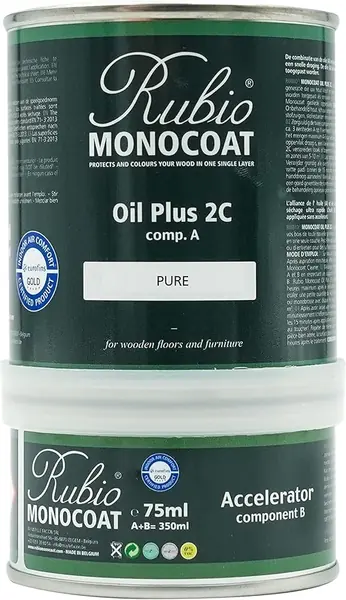
Rubio Monocoat Oil Plus 2C hardwax oil in a 350 mL can, Pure color

Main living areas

Shop Score 95/100
Base
Linseed-based hardwax oil
Sheen
Matte
Size
350 mL
Coverage
105-175 ft²
View on Amazon

One coat, no sanding between, and no lap marks to chase across a room — Rubio's pitch for Oil Plus 2C sounds like marketing until you watch how it behaves. It's a two-part hardwax oil: a linseed-based oil plus an accelerator you mix in, worked into the wood thin and buffed back off. Nothing sits on top. The finish cures inside the surface fibers, which is why the floor still feels like wood underfoot instead of like a sealed sheet.

For a living room, a hallway, or any floor you plan to keep for twenty years, this is the finish we choose first. Wear shows up as a dulled patch rather than a white scratch, and the fix is more oil on that patch — no screening the whole room, no blending a repair into a sea of semi-gloss. One coat also means one window for dust to land in, and the matte sheen quietly absorbs the everyday scuffing that makes a gloss floor look tired by spring.

Working with it takes a little discipline. The two parts get mixed thoroughly, applied thin, and buffed back off; anything the wood doesn't take has to come off the surface or it dries into a sticky patch. Coverage runs 105 to 175 square feet from the 350-milliliter can, and the line comes in 55 colors, so you can shift the tone of a floor and protect it in the same pass.

What it asks for is a floor worth the money. A can this size finishes a small room, so a whole house means buying the larger size and working room by room, and a rental turnover or a quick cosmetic refresh doesn't need a hardwax oil at all. For the floor you actually live on, one coat and a repair you can do with a rag are worth the premium.

Worth Noting

  • No film, so sanding marks show through
Our Verdict

We recommend Rubio Monocoat as the best floor finish here for the room you actually live in: one coat, a matte wood-like surface, and worn spots you re-oil instead of resanding.

Check Latest Price
2.

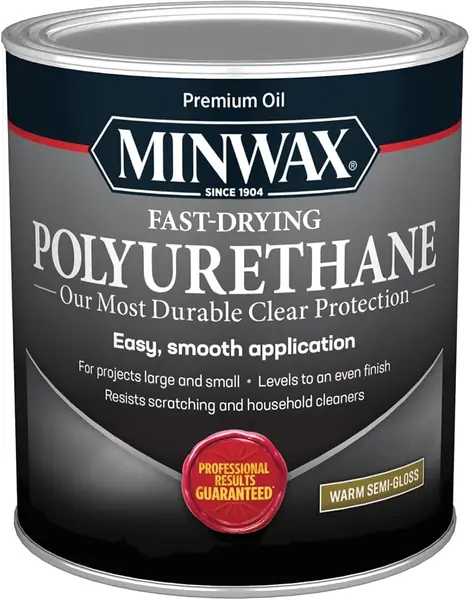
Minwax Fast Drying Polyurethane Best Traditional Polyurethane

Minwax Fast Drying Polyurethane in a one-quart can, clear semi-gloss oil-based finish

Traditional amber floors

Shop Score 94/100
Base
Oil-based
Sheen
Semi-gloss
Coverage
125 ft²/quart
Recoat
4-6 hours
View on Amazon

Oil-based polyurethane warms wood in a way no water-based finish can. On red oak it pulls out a honey-orange depth that looks like the floor in every house you remember from childhood, and that is exactly why we keep this Minwax can around for traditional rooms. It also means the decision is permanent: on maple, white oak, or anything with a white wash, this finish takes the floor toward yellow, and no amount of careful brushing changes that.

Underneath the color is a hard, floor-rated film — Minwax names floors alongside cabinets and trim — and the four-to-six-hour recoat window is what makes a three-coat job possible in a single Saturday. A quart covers about 125 square feet, so a 12-by-12 room runs through roughly three and a half quarts across three coats. Semi-gloss is the sheen for a traditional look: bright enough to read as finished, softer than a gym-floor gloss.

The cost of that warmth is solvent. Cleanup is mineral spirits, and the smell hangs around for days after the last coat, so plan on ventilation and on keeping the room off-limits. Let it cure rather than merely dry before rugs and heavy furniture go back. If you can empty the room for a week and you love amber oak, this is the simplest route to that floor.

Worth Noting

  • Ambers pale wood permanently
  • Solvent smell lingers for days
Our Verdict

For a warm amber floor with a hard film, this is the polyurethane we keep on the shelf, and the four-to-six-hour recoat keeps a room moving.

Check Latest Price
3.

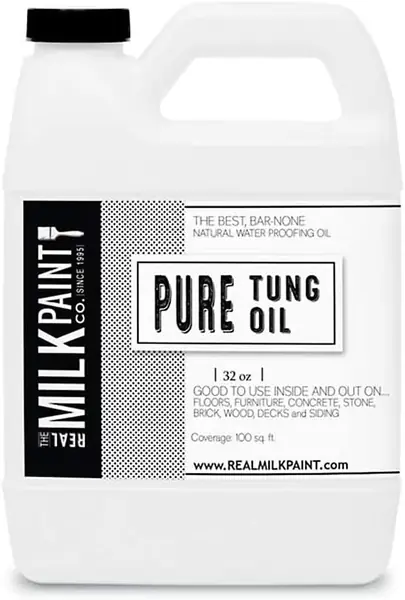
Real Milk Paint Pure Tung Oil Best Natural Oil Finish

Real Milk Paint pure tung oil in a 32-ounce bottle with amber liquid

Natural matte floors

Shop Score 93/100
Base
100% pure tung oil
Sheen
Matte
Size
32 fl oz
VOC Content
Zero
View on Amazon

Pure tung oil is the slowest finish here, and it is worth knowing that before the first coat goes on. This is the real thing: 100 percent tung oil, no metallic driers, no thinners, nothing added to hurry the cure. So you work in thin coats, keep the surface wet long enough for the oil to sink in, wipe off everything that hasn't, and then wait. A floor takes several of those passes.

The trick most people miss is cutting the first coats with a citrus solvent, roughly half and half. That thins the oil enough to move into the wood instead of sitting in a slick on top, and it makes a 32-ounce bottle go much further than the size suggests. Later coats go on undiluted to build the sheen. The result is matte, slightly amber, and closer to an old waxed floor than to anything that came out of a polyurethane can.

Between this bottle and the smaller Hope's one on this list, this is the one we point at a floor. There is more oil per bottle, and wood flooring appears in the product's own list of uses rather than being implied. It is also the finish we hand someone who wants to touch up a scratch with a rag instead of renting a sander.

Where it stumbles is patience. Coats need real time between them, and the floor is out of service longer than a polyurethane job would leave it, so a weekend project stretches out. It also adds a light amber cast, which is beautiful on oak and walnut and less welcome on maple. For a bedroom or living room where you can close the door and forget it, neither costs much.

Worth Noting

  • Several coats with long waits between
  • Adds a light amber cast
Our Verdict

We recommend this pure tung oil to anyone who wants a floor to feel like wood rather than a coated surface and can give it several coats and a few days.

Check Latest Price
4.

Varathane Ultimate Water-Based Satin Polyurethane Best Water-Based Clear

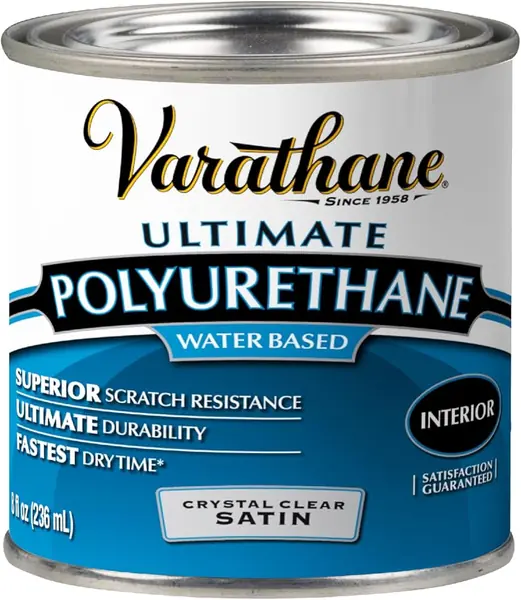
Varathane Water-Based Ultimate Satin Polyurethane in a half-pint can for interior wood

Pale wood floors

Shop Score 92/100
Base
Water-based
Sheen
Satin
Size
Half pint
Coverage
Up to 62 sq ft
View on Amazon

Where the Minwax can turns oak honey, this one stays out of the way. It goes on milky and dries clear, which is what you want under a pale floor — maple, white oak, ash, a gray stain, a white wash — where an oil-based film would drag the whole room toward yellow. Satin is the sheen to pick here; it reads as a soft sheen rather than a shine.

We choose this Varathane for pale floors and for rooms we have to keep living in. It is water-based, so there is hardly any odor, brushes clean up in the sink, and the fast dry time means a small room doesn't eat a whole weekend. It is also the finish we hand someone doing a first floor project, because nothing about it is fussy: thin coats, a good synthetic brush, and let it level.

Two things to know. The film is softer than an oil-based polyurethane, so a floor that takes dog claws, cleats, or dropped tools is better served by the Minwax. And thin coats matter — laid on heavy, this can dry with a milky haze instead of a clear one. One practical note: this listing is a half pint, about 62 square feet, which is a threshold or a test panel rather than a room; the same formula comes in larger cans, and that is the size to order for a floor.

Worth Noting

  • Softer film than an oil-based polyurethane
  • Brush marks if you overwork the finish
Our Verdict

We pick this water-based satin when the floor is pale enough that ambering would ruin it, and when we want to work without fumes.

Check Latest Price
5.

Varathane Triple Thick Polyurethane Best for Small One-Coat Jobs

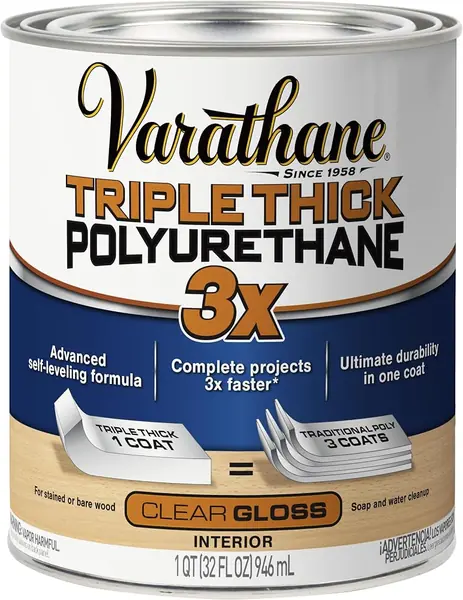
Varathane Triple Thick Polyurethane gloss wood finish in a one-quart can

Small one-coat jobs

Shop Score 91/100
Base
Water-based
Sheen
Gloss
Coverage
Up to 50 sq ft
Dry To Touch
2 hours
View on Amazon

It pours like pancake syrup. Triple Thick is the body of Varathane's standard water-based polyurethane at roughly three times the thickness, and that is the whole idea: self-leveling, one coat, and none of the sanding-between-coats routine that turns a floor into a three-day job.

A quart covers about 50 square feet and dries to the touch in roughly two hours, so a closet, a landing, or a small mudroom can be done in an afternoon. The maker's own description admits a soft amber hue, which is unusual for a water-based product and worth knowing if the wood under it is pale. Gloss is the sheen, and gloss is unforgiving — lap marks, dust nibs, and every flaw in the sanding show up under a window in a way satin never does.

We treat this as a problem solver rather than a whole-house finish, and Varathane's own recommended surfaces lean the same way, talking about furniture, doors, and trim more than floors. Where it earns its place is a small area where one coat is worth more than a perfect surface: a rental turnover, a closet, a set of stair treads. On a large, dark-stained floor, the thickness and the gloss work against you.

Worth Noting

  • Gloss magnifies lap marks and dust
  • About 50 square feet per quart
Our Verdict

We keep Triple Thick for small areas where one coat matters more than a flawless sheen, like a closet, a landing, or a quick turnover.

Check Latest Price
6.

Hope's 100% Pure Tung Oil Best for Trim and Touch-Ups

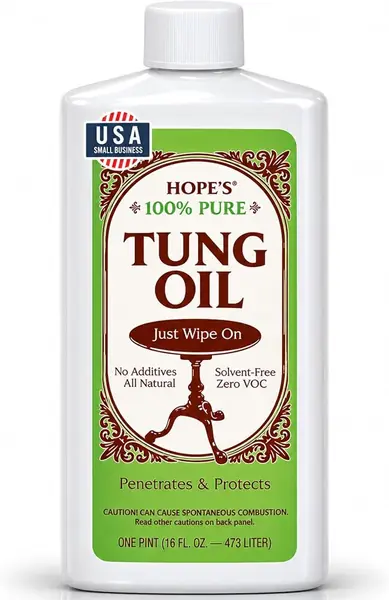
Hope's 100% Pure Tung Oil in a 16-ounce bottle for food-safe wood finishing

Trim and touch-ups

Shop Score 90/100
Base
100% tung oil
Size
16 fl oz
Type
Penetrating oil
Water Resistance
Water resistant
View on Amazon

Sixteen ounces is a small bottle, and on a floor that number does the talking: pure tung oil soaks into the wood rather than sitting on it, so a bedroom will empty this can long before you are finished. We reach for it for the small stuff — thresholds, stair nosings, a worn patch beside a doorway, a butcher block — rather than for finishing a room.

What it does, it does well. It is 100 percent tung oil with nothing added, thin enough to wipe on and buff back, and it leaves a soft matte surface with a slight darkening that flatters walnut and mahogany. Once cured it is safe for food contact, which is why it ends up on cutting boards and countertops. The patience is the price: coats need days rather than hours between them, and a cool room slows that further, so do not plan on rushing the last coat before the furniture comes back in.

Worth Noting

  • 16-ounce bottle won't finish a floor
  • Slow cure between coats
Our Verdict

We buy this for small oil jobs and kitchen wood rather than whole floors, because the bottle is small and pure tung oil asks for patience.

Check Latest Price

How We Tested Wood Floor Finishes

We started by sorting the category rather than shopping it. We read labels and technical sheets on more than 40 products, grouped them by finish family — film-building polyurethane, penetrating oil, and hardwax oil — then filtered for container size, sheen, recoat window, clarity and color-shift claims, and cost per square foot. Twelve made the cut for hands-on testing, and we bought every one at retail.

Each finish went onto white oak, pine, and maple panels, following the maker's directions exactly: sanding to the same grit, two coats where two were called for, and a written log of when each was dry to the touch, ready for a recoat, and safe to walk on. We applied them with the room closed up, then opened windows and ran fans, scoring odor at application, at four hours, and the next morning. Oily rags went flat on the driveway to dry, never in a pile.

The panels then lived in a hallway for nine months, walked on in boots, dragged with chairs, hit with dropped keys, and given a puddle left standing for twenty minutes. A kitchen floor and a set of stair treads got the same treatment, since that's where spills and grit do their worst. We raked a work light low across each surface to catch lap marks and dust, held finished offcuts beside bare ones in daylight to spot ambering, and measured the square footage each container actually finished instead of trusting the label.

At the end we gouged several panels on purpose and repaired them — spot-patching the oils, screening the film-formers — to see how each family handles a bad day.

How to Choose a Wood Floor Finish

Film or oil: decide how you want to repair it

A film finish — polyurethane or varnish — sits on the surface and takes the wear for the wood. It is tough and familiar, and when it dulls you screen and recoat, or sand the whole floor back. A penetrating oil or a hardwax oil cures inside the top fibers, wears as a dull patch instead of a white scratch, and can be topped up in that spot with more oil.

If you want to fix a traffic lane without emptying the room, choose an oil or a hardwax oil. If you want one uniform, sealed surface you can mop without thinking, choose a film.

Match the finish to the color of your wood

Oil-based polyurethane ambers. It warms oak into honey and pushes maple and white oak toward yellow, permanently. Water-based polyurethane dries clear and leaves a pale floor pale. Pure tung oil adds a light amber cast, and a hardwax oil deepens the grain without laying a yellow film over it.

Test on an offcut or in a closet before a whole room gets the first coat, because the color after coat one is the color you are keeping.

Do the coverage math before you order

Containers under-deliver against the optimism of a first-time buyer. A quart of polyurethane covers roughly 100 to 125 square feet per coat, and a bare floor wants three coats, so a 12-by-12 room at 144 square feet takes about three and a half quarts before overlap and a thirsty first coat.

One-coat products change the arithmetic in both directions: our top pick costs more per square foot but covers in a single pass, while Varathane Triple Thick covers only about 50 square feet per quart. Buy one can more than the math says.

Weigh smell and downtime against your schedule

Water-based finishes are close to odorless and dry fast, which is why they are the practical choice when you are living in the house while the work happens. Oil-based polyurethane and pure tung oil both want ventilation and calendar time — solvent smell hangs around for days, and oil cures slowly enough that a room can be out of use for a week.

If the house is empty anyway, that is a fair trade for the look. If it is not, read the recoat and cure times on the can before you fall for the picture on it.

Pick a sheen for the life you actually live

Gloss is the least forgiving sheen and the easiest to regret: it magnifies dust, lap marks, and every flaw in the sanding. Satin and matte hide ordinary wear and look right in most homes — a matte hardwax floor reads as wood and keeps reading that way as the finish dulls.

Save gloss for a formal room with good light and a floor you sanded carefully. Otherwise satin is the safer default.

Frequently Asked Questions

Final Verdict

Rubio Monocoat Oil Plus 2C is the finish we recommend first. One coat over a properly sanded floor gives a matte surface that still feels like wood, and the first time a chair leg drags across a hallway you will understand what the spot repair is worth.

If you love the amber depth of an oil-based film and can clear the room for a few days, Minwax Fast Drying Polyurethane gets you there for far less per square foot. And if the floor is maple, white oak, or anything pale, go water-based: Varathane's Ultimate Satin keeps the wood the color you bought it for.