↑↓ navigate ↵ open Esc close All results →

Best Belt Sanders of 2026

One momentary tip of a belt sander can gouge a crisp chamfer or dish a cabinet panel before you realize the abrasive bit in. While the tool excels at leveling proud glue-ups, trimming sticking door edges, and flattening cupped deck boards, raw motor power means little without the balance and speed control to keep the platen flat.

Running 11 sanders over nine months across clamped door edges, benchtop panels, and painted pine revealed that control hinges on handle weight during vertical passes, a speed dial that drops low enough for light cleanup, steady belt tracking, and a dust port that actually fits a shop hose. Compact 3 x 18-inch machines stay flatter in tight spots than 4 x 24-inch models, trading wider swaths for easier handling.

Whether the priority is aggressive stock stripping, controlled furniture flattening, or cordless mobility away from an outlet, belt size and low-speed control decide which machine belongs on the bench.

Our Top Picks

The Best Belt Sanders

1.

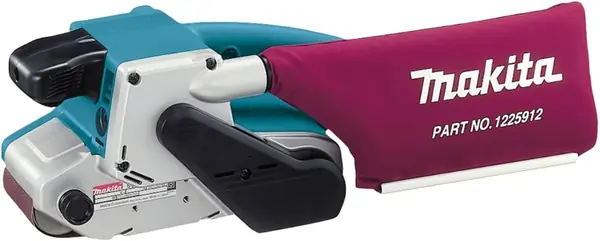
Makita 9403 4 x 24 Belt Sander Best Overall
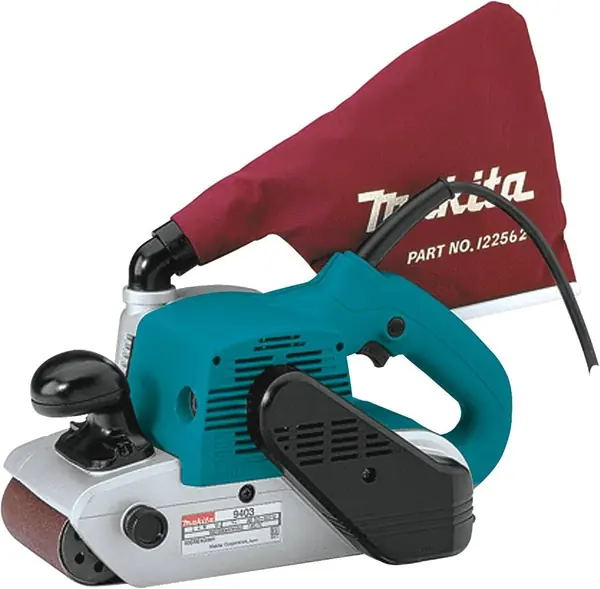
Makita 9403 teal corded belt sander with front grip and dust bag

Heavy stock removal

Shop Score 94/100
Amperage
11 A
Belt Size
4 x 24 inches
Weight
13 lb
Belt Speed
1,640 ft/min
View on Amazon

Eleven amps pushing a 4-inch belt at 1,640 feet per minute is the whole argument: this sander flattens a glued-up panel or a slab top the way a hand plane only dreams about. The wide platen is what keeps a cut level — there's more abrasive in contact with the wood, so the tool is harder to tip and dish a board. Electronic speed control holds that 1,640 under load, which means a heavy cut doesn't bog down into a gouge.

What surprised us is how controlled it feels for a machine this big. The front grip sits exactly where your left hand wants to be, so you steer with both hands instead of fighting torque with one wrist, and Makita rates it at 84 dB — an afternoon of use doesn't leave your ears ringing through dinner. The labyrinth seals are the detail we appreciate most: dust is what kills sanders, and the motor and bearings are boxed away from it.

Dust collection is better than we expected from a bag. It fills, the spout swivels out of your way on close work, and the housing is shaped so the nose and the side both reach flush against an adjoining surface — the difference between a clean repair patch and one you finish by hand. The belt tracks true once it's set, and we never had to touch the tracking adjustment again mid-project.

Worth Noting

  • Heavy at 13 pounds for overhead work
  • Single 1,640 fpm speed with no dial
Our Verdict

We recommend it as the default for anyone taking off serious material: 11 amps, a 4-inch belt, and dust collection that actually keeps up.

Check Latest Price
2.

Makita 9903 3 x 21 Belt Sander Best 3-Inch

Makita 9903 3 x 21 inch corded belt sander with front grip and dust bag

Furniture and trim

Shop Score 91/100
Amperage
8.8 A
Belt Size
3 x 21 inches
Weight
9.5 lb
Belt Speed
690-1,440 ft./min
View on Amazon

At 9.5 pounds, the 9903 is the sander that goes up on the bench instead of staying on the floor. Trim the belt to 3 x 21 and the whole tool becomes manageable: you can run it along a table apron, up a cabinet side, or over a door edge without feeling like you're wrestling a floor machine. The 8.8-amp motor gives away a little to our top pick, but you get something back for it.

What you get back is control. The speed dial runs from 690 to 1,440 feet per minute, so a 150-grit pass on softwood can run slow instead of burnishing the surface, and stock removal still gets the top of the range. Auto-tracking keeps the belt centered without fiddling, belt changes take a flick of a lever, and the 16.4-foot cord reaches most of a small shop without an extension. Flush sanding works off the nose and the side, same as its bigger sibling.

For furniture, trim, and anything you sand standing up, we prefer it to the 4-inch machines. It behaves itself in the way a professional tool should: the dust bag uses a slide release rather than a zipper, so emptying it doesn't dump fines on your shoes, and it catches most of what the belt throws. On a wide panel you'll make more passes than the 4-inch would — that's the trade for a tool you can control with one hand on the work.

Worth Noting

  • 3-inch belt needs more passes on wide panels
Our Verdict

Our pick for furniture-scale work: nearly the power of a bigger sander, a speed dial worth having, and a weight you can hold all afternoon.

Check Latest Price
3.

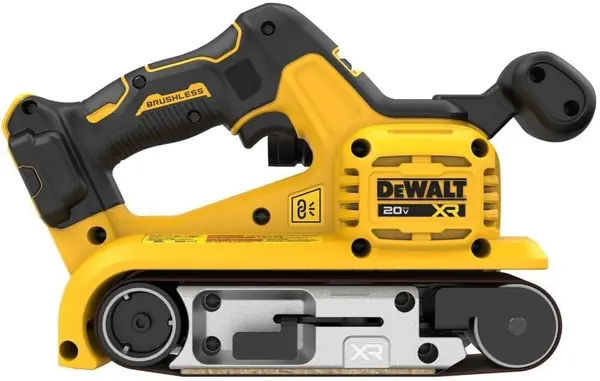
DEWALT DCW220B 20V MAX Belt Sander Best Cordless

DEWALT DCW220B cordless belt sander with belt housing and dust port

Cordless jobsite sanding

Shop Score 90/100
Motor
Brushless
Power Source
20V MAX battery, tool only
Speed Settings
25-position dial
Dust Collection
Airlock hose compatible
View on Amazon

There's no cord to drag across a surface you just sanded, and no outlet to go find. The DCW220B runs on DEWALT's 20V MAX packs with a brushless motor, and the belt release is genuinely tool-free and quick — a detail that matters more on a cordless sander, because switching grits to ease the load on the pack is how you stretch a battery through a job.

We think it's the cordless belt sander to beat for anyone already on the platform. The 25-position speed dial is the reason: you can slow the belt for a finish pass or open it up to level a glue joint, and that's a range the fixed-speed corded machines here don't give you. DEWALT also claims 16.7% more sanding surface than the 3 x 18 cordless it's aimed at, which is the difference between one pass and two along a wide rail.

Dust collection is designed around the Airlock hose, rated at up to 95% with it attached; with only the port and no hose, plan on sweeping afterward. Where it earns its keep is punch-list work — refinishing a door in place, easing a proud edge on a built-in, cleaning up a repair before the finish goes on. It won't outrun the 11-amp Makita on a deck, and it isn't built to.

Worth Noting

  • Bare tool; battery and charger sold separately
Our Verdict

Buy it if you already run DEWALT 20V MAX and want belt-sander stock removal without dragging a cord across a panel you just finished.

Check Latest Price
4.

SKIL 7510-01 3 x 18 Belt Sander Best for Beginners

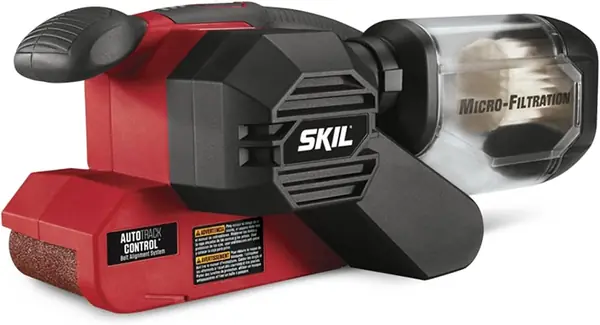
SKIL 7510-01 3 x 18 inch corded belt sander with pressure control indicator

First-time sander buyers

Shop Score 89/100
Amperage
6 A
Belt Size
3 x 18 inches
Weight
5.5 lb
Dust Port
Fits 1-1/4 in. vacuum hose
View on Amazon

A small light on the housing tells you when you're pressing too hard, and if you've never run a belt sander, that light is worth more than another amp. Lean on a belt sander and you don't sand faster — you heat the belt, burnish the wood, and shorten the motor's life. The 7510-01 catches the mistake before it costs you a board.

The rest of the package is beginner-friendly in the same practical way. At 5.5 pounds it's the lightest tool in this group, it takes a 3 x 18 belt, and the auto-track alignment keeps the belt centered so you spend your time sanding rather than adjusting. Single-lever belt changes, a micro-filtration dust chamber, and a port that fits a standard 1-1/4-inch vacuum hose round it out. Six amps handles paint removal on a fence, a door, or a picnic table without drama.

We think it's the right first belt sander: light enough to learn on, forgiving of inexperience thanks to that light, and honest about what it is. The vacuum port is the upgrade that matters most — hook up a shop vac and the dust chamber becomes a backup instead of the main event, which is the difference between sanding indoors and giving up on it.

Worth Noting

  • Homeowner-duty motor; not for all-day sanding
Our Verdict

We hand it to first-time buyers: the pressure light teaches technique, it is the lightest sander here, and the price is low enough to learn on.

Check Latest Price
5.

WEN 6321 3 x 21 Belt Sander Best Budget

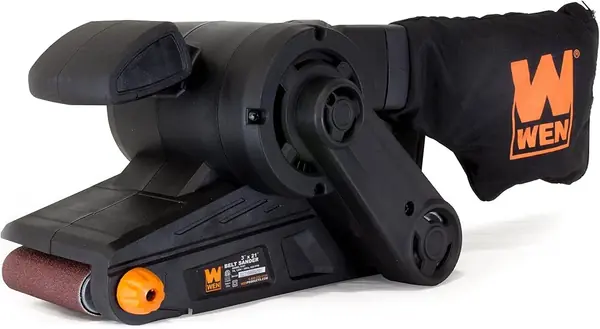
WEN 6321 black corded belt sander with front roller and dust bag

Occasional home projects

Shop Score 88/100
Amperage
7 A
Belt Size
3 x 21 inches
Weight
6.2 lb
Belt Speed
820 ft/min
View on Amazon

The least expensive sander here still turns a full 3 x 21 belt, and that's the first thing we check at this price. WEN didn't shrink the tool to hit the number: 7 amps, 820 feet per minute, 6.2 pounds. Those are close enough to the mid-priced machines that the savings show up in fit and finish rather than in how the belt meets the wood.

Two details we like. The front roller hangs slightly past the housing, so the belt reaches into corners a full-platen sander can't touch, and the quick-release lever makes a grit change a few-second job instead of a project. The lock-on trigger saves your hand on long passes, and the two-year warranty is longer than most here. This listing is the single-speed version; WEN also sells a variable-speed 6321, so check which one you're ordering.

Set the belt tracking true and it holds a line as well as tools at twice the money, which is the whole calculation for a shop that sands a few projects a season. It leaves most of the budget for belts and the consumables you'll actually go through, and it doesn't ask you to learn a complicated tool before it does useful work.

Worth Noting

  • Oblong dust port will not fit standard hoses
  • Durability thins under sustained heavy use
Our Verdict

We think it is the best way to put a full-size belt sander in a home shop for very little money, as long as the work stays occasional.

Check Latest Price
6.

Jellas BS02-SD 3 x 21 Belt Sander Best for Small Shop Work

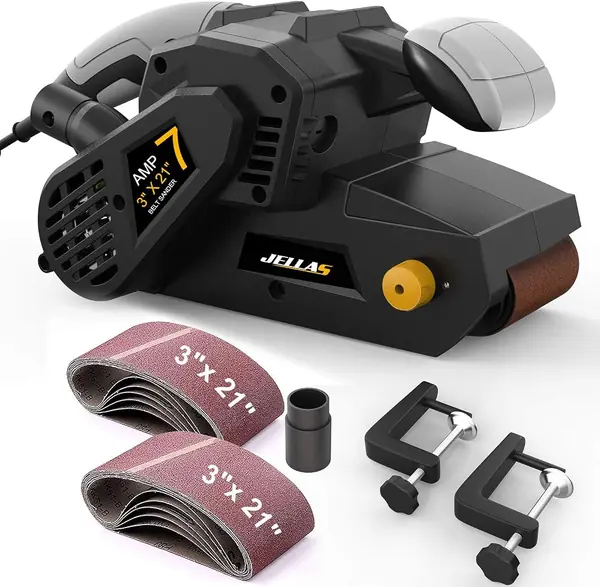
Jellas BS02-SD corded belt sander with dust bag and ten sanding belts

Small shop work

Shop Score 87/100
Amperage
7 A
Belt Size
3 x 21 inches
Speed Control
6-position variable dial
Included Belts
10 belts, 40-180 grit
View on Amazon

Two metal C-clamps turn this sander over and lock it to a bench, and suddenly you have a stationary edge sander alongside a handheld one. That's a capability none of the other picks here offer: you can shape a handle, true up a curve, or break an edge with both hands on the workpiece instead of both hands on the tool.

That bench mode is what makes it worth a place in a small shop. As a handheld sander it's competent rather than special — 7 amps, a six-position speed dial, and a 10-foot cord that crosses a bench without an extension. Where it stands out is small, curved work that a 4-inch platen simply can't follow.

The kit is generous for the money. Ten belts from 40 to 180 grit come in the box, which means you can start at coarse and work up without ordering anything, the dust bag detaches for emptying, and the package includes vacuum adapters so you can plumb it into a shop vac. For a shop doing trim, tools, and curved parts, that combination covers jobs the rest of this list doesn't.

Worth Noting

  • Durability record is mixed under steady use
Our Verdict

We like it as a second sander for a small shop — the bench clamps and ten included belts cover work the others on this list cannot.

Check Latest Price

What We Put Every Belt Sander Through

We started with about thirty belt sanders from spec sheets and retailer listings, then narrowed by what actually decides a purchase: belt width and length, amperage and speed, whether the speed could be dialed back, the weight on paper against the weight we measured, and whether the dust port fit a standard shop-vacuum hose or only its own bag. We also flagged which cordless models were bare tools, since one that needs a new battery platform is a different purchase. Eleven made the cut, and we ran them for nine months.

Every sander did the same work. We clamped a glued-up oak panel to a bench and timed how long each took to level a pencil line off the surface, then repeated it on a door edge standing vertical, where weight and balance show up fast—a sander that feels fine flat turns into a two-hand job at chest height. Each was weighed on a kitchen scale and held one-handed for a minute to find its balance point.

Belts were changed with the tool unplugged or the battery out, and we counted the seconds, then watched whether the new belt ran centered or walked toward the housing. For dust, we sanded into whatever came with the tool—bag, chamber, or hose—then checked the bench, the floor, and the motor housing for what got away, with eye protection on throughout and a respirator whenever no hose was attached. Durability got twenty-minute continuous runs on painted pine with a hand on the housing between passes, plus enough boards to notice whether the motor held speed. At the end we counted what was in the box, because a low price with nothing included isn't value.

How to Choose a Belt Sander

Start With Belt Width

A 4 x 24 machine covers ground and stays flat on decks, floors, and slab tops because more abrasive is in contact with the wood. A 3 x 21 is easier to control on furniture parts and follows a cupped or crowned board better, and a 3 x 18 is the trim-and-repair size. We think most woodworkers are served best by a 3 x 21 first and a 4-inch machine once the projects get large. Wider is faster; narrower is more forgiving.

Power and Belt Speed

Amperage is a rough read on how much motor sits behind the belt: 6 amps is homeowner duty, 7 to 9 amps covers serious furniture work, and 11 amps is production-grade stock removal. Belt speed matters just as much. Fast — 1,600 feet per minute and up — is for hogging material; slower speeds keep a fine grit from burnishing the surface. That's why a variable-speed dial is worth paying for if you plan to finish with the tool, not just dimension with it.

Weight, Balance, and Who Holds It

A 13-pound sander is a pleasure on a deck and a punishment on a cabinet side. Mass helps a wide belt stay flat, but it also decides who can use the tool for an afternoon. If your work is horizontal and large, buy the weight; if you sand vertical panels, aprons, or overhead, stay near 6 to 10 pounds. Balance matters as much as the number: a front knob or a D-handle lets you use both hands, which is the only way to control a belt sander.

Dust: Bags, Chambers, and Hoses

Every sander here ships with some kind of collector, and none of them replaces a shop vacuum. Bags fill quickly and lose efficiency as they load; a micro-filtration chamber beats nothing indoors; a port that accepts a 1-1/4-inch hose is the arrangement we prefer, because a vacuum pulls dust out of the cut and you can see the line you're sanding. Check the port shape before you buy — oblong ports on some budget sanders won't take a standard hose.

Flush Sanding and Belt Changes

Sanding flush to a wall means the belt and housing extend past the platen so the abrasive reaches into the corner. It only helps if the nose or the side of that particular tool is exposed, so look at which end is open before you plan a repair against a wall. Belt changes are the daily friction: a lever release is fine, but a tool-free system that tracks the belt automatically saves minutes at every grit change.

Frequently Asked Questions

Final Verdict

For stock removal and flattening — decks, slabs, glued-up panels — the Makita 9403 is the one we recommend. Eleven amps, a 4-inch belt, and a dust bag that genuinely collects add up to a tool that takes material off fast and leaves a flat surface behind.

If your sanding happens on furniture parts and vertical panels, the lighter Makita 9903 with its speed dial is the better fit. And if you already own DEWALT 20V MAX packs, the DCW220B buys you the same work without a cord.