↑↓ navigate ↵ open Esc close All results →

Best Disc Sanders of 2026

A disc sander has a personality problem: the machines that strip a tabletop in minutes are the same ones that leave pigtail swirls in your final coat, and the polite ones that finish glass-smooth can eat an afternoon. The fix isn't one do-everything tool — it's matching the sander to the job.

We ran 12 sanders through nine months of real work: stripping finish off a maple dresser, flattening pine glue-ups, feathering drywall patches, shaping small parts on the benchtop machines. What separated them rarely showed up on a spec sheet — it was how fast the dust bag filled, whether the grip let us run the tool one-handed along a rail, and how long a paper change took with gloves on. Paper and dust setup do more for a finish than another half-amp of motor.

The picks below cover the range: aggressive corded machines for stock removal, a cordless sander for trim work, a benchtop unit for small shops, a budget model for light projects. What they share is that none of them fight you.

Our Top Picks

The Best Disc Sanders

1.

DEWALT DWE6423K 5-Inch Random Orbit Sander Best Overall
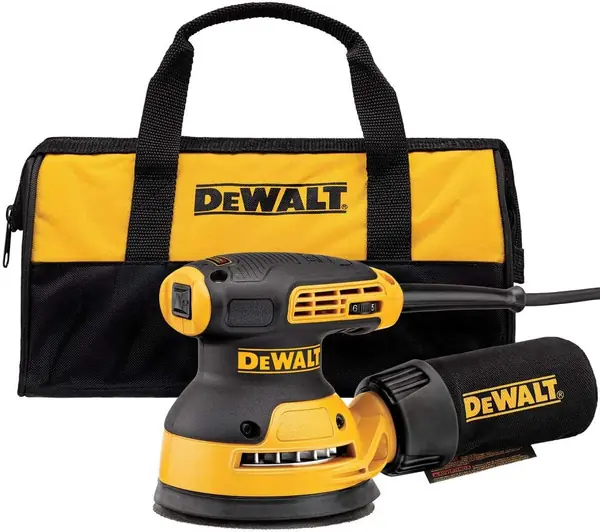
DEWALT DWE6423K corded random orbit sander with dust bag and carrying case

General woodworking

Shop Score 96/100
Motor
3 amps
Pad Size
5 inches
Speed Range
8,000 to 12,000 OPM
Dust Collection
One-handed locking bag; vacuum compatible
View on Amazon

The DWE6423K sits lower than most 5-inch sanders we have used, and that changes the way it handles. Your hand drops closer to the workpiece, so the tool feels steadier on a tabletop or a cabinet side. We noticed the separate counterweight before we noticed the motor; vibration stays manageable during long passes, and the rubber overmold gives you something to hold onto without a death grip.

We recommend it as the default because the 8,000 to 12,000 OPM dial gives you control where a single-speed sander gives you only speed. Turn it down for veneer, edging, or a delicate repair; turn it up when you need to flatten a glue line. The 3-amp motor has enough reserve for furniture work, and the low profile helps you keep the pad flat instead of tipping onto an edge.

Dust collection is a practical strength rather than an afterthought. The one-handed locking bag clicks on securely and empties without a wrestling match, and the port accepts a shop vac when you want stronger extraction. We kept the bag on for quick fixes and hooked up a vac for full panels. Either way, the dust-sealed switch is the kind of detail that matters in a dusty shop.

The kit also includes a carrying case, which we appreciate more than we expected; it keeps the sander, paper, and adapter together between projects. For a corded random-orbit sander that has to do finish work and general stock removal, this is the one we reach for first.

Worth Noting

  • Corded power requires access to an outlet
  • Full-panel sanding calls for hooking up a shop vac
Our Verdict

We recommend the DWE6423K to most woodworkers because its variable speed, low-profile body, and locking dust bag make finish sanding easier to control.

Check Latest Price
2.

Bosch ROS20VSC 5-Inch Random Orbit Sander Best Dust Collection

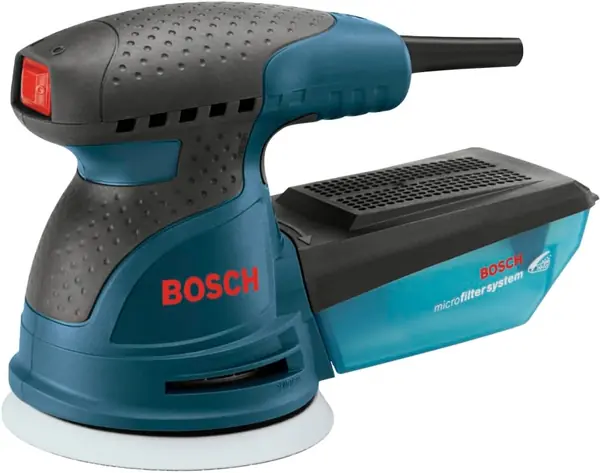
Bosch ROS20VSC corded palm random orbit sander with dust canister and bag

Dust-sensitive shops

Shop Score 95/100
Motor
2.5 amps
Pad Size
5 inches
Speed Range
7,500 to 12,000 OPM
Dust Collection
Microfilter canister; vacuum adapter
View on Amazon

The ROS20VSC is the sander we reach for when the work moves indoors. Its microfilter canister traps fine dust that would otherwise settle on every surface, and the motor is quiet enough that we can hold a conversation while it runs. That combination matters in a spare room, a basement, or any shop where the sander is not the only thing happening.

The pad dampening system is the other reason it earns a place. It brakes the pad at startup and helps keep swirl marks out of a finish, and the pliable backing pad follows gentle curves instead of fighting them. The 2.5-amp motor is not the strongest here, so we treat the Bosch as a finish sander; it is happiest taking light passes and letting the abrasive do the work.

The variable-speed dial runs from 7,500 to 12,000 OPM, which gives you room for both finish sanding and light stock removal. The dust canister takes a firm twist to open, but it seals well and lets you see how full it is. We also like that the kit includes a vacuum adapter and a soft bag, because those are the parts that make the dust system useful beyond the first session.

Worth Noting

  • Motor durability is inconsistent
Our Verdict

We pick the Bosch when clean air matters most: its microfilter canister and quiet motor suit indoor finishing and dust-sensitive shops.

Check Latest Price
3.

DEWALT DWE6401DS 5-Inch Rotary Sander Best for Stock Removal

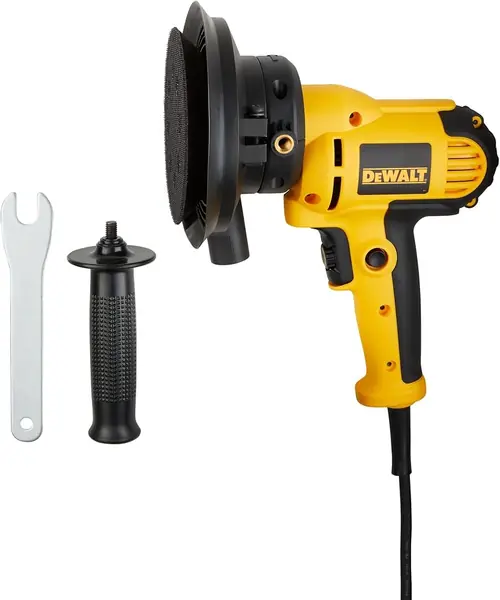
DEWALT DWE6401DS corded rotary disc sander with side handle and dust shroud

Fast stock removal

Shop Score 94/100
Motor
6 amps
Pad Size
5 inches
Speed Range
0 to 3,700 OPM
Dust Collection
Adjustable shroud; vacuum ready
View on Amazon

A rotary disc sander is a different tool from a random-orbit model, and the DWE6401DS makes that plain as soon as the 6-amp motor starts. It drives the disc directly, so it removes material fast and leaves swirl marks if you linger in one spot. That is not a defect; it is the trade-off you accept for power.

The variable-speed trigger dial runs from 0 to 3,700 OPM, and the mid-handle design with a soft grip gives you a balanced hold when the disc bites. The side handle adds a second hand for aggressive passes, which we want on a tool this strong. It accepts standard 5-inch 8-hole hook-and-loop paper, so you are not locked into a proprietary disc.

We reach for it when a deck, door, or painted surface needs fast stripping, not when we are chasing a furniture-grade finish. The adjustable dust shroud connects to a vacuum, and we keep one attached for indoor work because the shroud alone is not a dust bag. It is the least polite sander here, and that is exactly why it earns a spot.

Worth Noting

  • Heavy at 4.8 pounds
Our Verdict

We reach for this rotary sander when a job needs fast stock removal, not a swirl-free finish; its 6-amp motor and vacuum shroud earn the space.

Check Latest Price
4.

Makita BO5030K 5-Inch Random Orbit Sander Best Simple Corded Sander

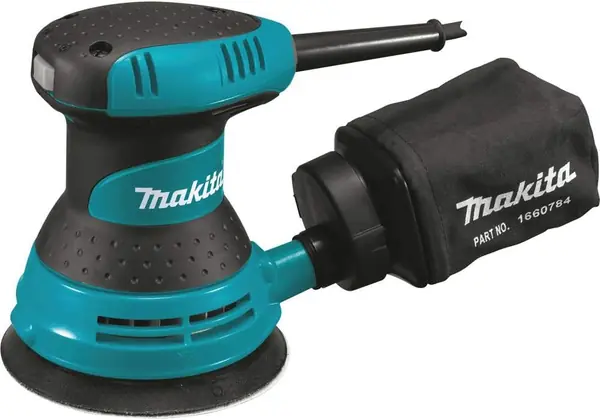
Makita BO5030K corded random orbit sander with dust bag and tool case

Simple corded sanding

Shop Score 93/100
Motor
3 amps
Pad Size
5 inches
Included
Dust bag and tool case
Orbit Speed
12,000 OPM
View on Amazon

There is no speed dial on the BO5030K, just a 3-amp motor turning a 5-inch pad at 12,000 OPM. That simplicity is the point. The tool has a short body, a rubberized grip, and a pad control system that keeps the disc from free-spinning at startup. It also comes in a plastic tool case that holds the sander and a few sheets without turning into a puzzle.

We recommend it to woodworkers who want a corded sander they can grab without fiddling. The 1/8-inch orbit is large enough to remove material at a useful rate, and the through-the-pad dust path lines up with standard 8-hole paper. We liked the balance in vertical work, where a lighter sander is easier to keep flat against a cabinet side.

The fabric dust bag has a wide mouth, so emptying it is less messy than a narrow-neck bag. It fills quickly on a big panel, but that is a reminder to empty it before it packs tight. For a one-speed shop sander, the BO5030K feels more sorted than its midrange price suggests.

Worth Noting

  • Hook-and-loop pad can wear out
Our Verdict

We suggest the BO5030K for woodworkers who want a straightforward corded sander, a useful case, and strong dust pickup without extra controls.

Check Latest Price
5.

Makita XOB01Z 18V Random Orbit Sander Best Cordless

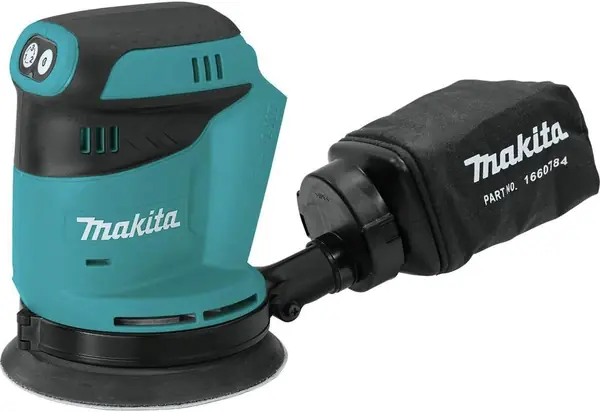
Makita XOB01Z cordless random orbit sander with dust bag, tool only

Cordless finish work

Shop Score 92/100
Pad Size
5 inches
Battery
18V LXT; tool only
Runtime
Up to 40 minutes
Speed Settings
7,000/9,500/11,000 OPM
View on Amazon

Cordless sanding is a genuine convenience, and the XOB01Z makes the strongest case for it here. Three speed settings, a 5-inch pad, and no cord to drag across a finished surface. We noticed the difference on assembled shelves and trim, where a cord tends to catch on the workpiece or pull the sander off line.

The 18V LXT motor runs at 7,000, 9,500, or 11,000 OPM, and the one-touch control is easy to find with a thumb. The 1/8-inch orbit gives it enough stroke for real material removal, while the pad brake keeps the disc from free-spinning at startup. We like the control at the low setting for finish passes and the top setting for flattening a glue line.

Makita rates the runtime at up to 40 minutes per charge. That number depends on the pack and the load, so we treat it as a guide rather than a promise. A larger battery makes more sense than a compact one if you plan to sand a whole project; the tool is light enough that the extra pack does not spoil the balance.

We recommend it to someone already invested in Makita's 18V system. For trim, shelves, and assembled pieces, the freedom from a cord is worth more than the last bit of muscle. It is the sander we pack when the work is upstairs and the outlet is downstairs.

Worth Noting

  • Tool only, no battery or charger
  • Power tapers as battery drains
Our Verdict

Makita 18V owners who want three-speed cordless sanding with low vibration and a controlled startup will be well served by the XOB01Z.

Check Latest Price
6.

WEN 6502T Belt and Disc Sander Best Benchtop Option

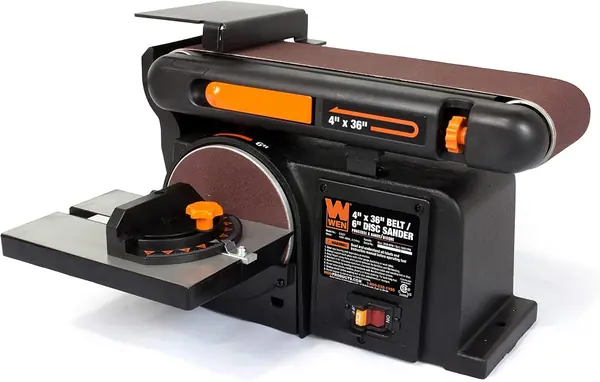
WEN 6502T benchtop belt and disc sander with cast iron base

Small benchtop shops

Shop Score 91/100
Motor
4.3 amps
Speed
3,600 RPM
Belt Size
4 x 36 inches
Disc Size
6 inches
View on Amazon

The WEN 6502T is not a hand sander, and that is why we like it. It puts a 6-inch disc and a 4-by-36-inch belt on a cast-iron base, so you can shape, square, and clean up small parts without chasing a handheld tool across the bench. For a small shop, that stationary format is a different kind of useful.

The belt tilts from 0 to 90 degrees, and the tension release lever makes grit changes straightforward. The cast-iron base keeps the machine from walking when you press a board against the disc. We also appreciate the two working surfaces: the disc is handy for end grain and curves, while the belt handles longer edges and flat stock.

The 4.3-amp motor turns the disc at 3,600 RPM, which is enough for hobby work and light furniture parts. It is not a production sander, and we do not treat it like one. The dust port accepts a shop vac, though you may need an adapter depending on your hose; we keep a vac attached because the open working surfaces throw debris.

Where it earns its keep is repeatability. A squared edge or a consistent curve comes easier when the tool stays put and you move the workpiece. If you have a bench and a vacuum, the WEN turns odd-shaped offcuts into useful stock without taking up much floor space.

Worth Noting

  • Motor and switch durability is inconsistent
Our Verdict

We like the WEN for small shops that need a stationary disc and belt sander with a stable cast-iron base and useful belt tilt.

Check Latest Price
7.

SKIL SR211601 5-Inch Random Orbital Sander Best Budget

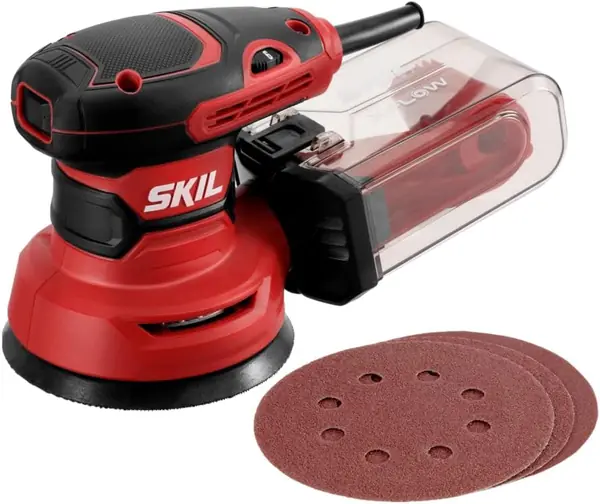
SKIL SR211601 random orbital sander with cyclonic dust box and sanding sheets

Light DIY projects

Shop Score 90/100
Motor
2.8 amps
Pad Size
5 inches
Speed Range
7,000 to 13,000 OPM
Dust Collection
Cyclonic dust box
View on Amazon

The SR211601 is the least expensive sander here, and it still gives you a variable-speed dial, a 5-inch pad, and a cyclonic dust box. That combination is why it earns a place for light DIY work. The body is compact, the grip is soft, and the tool feels less buzzy than its budget price suggests.

The 2.8-amp motor runs from 7,000 to 13,000 OPM, so you can slow it down for trim and open it up for a deck rail. We found it easy to control on vertical surfaces, and the hook-and-loop pad makes paper changes quick. The dust box is the part that needs patience; it collects some debris, but it is not a substitute for a shop vac on a big job.

We recommend it for a first sander or a second one for odd jobs, not for a production bench. It handles a fence, a tabletop refresh, or a drywall patch without asking much of your budget. The three included sheets get you started, but plan on buying more paper in the grits your project needs.

Worth Noting

  • Dust box can come loose
  • Durability is inconsistent under heavier use
Our Verdict

For light DIYers who want variable speed and a compact body at the lowest cost here, the SKIL fits best.

Check Latest Price

How We Tested the Best Disc Sanders

To build the shortlist, we started with the question every sander buyer runs into — pad and paper — then sorted current models by power source, speed control, dust setup, and price so the field covered everything from a stripped-down corded sander to a benchtop unit. Twelve made the cut, and we ran each one for nine months in a working garage shop. Nothing made the list that didn't move dust somewhere: a bag, a canister, a shroud, or a box.

Testing looked like actual work. We stripped finish from a maple dresser, flattened pine glue-ups, feathered drywall patches, and squared up small parts on the benchtop machines, wearing eye and hearing protection and a respirator the whole time. After each pass we wiped the surface down to see what the dust had been hiding, since swirl marks and pigtails show up fast once the board is wet. We also timed paper changes with work gloves on, ran each sander one-handed along a vertical rail to judge how the grip and weight balanced, and noted where our hands went numb after twenty minutes of continuous use.

Dust got its own set of checks. We weighed bags and emptied canisters after a fixed number of board feet, fitted each sander to the same shop vacuum to see which adapters actually sealed, and watched for dust escaping around the pad on long runs. Because these tools get leaned on, we came back to the same machines month after month to check for switch slop, cord strain, pad wobble, and bearing noise. The benchtop unit got measured for footprint on a crowded bench and clamped down for workholding checks.

How to Choose a Disc Sander

Start With the Sanding Action

A random-orbit sander spins a pad while the pad itself orbits, which is why it can remove material without the deep swirl marks a rotary sander leaves. That makes it the right first choice for furniture, cabinets, and general finishing. A rotary disc sander cuts faster and is better for stripping paint or flattening a rough board, but it demands a lighter touch and a steady hand. A benchtop belt-and-disc machine is a different purchase: it stays put while you move the workpiece and is best for edges, end grain, and small parts. Decide which of those jobs fills your week before you compare models.

Match the Power Source to the Shop

Corded sanders give you steady power for long sessions and usually cost less than a comparable cordless tool. Cordless models trade that endurance for freedom from an outlet, which is a real advantage on trim, assembled shelves, and work away from the bench. The catch is the battery platform: a tool-only sander is only a bargain if you already own compatible packs and a charger. If you are starting fresh, add the cost of batteries to the purchase before you decide. For a shop with one bench and a nearby outlet, we still prefer a corded sander for the steady power.

Treat Dust Collection as Part of the Tool

Every sander here can catch some dust, but none of them replaces a shop vac for a full panel. A bag or canister is convenient for quick work; a vacuum adapter is what keeps the air clear when you sand inside or work with fine dust. Check the port size and whether the adapter matches your hose, because a loose connection leaks dust at the worst moment. We also look at the filter or canister design: a clear box tells you when to empty it, and a stiff latch keeps it from dropping off mid-pass.

Look at the Pad, Paper, and Speed Control

Five-inch hook-and-loop pads are the practical standard because paper is easy to find and change. If the pad has eight holes, buy 8-hole paper or the extraction path will be partly blocked. Variable speed is worth paying for if you sand veneer, edges, or finished work; a single-speed sander is simpler and can be fine for rough stock. Orbit size matters too: a larger orbit removes material faster, while a smaller one is easier to control on curves. For a first serious sander, we favor a 5-inch pad with a speed dial.

Plan for Bench Space and Workholding

A benchtop belt-and-disc sander needs a stable surface and enough clearance to feed a board past the belt. The cast-iron base on the WEN is the feature that keeps it from walking, but you still need room for the workpiece and the dust hose. Handheld sanders are easier to store, though the cord and dust bag need somewhere to go between passes. If your work is mostly small parts, a stationary machine can be more useful than another palm sander; if you sand assembled pieces, stay handheld.

Frequently Asked Questions

Final Verdict

For most woodworkers, the DEWALT DWE6423K is the disc sander we recommend first. Its variable speed, low-profile body, and secure dust bag make it easy to control from a rough glue line to a finish pass, and the carrying case keeps the kit together. If dust is the deciding issue, the Bosch ROS20VSC is the cleaner, quieter choice for indoor work. If you need to strip material fast, choose the rotary DEWALT DWE6401DS instead; it is not a finish sander, but it removes stock with purpose.