↑↓ navigate ↵ open Esc close All results →

Best DEWALT Sanders of 2026

An aggressive or poorly controlled sander can leave swirl marks, rounded edges, and a cloud of fine dust hanging in the shop before the finish coat ever goes on. Before comparing pad styles, woodworkers face a practical split in power: a corded sander that runs continuously at the bench, or a 20V MAX cordless unit built to follow you out to a deck rail or a single-outlet basement.

Stripping a pine dresser to bare wood, feathering patches on vertical cabinet doors, and running cordless units to empty batteries across eight months with 12 sanders underscored what spec sheets hide. On painted built-ins and delicate veneers, variable speed control and a well-matched pad format matter far more than the maximum orbit rate printed on the box.

Covering both corded and battery platforms across random-orbit and sheet formats, the five sanders ranked below held up through extended vertical work and kept dust collection manageable.

Our Top Picks

The Best DEWALT Sanders

1.

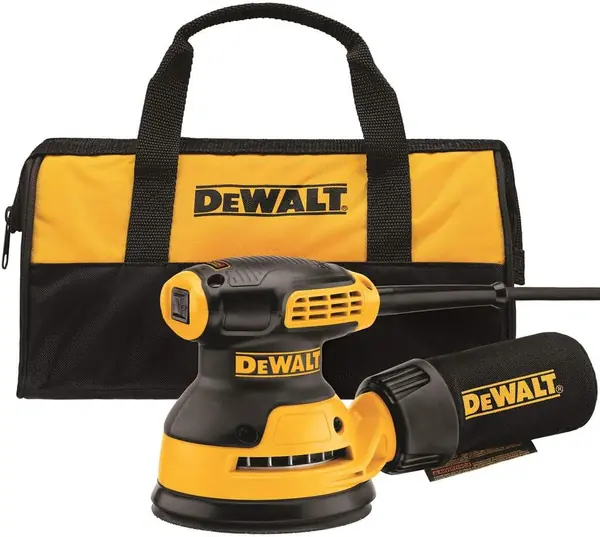
DEWALT DWE6423K 5-Inch Variable Speed Orbital Sander Best Overall
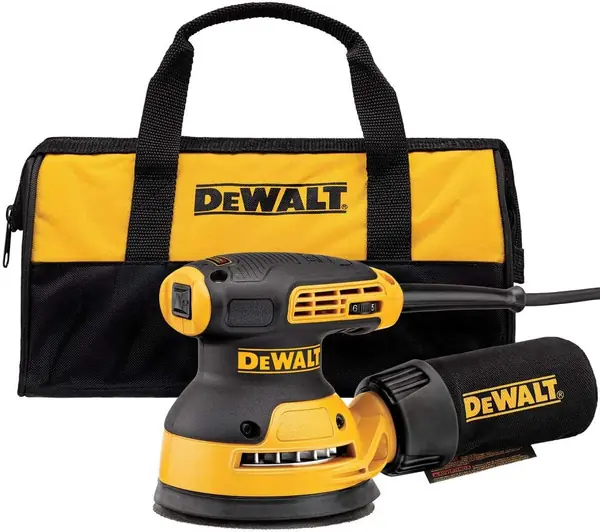
DEWALT DWE6423K 5-inch corded random orbital sander kit with dust bag and carrying case

General woodworking

Shop Score 98/100
Speed
8,000 to 12,000 OPM
Power Source
Corded electric
Motor
3 amp
Pad Size
5 inch
View on Amazon

The speed dial is what settles this one for us. DEWALT's corded 5-inch random orbital runs from 8,000 to 12,000 OPM, so you can strip a painted door at full tilt and then dial back for a veneered edge or a coat of finish. That one control is the difference between a sander you trust on good material and one you only point at rough lumber, and it is the first thing we check now.

The 3-amp motor has never felt short of power, and the separate counterweight earns its keep: an afternoon working vertical cabinet boxes left our hands far less buzzy than the quarter-sheet sanders we also keep around. The rubber overmold and the short body put your palm close to the work, which matters more than the spec sheet suggests once you are sanding a rail you cannot see from above.

Dust handling is better than most bags of this type. The one-handed locking bag seats with a twist, and the port takes DEWALT's DWV010 or DWV012 extractors directly. For any other vac with a 1-1/4-inch hose you need the DWV9000 quick connector; without it you are taping a hose on and hoping.

What arrives is the kit, sander, dust bag and carrying bag included, for roughly what the cordless bare tool costs. No battery to charge or replace, which for a tool that lives under a bench is an advantage rather than a compromise.

Worth Noting

  • Corded, so you need an outlet at the work site
Our Verdict

Our default pick: variable speed, low vibration, and a dust bag that actually seats make it the sander we use from paint removal through final passes.

Check Latest Price
2.

DEWALT DCW210B 20V MAX Orbital Sander Best Cordless

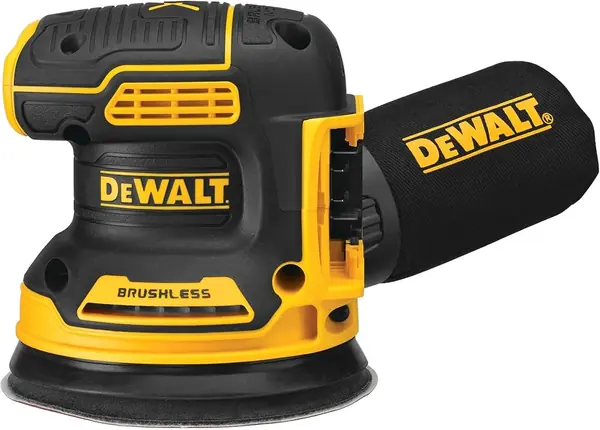
DEWALT DCW210B 20V MAX cordless random orbital sander with dust bag, bare tool

Existing 20V batteries

Shop Score 97/100
Speed
8,000 to 12,000 OPM
Power Source
20V MAX battery (tool only)
Pad Size
5 inch
Weight
2.5 lb
View on Amazon

A sander is the tool where a cord is most in the way, because you are moving across a panel rather than standing at a bench. The DCW210B cuts that loose. It is a brushless 5-inch orbital that runs on the 20V MAX packs already in your shop, weighs 2.5 pounds, and sits low enough to keep your hand near the surface instead of on top of a tower.

We were surprised by how little it gives up to the corded kit. The dial covers the same 8,000 to 12,000 OPM range, the 8-hole hook-and-loop pad swaps paper in seconds, and the dust-sealed switch is the detail that matters a few years in on a tool that lives in grit. On a project that moves between rooms, it is simply the one we grab.

The bag handles touch-up sanding; for a room we hook a hose to a vac and stop thinking about dust. Otherwise there is nothing to manage, and the low profile helps it stay put on narrow stock where a taller body wants to tip.

Worth Noting

  • Sold as a bare tool without battery or charger
  • Runtime swings widely with pack size and load
Our Verdict

If your shop already runs on 20V MAX, this is the sander to buy: brushless power and a real speed dial without a cord across your work.

Check Latest Price
3.

DEWALT DWE6411K 1/4 Sheet Palm Sander Best Sheet Sander

DEWALT DWE6411K quarter-sheet palm sander with dust bag and carrying bag

Trim and corners

Shop Score 96/100
Speed
14,000 OPM
Power Source
Corded electric
Motor
2.3 amp
Paper Size
1/4 sheet
View on Amazon

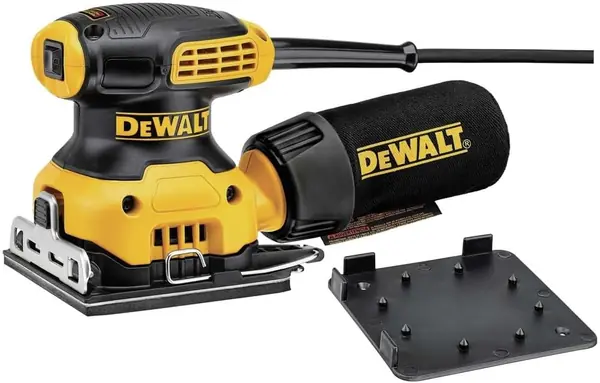
A round pad stops at the edge of a frame-and-panel door; a quarter sheet does not. The DWE6411K runs a flat rectangular pad with clamps at each end, which is what you want along rails, inside corners, and over patched drywall. At 2.8 pounds with a 2.3-amp motor turning 14,000 OPM, it is light enough to run one-handed at the top of a wall.

Paper is where this format pays you back, and the clamp is why we keep reaching for it: a full sheet cut into quarters with the included punch seats flat and stays put instead of creeping off the pad mid-pass. A stack of hook-and-loop discs costs real money by comparison, and a refinishing job burns through grits.

Understand what it is, though, because it is a finishing sander rather than a stock remover. Fourteen thousand orbits on a flat pad will smooth a tabletop and knock the fuzz off a coat of paint, but it takes material off far more slowly than a random orbital of similar amperage. Where it beats the round pads is control: the separate counterweight and rubber overmold let you work a small repair with your fingertips without the tool wandering.

Worth Noting

  • Dust bag passes fine dust indoors
Our Verdict

We keep a quarter-sheet sander for the places a round pad cannot reach, and this corded kit is the one we trust on trim, rails, and patched drywall.

Check Latest Price
4.

DEWALT DWE6421K 5-Inch Orbital Sander Kit Best Budget

DEWALT DWE6421K 5-inch corded orbital sander kit with dust bag and carrying bag

Occasional use

Shop Score 95/100
Speed
12,000 OPM
Power Source
Corded electric
Motor
3 amp
Pad Size
5 inch
View on Amazon

This is the least expensive way to put a DEWALT orbital on your bench, and it does the main job without complaint. A 3-amp motor turns the 5-inch pad at 12,000 OPM, the counterweighted body keeps vibration low enough for long passes, and the kit includes a dust bag and a carrying bag. We hand it to anyone who needs an orbital once or twice a season.

Where it earns its place is paint and rough stock. On a door frame with six coats on it, the fixed speed simply goes, and you follow it with 80 grit until you see wood. The bag catches the bulk of the chips, and nothing about the tool asks you to think, which on a stripping job is exactly right.

What you give up is the dial. Full speed is all it has, so thin veneer, a profiled edge, and a spot where the paper is already loading all get identical treatment. Experienced hands manage it with lighter pressure and constant movement, and for a homeowner with a fence to refinish that is a fair trade for the savings.

Worth Noting

  • Durability is the weakest among the corded models here
Our Verdict

It strips paint and flattens panels as fast as anything here, and it is the sander we hand out for occasional projects and one-off repairs.

Check Latest Price
5.

DEWALT DCW200B 20V MAX XR 1/4 Sheet Sander Best for Cordless Trim Work

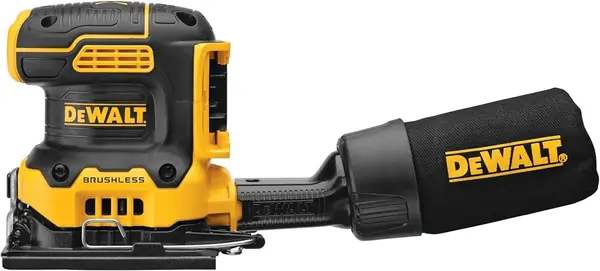
DEWALT DCW200B 20V MAX XR cordless quarter-sheet sander with dust bag, bare tool

Cordless trim work

Shop Score 94/100
Speed
8,000 to 14,000 OPM
Power Source
20V MAX battery (tool only)
Weight
2.1 lb
Paper Size
1/4 sheet
View on Amazon

Cordless and quarter-sheet is a narrow combination, and it exists for one kind of job: casing, trim, and cabinet faces where you are moving between pieces and a cord is a nuisance. The DCW200B handles that at 2.1 pounds, the lightest sander in this group, with a short body that keeps your hand where you can see it.

The dial spans 8,000 to 14,000 OPM, the widest range here, so you can slow it for a delicate pass and open it up when you want to move. The paper clamp holds a quarter sheet firmly, the included dust chute is short enough that the bag rides against the body instead of flopping, and pre-cut sheets are cheap enough to change often rather than push a worn one.

What keeps it out of our top tiers is the arithmetic. It is the most expensive sander here, and a flat quarter-sheet pad is inherently slower at flattening a panel than the cordless orbital. We reach for the DCW210B first unless the job is trim and corners, where the narrow pad is the whole reason to own one.

Worth Noting

  • Bare tool with no battery or charger
  • Drains packs quickly at high speed
Our Verdict

A capable cordless quarter-sheet sander for trim and corner work, but the premium price and battery appetite make it a specialist pick.

Check Latest Price

How We Tested These Sanders

We built the shortlist from the current lineup, filtering by power source, pad format, speed control, and what actually ships in the box — a kit with a dust bag and paper, or a bare tool meant for batteries you already own. Twelve sanders came in for testing, and we kept them for eight months.

Most of that time went into a pine dresser wearing four coats of old finish and a stack of cabinet doors we sanded clamped upright, which is the position that tells you fastest whether a tool's grip and weight will hold up past the first hour. We ran the variable-speed models at both ends of the dial on the same panel to see where the finish actually changed. Cordless models went out to a deck rail and into a basement corner with no outlet in sight; corded ones stayed on the bench and ran long, uninterrupted passes.

Dust was the recurring test. We connected every sander that accepts a hose to a shop vac, noted whether it fit without an adapter, and laid a black tarp under the work to see what escaped the bag. Indoors we wore eye protection and a fitted respirator every session, emptied bags before they were full, and kept cords clear of the pad path.

For the cordless models we charged a pack, sanded a plywood panel until the tool stopped, and recorded the time along with whether it bogged down before the battery gave out. We counted how many sheets of paper each sander chewed through on the dresser, changed them the way a homeowner would, and watched for gritty switches, wobbling pads, and housings that ran hot during long vertical work.

How to Choose a DEWALT Sander

Corded or Cordless Comes First

Every cordless sander here is sold as a bare tool, so the honest question is whether you already own 20V MAX packs and a charger. If you do, the DCW210B costs about what a corded kit does and frees you from the outlet. If you do not, batteries and a charger are a separate purchase that changes the math completely, and a corded kit is the better entry point.

Corded models also hold full power indefinitely, which matters when you sand for hours. If your work is benches, doors, and panels within reach of an outlet, corded is the simpler, cheaper answer.

Match the Pad to the Work

A 5-inch random orbital is the general-purpose choice: the orbiting pad cuts quickly without leaving the swirl marks a simple orbital leaves, and it is the fastest way to flatten a panel or strip a tabletop. A quarter-sheet sander uses a flat rectangular pad that reaches into corners, along rails, and around trim where a round pad cannot go, but it removes material far more slowly.

If you sand mostly flat stock, start with the round pad and add a quarter sheet later. If you refinish cabinets, doors, and trim, the flat pad earns its place first.

Pay for the Speed Dial

A dial that runs from 8,000 to 12,000 OPM is the upgrade we consider worth the money. A fixed 12,000 OPM tool has exactly one behavior, full speed, and full speed on veneer, profiled edges, or a spot where the paper is loading up is how you sand through a face you meant to keep.

The difference shows up inside the DEWALT lineup: the DWE6423K has the dial, the DWE6421K does not. If you sand anything thin, finished, or expensive, buy the dial.

Dust Bags Are Not Dust Protection

Every sander here ships with a cloth or paper bag, and every one of those bags passes fine dust. The bag is for chips. For interior work, hook the sander to a shop vac or extractor through the locking port; DEWALT's DWV010 and DWV012 connect directly, and other vacs with a 1-1/4-inch hose need the DWV9000 universal quick connector.

Wear a respirator regardless. Sanding finish, paint, or composite dust is the part of this hobby that actually hurts people.

Budget for Pads and Paper

Hook-and-loop 8-hole discs are the convenient format and the more expensive one per sheet; quarter-sheet sanders cut plain paper from a full sheet with the included punch, which is dramatically cheaper to run. Either way, buy an assortment up front so you are not stopping mid-project.

Check the backing pad before you blame the paper. Hook-and-loop material wears out well before a motor does, and on the 5-inch DEWALT models the pad is replaceable rather than a reason to replace the tool.

Frequently Asked Questions

Final Verdict

The DEWALT DWE6423K is the sander we point most people toward. The variable-speed dial, the low-vibration body, and a dust bag that seats properly make it usable from paint removal down to a final pass, and it runs all day without a battery to think about.

If your shop already runs on 20V MAX, buy the DCW210B instead and skip the cord. And if trim and corners are the job, the quarter-sheet DWE6411K reaches places neither round pad can.