WEN 6307 Detail File Sander Best Overall
- Weight
- 2.4 lb
- Amperage
- 2 amps
- Speed Range
- 1,080 to 1,800 feet per minute
- Belt Size
- 1/2 by 18 inches
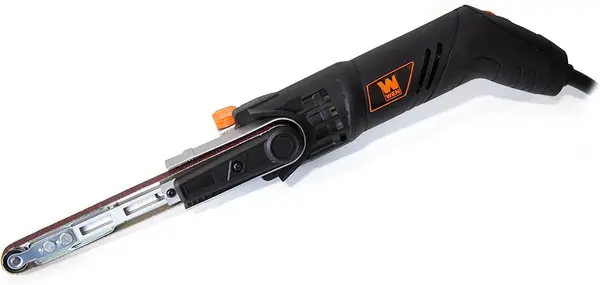
A half-inch belt sounds like a compromise until you need to sand inside a mortise or between balusters. The WEN 6307 is our top pick because that narrow 1/2-by-18-inch belt pivots up to 55 degrees, so you can put abrasive on the wall of a slot or the inside curve of a cutout instead of just near it. The 2-amp motor and the 1,080-to-1,800-feet-per-minute variable speed dial give us enough control to shape a curved rail or clean up a joint without hogging material. We also appreciate the auto-tracking belt system, which keeps the belt centered without constant adjustment.
What surprised us is how manageable the tool feels at 2.4 pounds. You hold it more like a file than a palm sander, and that is the point: the narrow contact patch lets you see exactly where the abrasive is cutting. Tool-free belt changes make it quick to move from 80 grit for shaping to 180 for cleanup, and the 55-degree pivot matches angled contours. The trade-off is coverage. On a broad panel, a half-inch belt is slow, so keep a larger sander for the flat field and save this one for the details.
The dust port is a simple connection rather than a sealed canister, and adding a shop vac makes a noticeable difference. The three included belts get you started, but we keep a small range of grits on hand because the belt is the consumable that decides how clean the cut looks. For joinery, curved cuts, and any spot where a triangular pad bottoms out, this is the sander we reach for first.
What We Like
- Narrow pivoting belt reaches slots and curves
- Variable speed keeps aggressive cuts controllable
- Tool-free belt changes speed up grit swaps
Worth Noting
- Grip can feel tippy on long passes
- Belts can fail at the splice
We recommend the WEN 6307 when your detail work runs to slots, slats, and curved edges, where its narrow pivoting belt reaches what a pad sander cannot.
Check Latest Price