Gohelper Chisel Sharpening Jig Best Overall
- Material
- Anodized aluminum and stainless steel
- Included Components
- Guide, angle gauge, angle fixture, instructions
- Angle Range
- 10° to 45°
- Chisel Width Range
- 0.1 to 2.8 in
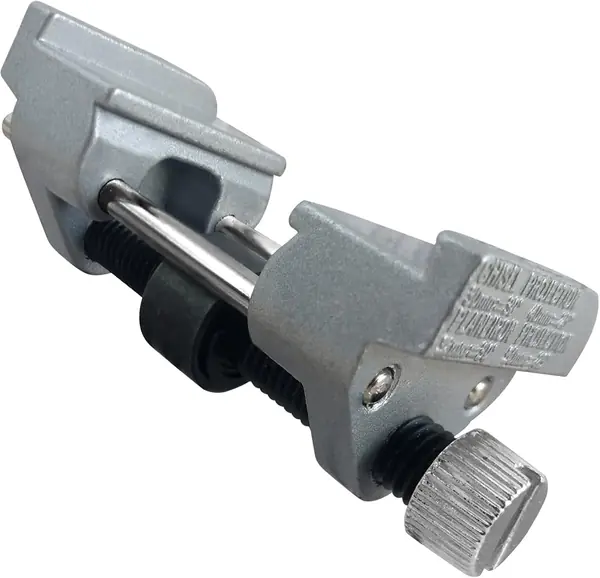
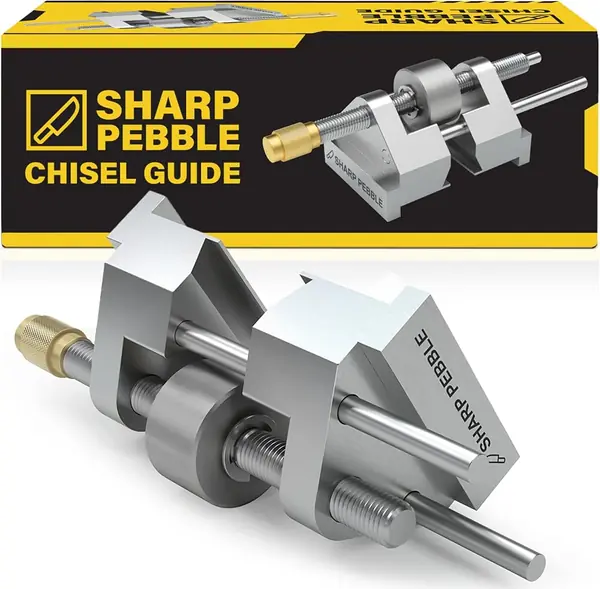
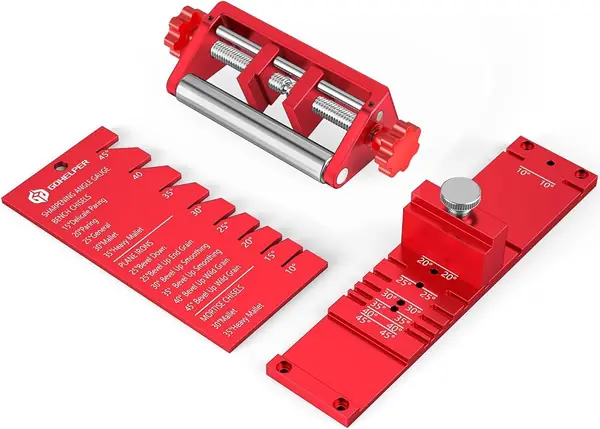
Two extra pieces in the box are why this jig sits at the top of our list: an angle gauge and a slotted fixture with a positioning block. Read the bevel angle off the gauge, lock the block at that angle, drop the guide into the slot, and the blade lands at the same projection every time. That deletes the step most of us get wrong, which is eyeballing how far the chisel sticks out of the jaws. The jaws open from 0.1 to 2.8 inches, the widest range here, so a 1/8-inch chisel and a broad plane iron use the same tool.
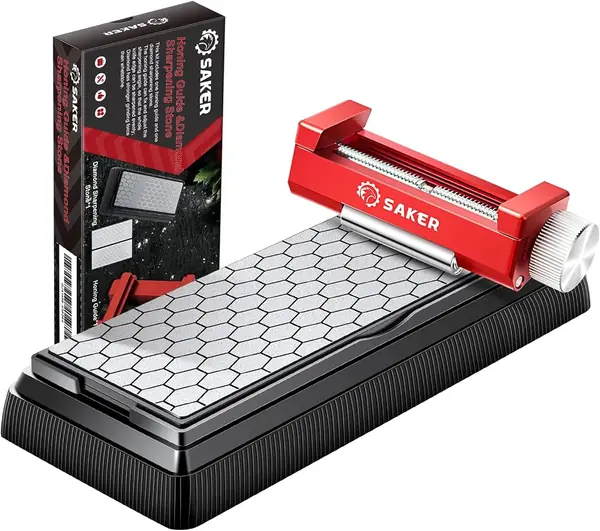
The long roller is the other thing we appreciated. A wide bearing spreads the load and keeps the guide from rocking on a diamond plate or a sheet of wet-or-dry paper, which is exactly where a narrow roller wanders and rounds over a bevel. The first setup takes a couple of minutes with the included instructions; after that it is a thirty-second job. This is the guide-only version, and it is also sold bundled with one or two stones if you do not own any.
One habit worth forming: seat the blade against the jaws and sight down the edge before you tighten. A chisel clamped in a hurry can sit a degree or so off square, and you will only find out later, as a bevel that is wider on one corner than the other. It costs a few seconds and saves the edge.
What We Like
- Angle fixture and gauge make setup repeatable
- Widest tool capacity here at 0.1 to 2.8 inches
- Wide roller bearing stays steady on diamond plates
Worth Noting
- Small plastic knobs are awkward to tighten
We recommend it as the default for most shops: the angle fixture takes the guesswork out of setup, and the jaws span 0.1 to 2.8 inches.
Check Latest Price