↑↓ navigate ↵ open Esc close All results →

Best Oil for Sharpening Stones of 2026

Grabbing whatever household bottle sits under the sink is a fast way to gum up an oilstone or ruin a waterstone altogether. Honing fluid has two specific jobs on the bench: lifting fine steel swarf clear so the abrasive keeps cutting, and leaving a light film that wards off rust between sharpening sessions — provided the chemistry matches the stone.

Sixteen bottles ran across six months of bench sharpening to see which formulas stay wet long enough to float metal particles away, keep carbon steel free of corrosion, and remain food-safe on kitchen blades. Viscosity stability mattered more than expected, because an oil that flows like syrup in a cold winter garage and thins out in July makes the same stone feel unpredictable across seasons.

Matched cleanly to kitchen knives, traditional oilstones, diamond plates, and guided sharpeners, the six fluids ahead pair each abrasive with the lubrication it was formulated to take.

Our Top Picks

The Best Oil for Sharpening Stones

1.

UniKitchen Knife & Honing Oil Best Overall
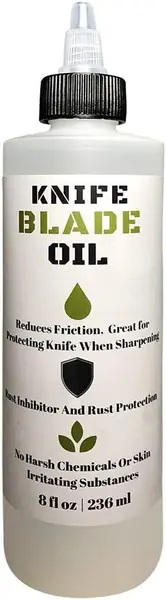
UniKitchen 8-ounce knife and honing oil bottle with clear food-safe oil

Kitchen and shop

Shop Score 95/100
Volume
8 fl oz
Stone Compatibility
Oil stones, Arkansas/India stones, diamond plates
Food Safety
USP food-grade
Dispensing
Precision twist-cap tip
View on Amazon

A food-safe sharpening oil that also works on diamond plates is a rarity, and that combination put UniKitchen at the top of this list. The 8-ounce bottle is clear, odorless, and thin enough to spread across an oil stone without turning the surface into a slippery puddle. The twist-cap tip lets us place a few drops exactly where the blade meets the stone, which matters more than it sounds when you're touching up a chisel on a crowded bench.

On an India stone, the oil carried dark swarf away from the surface and kept the abrasive cutting instead of loading up. We also used it on a diamond plate, where the lighter film was easy to control and didn't leave a sticky residue. The food-grade formula is the reason it earns a place in a kitchen drawer as well as a shop cabinet: it's odorless and tasteless, and a thin coat on a carbon-steel blade after sharpening helps keep rust from getting a foothold.

The 8-ounce size is generous for something applied a few drops at a time, and the precision tip keeps us from over-oiling. It's not a heavy oil, so we use it sparingly and re-wet the stone if it starts to dry. That's a small habit, not a hassle, and it leaves the stone clean enough to wipe down instead of scrub.

What makes it our default is the range: oil stones, Arkansas and India stones, diamond plates, and guided systems, all from one food-safe bottle. When we're sharpening kitchen knives and woodworking tools in the same session, this is the bottle we reach for first.

Worth Noting

  • Light oil requires re-wetting if the stone starts drying
Our Verdict

We recommend UniKitchen as the default for anyone who sharpens kitchen knives and shop tools on oil stones or diamond plates; the food-safe formula and precise tip make it easy to use well.

Check Latest Price
2.

Norton Sharpening Stone Oil Best for Oil Stones

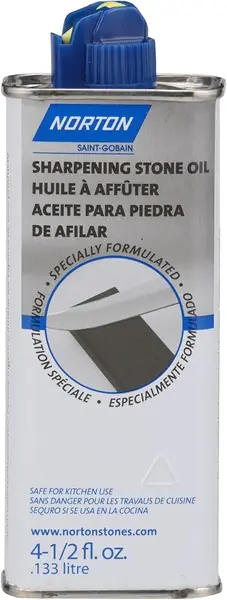
Norton 4.5-ounce sharpening stone oil can with mineral oil

Oil stones

Shop Score 94/100
Volume
4.5 oz
Stone Compatibility
Oil stones only
Base
Mineral oil
Purity
USP mineral oil
View on Amazon

Norton's 4.5-ounce can is the most purpose-built oilstone oil here: a highly refined mineral oil with enough body to stay on an India or Arkansas stone and flush abrasive and metal chips away instead of letting them bond to the surface. The snug lid and compact can feel workmanlike, and the oil meets U.S. Pharmacopeia mineral oil purity standards, a useful reassurance for a fluid that lives on the bench for years.

We like it best on slower, porous oil stones. A few drops spread into a slick film that doesn't run off the edge, and the stone keeps cutting instead of glazing over. The oil is light enough that it doesn't turn into a cleanup project, but it has more body than the watery sharpening solutions we've tried. If you sharpen chisels and plane irons on an India combination stone, this is the one we reach for.

It's a simple product done well: one can, one job, no scent or dye to speak of. We keep it with our oil stones and reach for it when we want a predictable film and a clean-cutting stone. That's not a glamorous purchase, but it's the kind we stop thinking about, which is the point.

Worth Noting

  • Limited to oil stones and oil-stone systems
Our Verdict

For India and Arkansas oil stones, Norton is the bottle we trust: a refined mineral oil that stays put, flushes swarf, and keeps the stone from loading.

Check Latest Price
3.

Smith's Honing Solution Best for Mixed Stone Collections

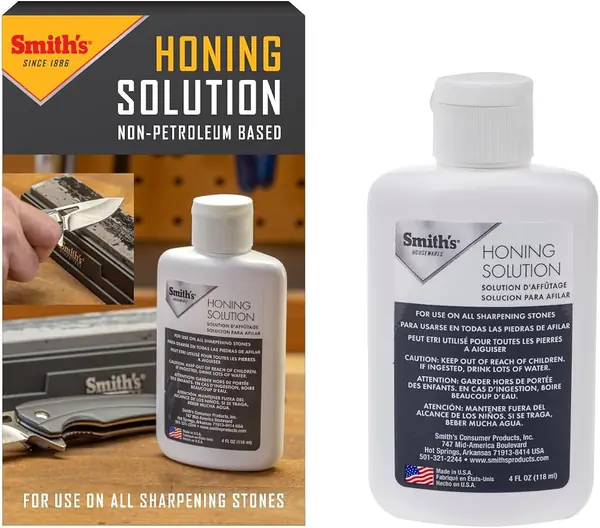
Smith's HON1 4-ounce honing solution bottle with flip-top cap

Mixed stone collections

Shop Score 93/100
Volume
4 oz
Stone Compatibility
All sharpening stones
Base
Non-petroleum
Additives
Cleaning agents and rust inhibitors
View on Amazon

Smith's is the pick for a mixed drawer of stones: the 4-ounce bottle is non-petroleum-based and labeled for all sharpening stones, with built-in cleaning agents and rust inhibitors. The flip-top cap is easy to use one-handed, and the fluid is meant to keep metal chips from bonding to the surface. That's the job on an Arkansas stone, where a dry pass can clog the pores and ruin the cut.

On a diamond plate, we appreciated that the solution didn't leave a heavy film, and the rust inhibitor is a real plus for carbon-steel blades that sit between sessions. The 4-ounce bottle is small enough to tuck in a toolbox, and a little goes a long way. We do keep the stone wet and use the solution sparingly, because the formula is on the thin side. It rinses off hands and tools without a greasy fight, which we didn't expect from a sharpening oil. For a shop that runs oil stones, diamond plates, and the occasional kitchen knife, it's a flexible second bottle to have.

Worth Noting

  • Thin formula needs occasional re-wetting to keep stones wet
Our Verdict

Smith's earns a spot for mixed stone collections: it's non-petroleum, labeled for all stones, and adds rust protection for carbon-steel tools.

Check Latest Price
4.

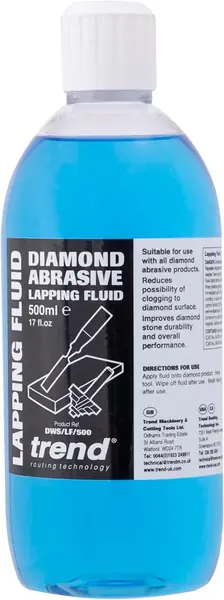
Trend Diamond Lapping Fluid Best for Diamond Plates

Trend 17-fluid-ounce diamond lapping fluid bottle for sharpening stones

Diamond plates

Shop Score 92/100
Volume
17 fl oz
Stone Compatibility
Diamond stones and lapping plates
Base
Petroleum-based
Formulation
Lightweight fluid
View on Amazon

Trend's lapping fluid is the specialist here: a lightweight petroleum fluid made for diamond abrasives and lapping plates, not a general honing oil for Arkansas stones. We think it earns its keep if diamond plates are your main sharpening surface. A few drops spread into a thin film that lets the tool glide without skating, and the plate stays clear instead of loading with metal.

On a diamond card, the difference is subtle but real. The fluid is thin enough to work into the nickel surface and carry swarf away, and it leaves less rust risk than water, which matters because the nickel bonding is porous. We used only a few drops at a time; a little goes a long way, and the 17-ounce bottle will outlast a lot of small dropper bottles.

It's not the bottle for someone who splits time between oil stones and diamond plates—that's a job for a broader oil. But for a woodworker who sharpens chisels and plane irons on diamond plates, it's the most purpose-matched fluid in this group. We keep it with the diamond stones and don't loan it out.

Worth Noting

  • Premium price for a specialist fluid
Our Verdict

If your sharpening lives on diamond plates, Trend's lapping fluid is the one we choose: it keeps the surface clear and cuts rust risk without the mess of water.

Check Latest Price
5.

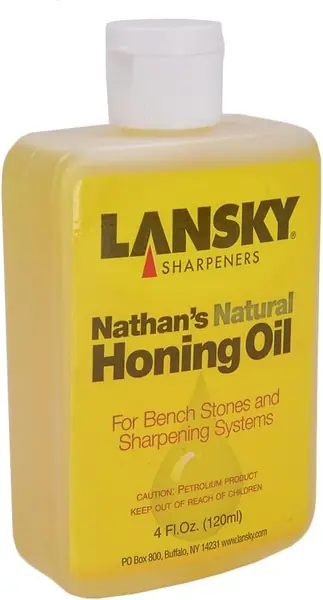
Lansky Nathan's Honing Oil Best for Guided Systems

Lansky Nathan's Natural Honing Oil 4-fluid-ounce bottle with yellow label

Guided sharpening

Shop Score 91/100
Volume
4 fl oz
Stone Compatibility
Bench stones and sharpening systems
Base
Petroleum product
View on Amazon

Lansky's oil is the one that lives with a guided sharpening system: the 4-fluid-ounce bottle is blended for Lansky stones and hones, and it works just as well on a natural Arkansas benchstone. The flip cap is easy to open with oily hands, the yellow tint makes it easy to see where you've oiled, and the oil has enough viscosity to stay on the stone without turning into a syrupy mess.

We used it on a Norton tri-stone and on an axe puck, and it did the quiet work you want: it kept the surface slick, carried away the dark slurry, and let the abrasive cut instead of skate. A little goes a long way; the bottle is small enough to keep in a sharpening kit and still lasts through a season of touch-ups. The oil has a slight petroleum smell, which is worth knowing if you're sensitive to it.

We keep it with the guided system and the axe kit, where its job is simple and repeatable. The bottle is small, the cap is secure, and the oil does what a honing oil should: it makes the stone feel sharper and the edge come up faster. It's not fancy, but it's the bottle we reach for when we don't want to think about the oil and just want to sharpen.

Worth Noting

  • Not marketed as food-safe
Our Verdict

For Lansky-style guided systems and Arkansas benchstones, we reach for Lansky's honing oil: it stays put, cleans the stone, and makes the edge come up faster.

Check Latest Price
6.

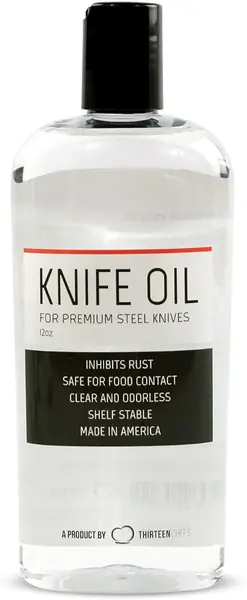
Thirteen Chefs Knife & Honing Oil

Thirteen Chefs 12-ounce knife and honing oil bottle with food-safe label

Kitchen knife care

Shop Score 90/100
Volume
12 oz
Food Safety
Food-safe certified
Odor
Odorless and tasteless
Blade Protection
Carbon steel and Damascus
View on Amazon

Thirteen Chefs' 12-ounce bottle is the kitchen-first option: a food-safe, odorless, tasteless sharpening oil that's meant for sharpening stones and for wiping down carbon-steel blades afterward. The larger bottle makes sense if you sharpen often or keep a stone in a busy kitchen. The oil is thin enough to spread evenly without leaving a gummy film, and it doesn't carry a scent that lingers on the blade. The bottle is simple, but the oil is the point.

We used it on an oil stone and a diamond plate, and it kept the surface wet without hiding the feedback from the edge. The oil lifted metal dust away and wiped off the blade cleanly, which is the practical test for a kitchen oil. It also left a thin protective coat on a carbon-steel knife without a sticky residue. Cleanup was a rag and a quick rinse, not a scrub.

What we like most is the combination of a food-safe formula and a bottle that doesn't feel precious. The 12-ounce size is more than most home sharpeners need, but it leaves plenty for blade care between sessions. We keep it in the kitchen drawer, not the shop cabinet. For a cook who wants one bottle for the stone and the knife block, that's a useful simplification.

Worth Noting

  • 12-ounce bottle exceeds what most home sharpeners need
Our Verdict

Thirteen Chefs is a good fit for a kitchen that sharpens often: the food-safe oil is odorless, cleans up easily, and leaves a protective film on carbon steel.

Check Latest Price

How We Tested Sharpening Oils

We started by reading what stone makers say about their own abrasives, then built a shortlist covering the bases shoppers actually weigh: mineral oil, petroleum-based honing oil, non-petroleum formulas with cleaning and rust additives, and thin fluids built for diamond plates. Food-safety claims, bottle size, and how the cap dispensed narrowed it to 16 bottles, which we used for six months.

Most of the testing happened where sharpening happens — the kitchen counter after the dinner dishes, a garage bench with chisels and an axe, and a guided system clamped to the edge of a worktable. Each fluid went onto oil stones, Arkansas and India stones, and diamond plates; we kept waterstones out of it entirely and followed their makers' water-only instructions.

We timed how long a film stayed wet through a ten-minute session, counted strokes before swarf clouded the surface, and wiped the stone afterward to see whether metal lifted cleanly or smeared into the pores. Bottles sat in both a warm kitchen and a cold garage so we could tell whether a fluid thickened, separated, or poured the same from one session to the next.

Rust got its own round: we coated carbon steel blades and left them a week, then checked for freckling. We smelled every oil, washed and dried a knife, and sliced an apple to see if anything carried over, since a food-safe claim means little if the taste lingers. We also tracked how many drops each cap delivered and how much a single session used, which is where value per use really shows up — a large bottle with a wasteful pour can cost more per sharpening than a small one with a controlled tip. Petroleum-based bottles were stored on a high shelf, well out of reach of kids.

How to Choose Oil for Sharpening Stones

Match the Fluid to the Stone

The first decision is the stone, not the bottle. Oil stones, including India and Arkansas stones, need a lubricant to lift metal and abrasive particles; a dry Arkansas stone can clog and stop cutting. Diamond plates can run dry, but a dedicated lapping fluid keeps the surface clear and reduces rust on the porous nickel bonding. Waterstones are the exception: use water, not oil, because oil can seal the stone and change how it cuts.

We keep a dedicated oilstone oil for India and Arkansas stones, a lighter diamond fluid for plates, and a food-safe oil for kitchen stones. If you want one bottle for a mixed collection, UniKitchen covers oil stones and diamond plates, while Norton is the oilstone specialist. Check the maker's compatibility list before you commit to a bottle that has to serve more than one kind of stone.

Viscosity: Thin Enough to Cut, Thick Enough to Stay

A sharpening oil has to do two contradictory things: flow into the stone's surface and stay there long enough to lift swarf. Too thin and it beads or runs off; too thick and the blade skates instead of making contact. We look for an oil that spreads into a visible film without pooling, and we apply it a few drops at a time, re-wetting if the stone starts to dry.

Thin formulas are not automatically bad—Smith's needs a wet stone and a light hand—but they demand more attention. A slightly heavier mineral oil like Norton's is more forgiving on a porous India stone. If you sharpen on a small bench stone, a precision tip is worth having because it keeps the oil where the edge meets the stone.

Cleaning, Clogging, and Rust Protection

The useful work happens below the edge: oil floats metal dust and spent abrasive away so the stone keeps cutting. On a diamond plate, rust is the other concern, because the nickel bonding is porous and water can start corrosion. A fluid with rust inhibitors or a dedicated diamond lapping fluid earns its place here, especially if the plate lives in a humid shop.

Food-safe oils add another layer of protection for kitchen knives, but they are not a substitute for drying the blade. We wipe the stone clean after each session and put a thin coat on carbon steel before it goes back in the block. That routine keeps both the stone and the knife working longer.

Food Safety and Shop Safety

If the stone sharpens kitchen knives, choose a food-safe oil. UniKitchen and Thirteen Chefs are both food-grade and odorless, which matters when the blade goes straight back to prep. For chisels, axes, and shop tools, a petroleum honing oil like Lansky's is fine, but keep it out of reach of children and away from food surfaces.

Don't substitute motor oil, WD-40, or scented baby oil. They can be too thick, leave a lingering odor, or contain additives you don't want on a knife. A dedicated honing oil is smart insurance for the stone and the edge.

Bottle Size and Dispensing

Most sharpening oils are used a few drops at a time, so a 4-ounce bottle can last a long time. Larger bottles make sense for a busy kitchen or a shop that sharpens often, but they take up more bench space. A flip cap is convenient for a shop; a precision twist tip is better for controlled drops on a small stone.

We prefer a bottle that lets us place oil exactly where we need it and close securely. If you sharpen in more than one place, buy a small bottle for the kit and keep the big one at the bench.

Frequently Asked Questions

Final Verdict

UniKitchen is the bottle we recommend first because it covers the most ground: oil stones, Arkansas and India stones, diamond plates, and kitchen blades, all with a food-safe formula and a tip that keeps application tidy. If your sharpening is built around India or Arkansas oil stones, Norton is the more purpose-built choice and the one we keep on the oilstone shelf. Diamond-plate sharpeners should go straight to Trend.