↑↓ navigate ↵ open Esc close All results →

Best Pocket Sharpening Stones for Knives and Tools of 2026

Grit numbers printed on a package rarely tell you whether a pocket sharpener will actually leave your jacket or tool pouch when a blade starts crushing tomatoes or fraying rope. Dependable carry stones stay anchored under finger pressure, offer enough abrasive surface to sweep an edge without barking a knuckle, and slip back into a protective sleeve that keeps loose grit out of your pocket.

Sharpening kitchen knives, fish hooks, garden pruners, and a mower blade over five months with 16 compact stones underscored how much abrasive chemistry shapes field maintenance. Diamond plates cut quickly into hard stainless steels, ceramics bridge touch-ups cleanly, and natural Arkansas novaculite refines edges more slowly to a finer polish.

Because compact dimensions always involve trade-offs against full bench stones, the eight options ranked here match different carry styles while holding flat and steady in hand.

Our Top Picks

The Best Pocket Sharpening Stones for Knives and Tools

1.

Fallkniven DC4 Best Overall
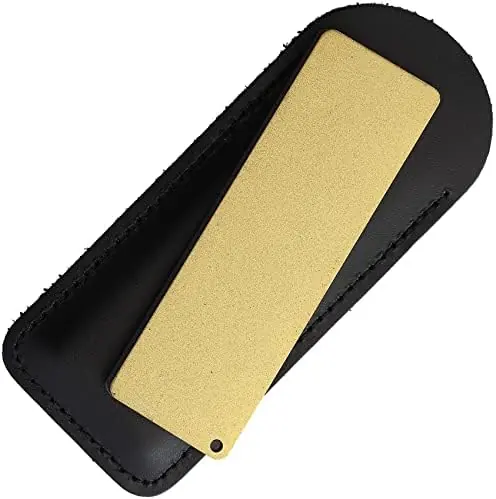
Fallkniven DC4 diamond and ceramic whetstone with gold and gray faces

Pocket carry

Shop Score 96/100
Weight
0.32 oz
Dimensions
3.94 x 1.26 x 0.35 in
Sheath
Leather
Abrasive
Diamond and ceramic
View on Amazon

At 0.32 ounces, the DC4 disappears into a shirt pocket, and the leather sheath lets it ride there without nicking a phone or a headlamp. The stone is a 3.94-inch strip with diamond on one face and ceramic on the other, so you get a fast-cutting side for a dull edge and a finer side for the finish. The 1.26-inch width feels at home on a pocketknife or a small hatchet.

We reach for the DC4 first when we are heading out with a pocketknife, because it covers real edge repair without asking for a pack slot. The diamond side raises a burr quickly, the ceramic side cleans that burr up, and the leather sheath can be used as a strop when we want a little more polish. On a hard stainless blade, the diamond side keeps cutting, and the fine side is easy to control on a small bevel. That combination is why it is our top pick rather than just another small stone.

The 181N is the pick for a tool roll and the DiaFold is the pick for a drawer; the DC4 is the pick for a jacket pocket. We have not found another stone here that balances those jobs as neatly, and it is the one we check for before a hike. That is a small thing until you are five miles from the truck.

Worth Noting

  • Small face takes extra passes on long blades
Our Verdict

We pick the DC4 for anyone who wants a real sharpening stone in a pocket; it is light, versatile, and protected by its sheath.

Check Latest Price
2.

SHARPAL 181N Best for Pack and Field Tools

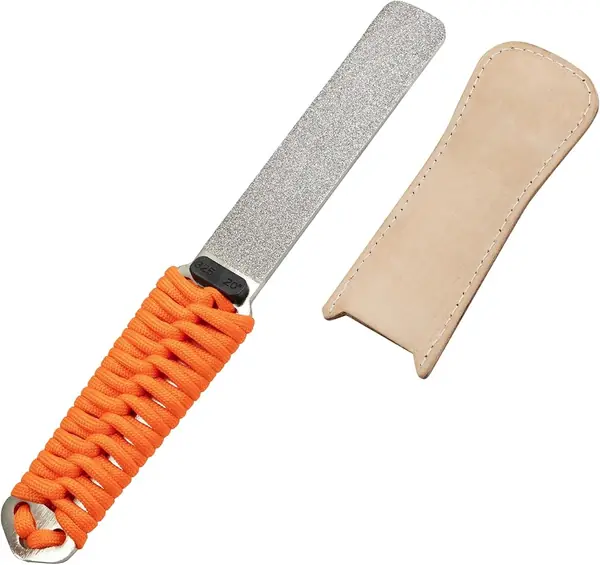
SHARPAL 181N diamond stone file with silver plate and paracord handle

Field tool kits

Shop Score 95/100
Weight
5.64 oz
Grits
325 / 1200
Dimensions
8.66 x 1.65 x 0.59 in
Handle
Paracord with leather strop
View on Amazon

The 8.66-inch length tells you what the 181N is for: it is a pack stone, not a pants-pocket stone. We keep it in a tool roll or the lid pocket of a pack, where the 5.64 ounces barely register, and we are glad to have the extra surface when an axe or a pair of shears needs work. The paracord handle gives a full-hand grip, and the leather sheath protects the diamond plate in transit.

One side is 325 grit for resetting an edge; the other is 1200 grit for honing. The diamond cuts fast on hard steel, and the long narrow face lets you stroke a mower blade or a hatchet without stopping every inch. The leather sheath can serve as a strop, and the paracord can be unwound in an emergency, though we treat that as a bonus rather than a reason to buy. The handle is long enough to wrap a hand around, which matters when you are bearing down on a mower blade.

This is the stone we choose for garden tools and camp axes, not for a suit pocket. The DC4 is easier to carry; the 181N is easier to use on long edges. If your sharpening happens at the tailgate or in the shed, the size is an advantage, not a burden.

Worth Noting

  • Extra-fine diamond may wear with heavy use
Our Verdict

We reach for the 181N when the tools are axes, shears, and camp knives, because its long surface and strop make pack carry worthwhile.

Check Latest Price
3.

Smith's DCS4 Best for Hooks and Small Tools

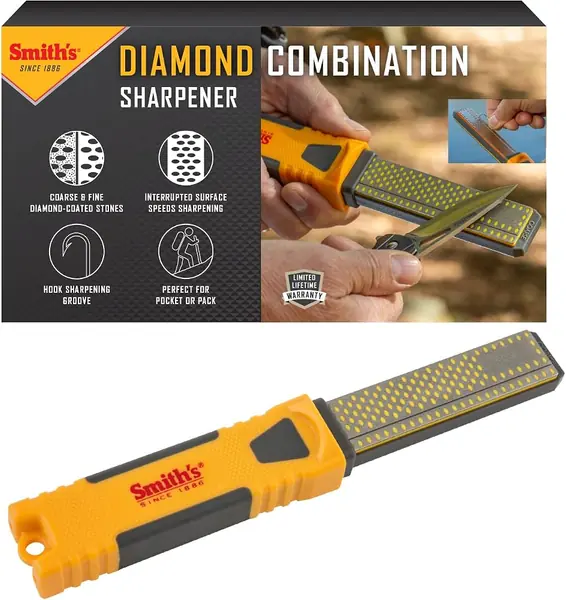
Smith's DCS4 yellow handled diamond sharpener with coarse and fine stone

Fish hooks

Shop Score 94/100
Grits
Coarse and fine
Handle
Rubber grip storage handle
Stone Length
4 in
Overall Dimensions
9 x 2 x 1 in
View on Amazon

The DCS4 hides its 4-inch stone inside the handle, so the whole thing closes into a package that can live in a tackle box or a glove compartment. The rubber grip gives you something to hold while the stone is exposed, and the color-coded coarse and fine faces are easy to tell apart when your hands are cold or wet. The stone locks into the handle for use, then pulls out and goes back in for storage.

We found the micro-sharpening pad and groove useful for fish hooks and pointed tools, the kind of small edge that a flat stone tends to miss. The interrupted surface also gives metal filings somewhere to go, which keeps the stone cutting instead of loading up. For a quick touch-up on a pocketknife or a pair of scissors, the coarse side does most of the work and the fine side finishes.

We like the DCS4 as a leave-in-the-truck sharpener because the handle protects the stone and the whole package is easy to grab. It is not as compact as the DMT cards when closed, but it gives you a more comfortable grip and a bigger surface for hooks and small tools. That makes it a better fit for an angler or a camper than for someone who wants the thinnest possible kit.

Worth Noting

  • Fine diamond can wear under steady use
Our Verdict

We like the DCS4 for anglers and campers because the handle protects the stone and the micro pad reaches hooks and points.

Check Latest Price
4.

DMT DiaFold Best Folding Stone

DMT DiaFold folding diamond stone with gray red and blue handles

Toolbox and kitchen

Shop Score 93/100
Weight
2.65 oz
Grits
600 / 325 mesh
Handle
Folding
Surface
4 x 1 in
View on Amazon

The DiaFold solves the awkward part of sharpening on a small stone: where to put your fingers. The handles fold out to give you a clear grip on both ends, then fold back around the diamond plates when the work is done. The 4-inch surface is long enough for a kitchen knife but short enough to pack.

One side is coarse 325 mesh and the other is fine 600 mesh, so it handles a dull edge and a finish without a third stone. The diamond cuts quickly, and we appreciate that it runs dry. The folding handle also gives you a little clearance over a counter or a tailgate, which is more comfortable than pinching a bare card.

In the kitchen, we keep it in a drawer for quick touch-ups; in the workshop, it goes into a tool bag. It is not a replacement for a bench stone when you are reprofiling a chisel, but it is a good compromise for someone who wants one portable stone for knives and small tools.

We recommend the DiaFold to anyone who wants a folding stone rather than a card or a sheath stone. It is heavier than the credit-card sets, but the handles make it easier to use for more than a few seconds. That is the trade we make for a stone that lives in a drawer and comes out often.

Worth Noting

  • Folding handle feels less solid than a bench stone
Our Verdict

The DiaFold is our choice for a stone that stays in a drawer or toolbox; it opens fast and protects its surface when closed.

Check Latest Price
5.

Dan's Arkansas Stone Best Natural Stone

Dan's three-inch Arkansas whetstone with natural stone color and leather pouch

Woodworking tools

Shop Score 92/100
Weight
2.12 oz
Dimensions
3 x 1 x 0.25 in
Grit
Soft Arkansas medium
Case
Leather pouch
View on Amazon

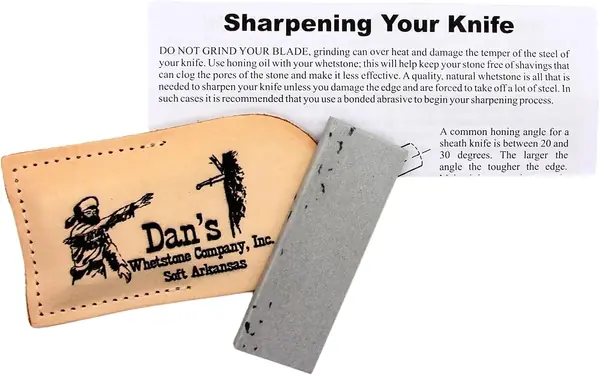
A natural Arkansas stone has a different feel from a diamond plate, and the Dan's 3-inch pocket stone is a good way to find out whether you like it. The soft Arkansas grade is a medium grit, fine enough to leave a smooth edge but still able to maintain a working knife. It arrives in a leather pouch that keeps the stone from rattling around in a pocket.

We like it for woodworking tools and pocketknives that only need maintenance. The novaculite cuts with less bite than diamond, so you can feel what the edge is doing and stop before you overdo it. The 3-inch length is small enough to carry but long enough to make a controlled stroke on a 3- to 4-inch blade.

This is the stone for someone who enjoys the ritual of a natural stone and does not mind a little more time at the job. The SHARPAL cards are faster to deploy and the DC4 is more versatile on hard steel, but the Dan's stone is the one that feels traditional in the hand. A few passes on each side are usually enough to bring back a working edge, and the feedback is gentle enough to learn on.

Worth Noting

  • One medium grit cannot reset a damaged edge
Our Verdict

We recommend the Dan's stone to anyone who prefers a natural whetstone for maintaining pocketknives and woodworking tools.

Check Latest Price
6.

SHARPAL 116N Set Best Ultra-Thin Grit Set

SHARPAL 116N three diamond sharpening cards with gray surfaces and sleeves

Thin EDC kits

Shop Score 91/100
Weight
6.72 oz
Grits
325 / 600 / 1200
Storage
Pouch
Card Dimensions
3.27 x 2.13 x 0.14 in
View on Amazon

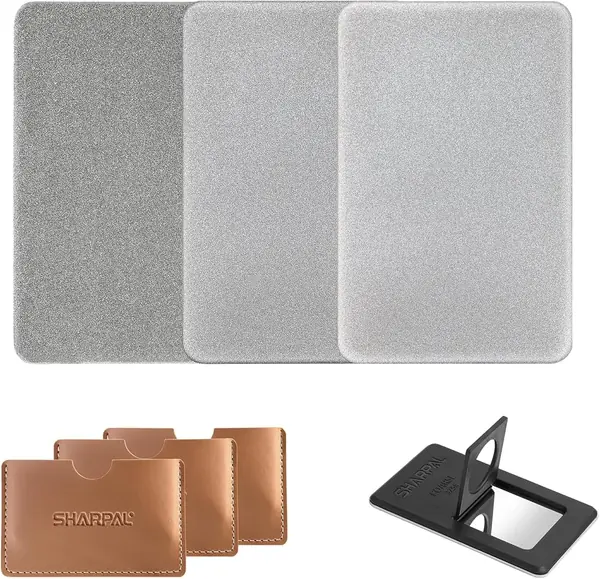
Three cards, three grits, and three little sleeves: the 116N set is the most packable way to get a full progression from coarse repair to a fine finish. Each card is 3.27 by 2.13 inches and about an eighth of an inch thick, so the set can slide into a pouch or a cargo pocket without taking up the space of a handled stone.

We used the 325-grit card to bring back a dull camp knife, then moved to the 600 and 1200 cards for the finish. The diamond cuts fast and runs dry, and the color coding makes it easy to grab the right grit without reading a label. The ring grip is a nice touch when your hands are slick.

We recommend this set to someone building a small field kit or a woodcarving roll, where three separate cards make more sense than one thick stone. It is not as comfortable to hold as the DiaFold or the 181N, but the thin profile is the point. If you want one stone that disappears into a pocket, the DC4 is simpler; if you want options, this is the set.

Worth Noting

  • Three separate cards can be easy to misplace
Our Verdict

When you want a full grit progression in a flat package, the 116N set is the one we tuck into a pack.

Check Latest Price
7.

DMT Dia-Sharp Cards

DMT Dia-Sharp three credit-card diamond stones with grit-coded cases

Wallet carry

Shop Score 90/100
Grits
325 / 600 / 1200
Dimensions
3.25 x 2 x 0.05 in
Set
Three cards
Carry
Vinyl cases
View on Amazon

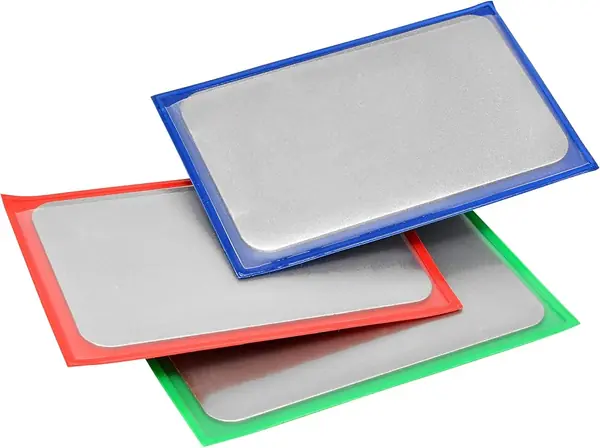
The DMT credit-card set is the stone we hand to someone who says they will never carry a stone. At 3.25 by 2 inches and about a twentieth of an inch thick, each card slips into a wallet or a small pouch, and the three grits cover more than the size suggests. We keep the coarse card for a dull work knife and the fine card for touch-ups.

The diamond surface cuts fast and needs no oil or water, and the vinyl sleeve keeps the grit side from scratching whatever it shares a pocket with. The cards are flexible enough to follow a slight curve, but they are not comfortable to hold for long strokes; you are mostly making short passes with fingertips. The sleeves are labeled, which saves fumbling when you are crouched over a pack.

The DiaFold is easier to hold and the DC4 is more versatile on a hard edge, but neither is as easy to keep in a wallet. We have used the coarse card on a dull work knife and the fine card on a pocketknife in the same sitting, and the size never became the annoyance we expected. For occasional touch-ups and a tiny footprint, the cards earn their place.

Worth Noting

  • Very little surface for large knives
Our Verdict

We keep the DMT cards for wallet carry and light touch-ups, not for replacing a full stone.

Check Latest Price
8.

Wazoo Viking Whetstone

Wazoo Viking whetstone pendant with natural stone and leather cord

Wearable EDC

Shop Score 89/100
Weight
0.64 oz
Dimensions
2 x 1 x 0.25 in
Grit
Medium 600-800
Material
Arkansas novaculite
View on Amazon

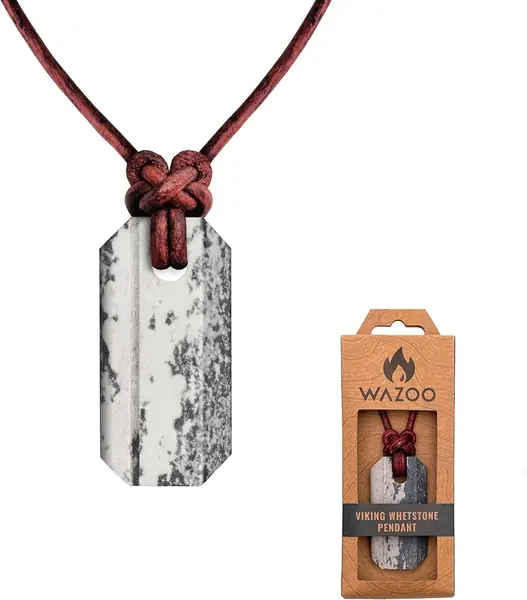
The Wazoo is a sharpening stone in necklace form: a 2-inch piece of Arkansas novaculite on a leather cord, with four facets cut into the stone. It is 0.64 ounces, so it disappears under a shirt, and it is the only pick here that can be with you without occupying a pocket.

The medium 600-800 grit is a finishing stone, not a coarse repair tool. We found the facets useful for fish hooks and serrated edges, where a flat card can be awkward, and the natural stone leaves a polished edge on a pocketknife. The leather cord is thick and comfortable, and the adjustable clasp makes it easy to size.

This is not the stone we take when a machete needs a new bevel; the 181N or the DiaFold is better for that work. It is also a piece of jewelry, and it looks like one, which is why some people will wear it every day and others will leave it in a drawer.

We see the Wazoo as a wearable backup, not a primary sharpener. If you already carry a knife and want a stone that is always on you, the necklace format is genuinely useful. If you need to remove a lot of steel or you want the most stone for the space, choose a pack stone instead.

Worth Noting

  • Premium price for a small stone
  • Leather cord may wear with daily use
Our Verdict

We see the Wazoo as a wearable backup sharpener; it is clever and good-looking, but it will not replace a pack stone.

Check Latest Price

How We Tested Pocket Sharpening Stones

We built the shortlist from specs and customer reviews, pulling in anything small enough to ride in a pocket, a wallet, or a tool pouch, then narrowed by carry size, grit range, abrasive type, and price, weighing what each stone cost against how much usable abrasive surface you actually get. We deliberately kept diamond, ceramic, and natural novaculite in the mix so the comparison wasn't all one material. Sixteen stones went into testing, from wallet-thin cards to a handled file with a paracord wrap.

For five months these lived where stones actually live: a kitchen counter on weeknights, a toolbox, a jacket pocket on a camping and fishing trip, and a workbench where we touched up pruners, a fish hook, and a mower blade. We weighed each one on a kitchen scale and measured the abrasive surface, because a stone too small to finish a stroke gets left behind. Then we held each the way a buyer would, thumb on one end and fingers behind the edge, and noted whether there was room to complete a pass without the heel of the hand dragging.

Sharpening performance got the most attention. We dulled a batch of kitchen knives to the same starting point, then counted passes until each sliced paper cleanly and cut a ripe tomato without crushing it, running the same sequence on a hard stainless blade and a high-carbon one to see which abrasives cut quickly and which glazed and slowed.

We tested grip on a dry cutting board and a damp one, counting strokes before a stone shifted. Between sessions every stone went back into its sheath or pouch, and we checked diamond plates for bald patches, paracord wraps for loosening, and folding hinges for play. We also rinsed and dried each one to see which wanted water and which wanted oil.

How to Choose a Pocket Sharpening Stone

Start with carry size, not grit count

A stone that stays home is not doing its job. Measure the actual stone, not the sheath, and picture where it will live: a 3- to 4-inch stone like the Fallkniven DC4 or Dan's Arkansas drops into a pocket, while an 8.66-inch file like the SHARPAL 181N is a pack or tool-roll stone. Weight matters less than thickness and length, because a thin card disappears but a thick handle can print. Compact in a listing often means it fits a glove box, not a jeans pocket.

Choose a grit range for the edges you meet

Coarse grit repairs damage and fine grit refines. For a pocket stone, we prefer a coarse and fine pair because it covers more real-world work than a single fine stone, especially if you sharpen camp knives, pruners, or chisels that see abuse. A 325-grit diamond side is fast; 600 to 1200 grit finishes the edge. Three-card sets give you more steps, but two good grits are enough for most pocket carry. If you only maintain a sharp knife, a medium natural stone like Dan's soft Arkansas is pleasant and sufficient.

Pick a shape you can hold safely

Small stones are hard to hold, and that is where handles, finger grooves, and folding frames earn their keep. A bare card works on a stable table, but a handled stone or a folding DiaFold gives your fingers clearance in the field. Keep the edge moving away from your hand and use light pressure with diamond. The right shape is the one that lets you make controlled strokes without crowding your knuckles, even when the stone is only a few inches long.

Plan for wear and protection

Every stone needs a home. A leather pouch or vinyl sleeve keeps the abrasive from knocking against keys and keeps grit out of your pocket. Diamond cuts fast, but the fine side is usually the first to show wear, so do not lean on it for heavy repair. Natural Arkansas stones are harder to chip than ceramic but can still crack if dropped. Store the stone dry, wipe off metal filings, and replace it when the surface glazes or stops cutting.

Frequently Asked Questions

Final Verdict

The Fallkniven DC4 is our top pick because it is the rare stone that is both a genuine pocket carry and a capable sharpener. The diamond side handles a dull edge, the ceramic side finishes it, and the sheath keeps it ready without a pouch.

If your sharpening happens at camp or in a toolbox, the SHARPAL 181N is the better fit: its longer surface and leather strop make quicker work of axes, shears, and garden tools.