↑↓ navigate ↵ open Esc close All results →

Best Circular Saw Guides of 2026

Most woodworkers start breaking down sheet goods by clamping a factory edge of plywood across the panel and hoping it stays put. A dedicated saw guide replaces that guesswork with a straight reference edge and a built-in blade offset, so the cut lands directly on the layout line without wobbly rips or edges that need heavy sanding.

Eight months of testing 12 guides—from driveway plywood breakdowns to benchtop trim rips and sawhorse crosscuts—revealed flaws that never show up in product photos. How a guide locks onto the stock, whether via an integrated clamp edge or separate C-clamps, mattered more than total length, and multi-piece rails reaching 100 inches tend to lose straightness at the joint. Always check saw clearance first, since bulky plastic lower guards can hang up on a sled.

The best match depends on the saw already in the shop and the cuts you make most often, not simply the longest rail on the shelf.

Our Top Picks

The Best Circular Saw Guides

1.

Milescraft 1409 TrackSawGuide Best Overall
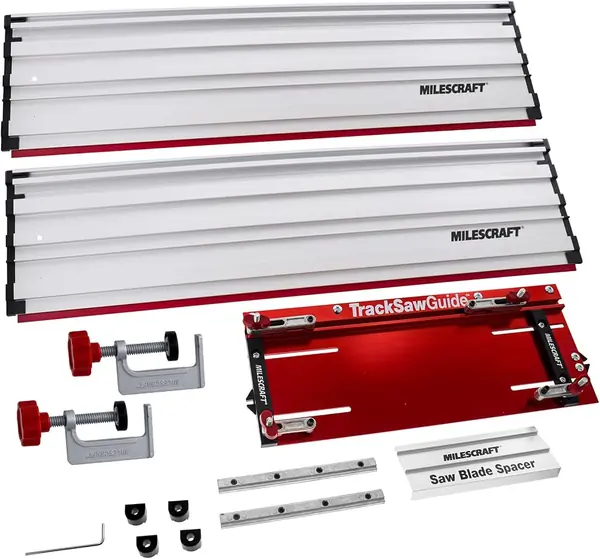
Milescraft 1409 TrackSawGuide aluminum track and sled system for circular saws

Plywood and trim

Shop Score 94/100
Construction
Aluminum base and rails with anti-friction pads
Max Cut Depth
Over 1-3/4 in.
Cutting Length
50 in., extendable with add-on GuideRail extensions
Saw Compatibility
Most circular saws with blades up to 7-1/4 in.
View on Amazon

Most guides give a circular saw an edge to slide against. This one gives it a track to follow: an aluminum sled clamps to the saw's base, and the saw then rides two aluminum rails on anti-friction pads. The difference shows up on the second cut. Once the sled is set, every pass on that track lands in the same place, and the red cutting strip supports the fibers so the edge doesn't splinter.

Fifty inches of rail covers a crosscut on a 4x8, and add-on GuideRail extensions take it out to full-sheet rips. The low profile lets the saw cut over 1-3/4 inches deep, which is enough for a standard interior door. Setup took a careful read of the instructions; aligning the side guide to the blade is the fussiest step, and it is worth doing on a scrap with a square rather than by eye.

We noticed the all-metal build the first time we set it on a sheet. Nothing flexes, there is no plastic base creeping out of square, and the sled glides without the stutter you get from a bare saw base dragged across plywood. The compromise is fit: there is some play between sled and rail that takes patience to dial out, and it comes back if the sled is pulled off and remounted carelessly.

That said, we think this is the guide most people should buy first. It is the closest thing here to turning the saw you already own into a track saw, and it handles crosscuts, rips and trim on a single setup — more ground than any other guide in this group covers.

Worth Noting

  • Saw clamps can feel light on heavier saws
Our Verdict

For most people with a circular saw and a sheet of plywood, this is the guide we recommend: an all-metal track system that steers the saw instead of just edging it.

Check Latest Price
2.

Swanson CG100 Cutting Guide Best Long Straightedge

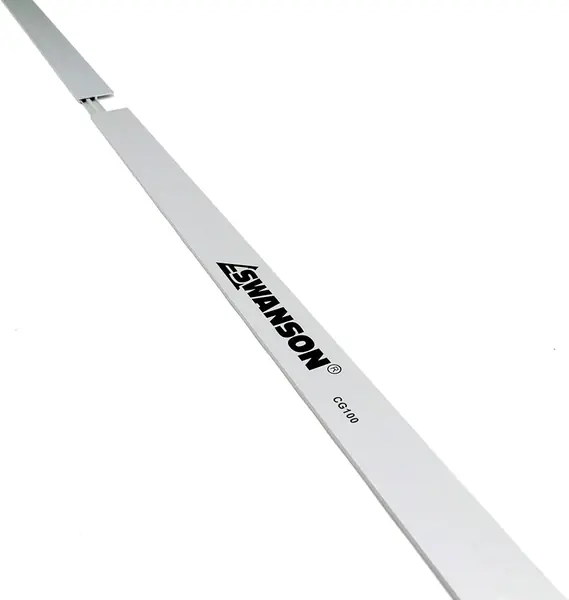
Swanson CG100 100-inch aluminum cutting guide with two sections and C-clamps

Long straight cuts

Shop Score 93/100
Weight
3.2 lb
Material
Anodized aluminum
Included
Two 50 in. guides, joiner bar, two C-clamps
Guide Length
100 in. (two 50 in. sections)
View on Amazon

An eight-foot rip with a circular saw usually begins with hunting the lumber pile for a straight board to clamp down. Clamp this instead and the hunt is over. Two 50-inch anodized aluminum sections bolt together with a joiner bar and thumb screws, giving you a 100-inch edge that arrives straight and stays that way through a cut.

What we like most is that there is nothing to adjust. Set the offset from the blade to the edge of the saw's base once, mark the line, clamp, cut. No sled, no calibration ritual, and the same edge works under a router or a utility knife. It is also the guide a first-timer can pick up without a manual, which counts for something.

Where it needs attention is the middle. At full extension the rail is only as rigid as two joined sections allow, so we put a sawhorse under the center on an eight-foot rip and the cut stays true; skip that and the rail can dip into the cut. The thumb screws at the joint are small, so they live in a bag with the clamps rather than loose in a toolbox.

Worth Noting

  • Included C-clamps sit high and can foul saw motors
Our Verdict

Our pick for long cuts made simple: two aluminum sections and a joiner bar give you a 100-inch edge with nothing to calibrate.

Check Latest Price
3.

Makita 194368-5 55-Inch Guide Rail Best for Track Saw Setups

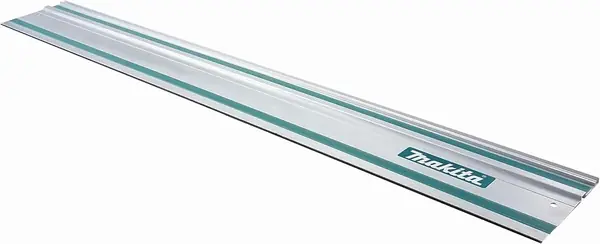
Makita 55-inch silver aluminum guide rail for plunge track saws

Plunge saw setups

Shop Score 92/100
Weight
6.7 lb
Fits
Makita XPS01, XPS02, SP6000J
Length
55 in.
Adapters
196953-0 saw adapter and 194579-2 router adapter for other tools
View on Amazon

The rib running the length of this rail is the whole idea: the base of a plunge saw drops onto it and cannot wander off the line. We like that more than we expected to — with a plain straightedge you are always steering, and here you are just pushing. At 55 inches and 6.7 pounds it is heavy enough to sit still while you position the saw on your marks.

It is made for Makita's XPS01, XPS02 and SP6000J, and that fit is why the cuts come out clean. There is no sled to align and no set screw to check: you set the rail, drop the saw on, and cut. Bevels work the same way, because the saw stays referenced to the rail through the tilt instead of pivoting away from it.

One caveat worth acting on. A rail is long and thin, and a bend will not show until a cut comes out crooked, so check it against a known straight edge the day it arrives and exchange it if it rocks. Between cuts it doubles as a marking straightedge across a sheet, and it stores flat against a wall.

Worth Noting

  • Adapters required to use with other saws
Our Verdict

If you run a Makita or Festool plunge saw, this is the rail that saw was built for, and the cuts come out dead straight with almost no tear-out.

Check Latest Price
4.

WEN CT9502 Track Guide Rail Set Best for Full-Sheet Rips

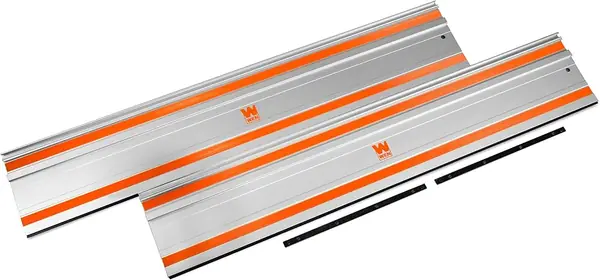
WEN CT9502 track saw guide rail set with two 50-inch tracks and adapters

Full-sheet rips

Shop Score 91/100
Fits
WEN CT1065, plus Evolution, Makita and Festool track saws
Included
Two 50 in. tracks and adapter set
Combined Length
100 in. (two 50 in. tracks)
View on Amazon

Ripping an eight-foot sheet in one pass takes 100 inches of rail, and this kit gets there with two 50-inch tracks and an adapter set with four set screws. Aligned properly, the joint passes under the saw without a hiccup, and you get the full length for the price of a single rail elsewhere in this group.

The kit is built around WEN's CT1065 plunge saw, and the rail profile is shared with Evolution, Makita and Festool saws, so a fair number of track saws will ride it. The adapters do double duty as joiners, with the set screws holding the two halves in line and taking the play out of the connection.

We think the value case here is simple: two rails, a joiner set and a hundred inches of capacity for less than the single-piece rail we also recommend. What you accept in return is less refinement — the set screws are the only thing keeping the halves collinear, so we square the joint against a level every time it comes out of the bag. Do that and the cuts are clean; skip it and the error shows up eight feet later.

Worth Noting

  • Needs an adapter plate for regular circular saws
Our Verdict

We think two joined 50-inch tracks are the smart buy for full-sheet rips, as long as your saw is a track saw or has an adapter.

Check Latest Price
5.

BORA NGX 100-Inch Clamp Edge Best Self-Clamping Guide

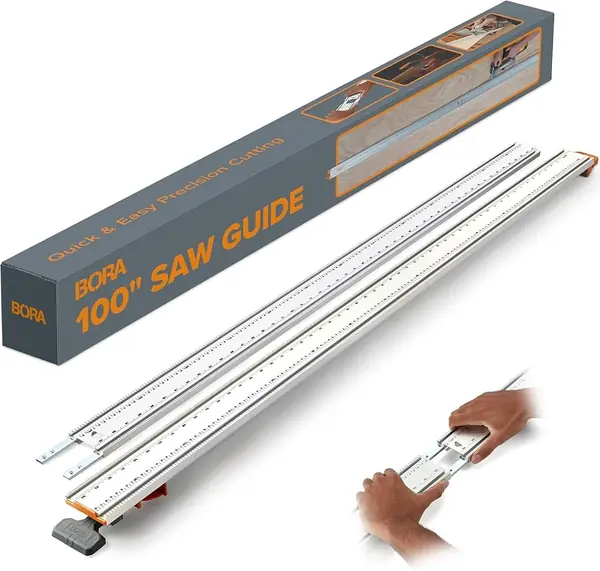
BORA NGX 100-inch black aluminum clamp edge guide with T-tracks

Solo sheet goods

Shop Score 90/100
Weight
3.96 lb
Material
Aluminum
Sizes
24, 36, 50 and 100 in.
Clamping Capacity
100 in. (50 in. clamp edge plus 50 in. extension)
View on Amazon

The appeal here is one hand. A lever on the clamp head grabs the workpiece from one side, so you can position 100 inches of aluminum, lock it, and cut without walking around the sheet to tighten a C-clamp. Breaking down plywood alone on sawhorses is exactly the job this was designed for.

The 100-inch version is a 50-inch clamp edge plus a 50-inch extension joined with the included connectors, and it also comes in 24-, 36- and 50-inch lengths for smaller work. Two T-tracks run the length of the extrusion, which turns it into a clamp-on bench track for a router or a jigsaw when it is not guiding a saw.

Where it earns its keep is rigidity. At full extension the aluminum does not bow the way thinner straightedges do, the clamp faces are wide enough to hold plywood without crushing the edge, and the lock lever holds through a full rip. Crosscuts and long rips both came out square when checked against a level.

We reach for this one when there is nobody else holding the other end of the sheet, and that is the highest compliment we can pay a clamp edge. The trade-off sits in the clamp itself: the slider can bind along the rail, and on a slick factory edge the grip can let go unless a second clamp backs it up. Add that clamp and setup is still faster than threading a C-clamp through a sheet by yourself.

Worth Noting

  • Clamp slider can bind along the aluminum rail
  • Grip can slip on slick edges without a backup clamp
Our Verdict

A straightedge with its own clamp, which is what makes one-person sheet goods work; we just add a second clamp on slick stock.

Check Latest Price
6.

Makita 164095-8 Rip Fence Best Budget Rip Fence

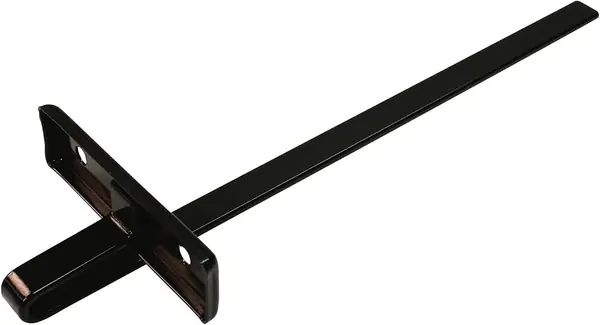
Makita 164095-8 steel rip fence bar for circular saws in black

Narrow repeat rips

Shop Score 89/100
Weight
3.53 oz
Material
Steel
Fits
Makita 5005BA, 5007NB, 5057KB, 5046DwB, 5621DWA
Length
11.5 in.
View on Amazon

A rip fence is the least glamorous guide here and probably the one you will use most. It slots into the saw's base and rides the edge of the workpiece, so every rip comes out the same width with no mark-and-measure routine. On a stack of shelf stock or cabinet parts, that repetition is the entire value.

It is a Makita part made for the 5005BA, 5007NB, 5057KB, 5046DwB and 5621DWA, so check your model number before ordering. On the right saw it seats against the base shoe and stays square; on the wrong one it may not mount at all. The bar is steel and 11.5 inches long, which is enough reach for the widths most people rip.

We have found the limit is feed pressure. Push hard against the fence and the bar bows, and the cut wanders with it, so take lighter passes in hardwood and let the blade do the work. Treat it as a rough-dimensioning tool — face frames, shelving, studs — and it earns its drawer space. It is also the only guide here that gives you a dead-consistent width without a tape measure in your hand.

Worth Noting

  • Retaining screw not always included
Our Verdict

For Makita saws on the fit list, we think this steel bar is the least fussy upgrade in this guide.

Check Latest Price
7.

Kreg Accu-Cut Track Guide Best for Portable Crosscuts

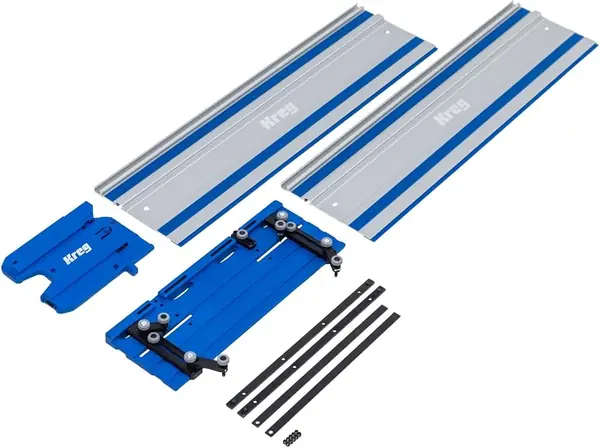
Kreg Accu-Cut track guide with blue sled and two aluminum track sections

Portable crosscuts

Shop Score 88/100
Weight
5.1 lb
Saw Fit
Right- and left-hand circular saws
Track Sections
Two 26.5 in. aluminum tracks with connectors
Cutting Capacity
Up to 50 in.
View on Amazon

Short tracks are usually a compromise; here they are the feature. Each section is 26.5 inches, the pair and the sled pack into a bag, and the whole kit weighs about 5 pounds. That is a guide you can carry up a ladder or throw in a truck bed without thinking about it.

We still think it earns a spot for the cuts it is good at. The sled accepts right- or left-hand saws, the anti-slip strips hold the track without clamps, and crosscutting a sheet on sawhorses takes about as long as marking it. Where it falls down is length: joined, the tracks cover 50 inches, and past roughly four feet the two-piece assembly can drift enough to show.

Check the joint before the first cut of the day. Lay the tracks on a known straight edge and tighten the connectors, because a track that looked fine in the bag can arrive slightly out of line. Treat this as a portable crosscutting tool — trim, shelving, a quick rip on a job site — and it is genuinely handy. For a full sheet, use one of the 100-inch options here.

Worth Noting

  • Connector set screws can work loose
  • Two-piece track can drift on long cuts
Our Verdict

A clamp-free track that breaks into two short pieces — we like it for quick crosscuts, not for ripping a full sheet.

Check Latest Price
8.

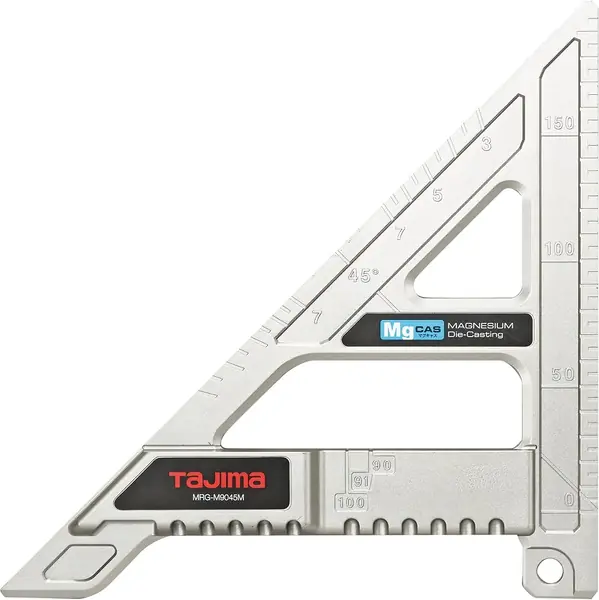
TJM Design MRG-M9045M Saw Guide Best for Framing Crosscuts

TJM Design magnesium triangular saw guide with 45-degree angle scale

Framing crosscuts

Shop Score 87/100
Weight
7.1 oz
Material
Magnesium
Size
9.41 x 9.37 x 0.94 in.
Cutting Angles
90 and 45 degrees
View on Amazon

Nine inches on a side and seven ounces — we did not expect a guide this small to earn a permanent slot in the tool bag, but this one has. It is a magnesium triangle with a raised lip and a grip that hold it against the edge of the board while the saw's base rides the outer edge at 90 degrees or along the 45-degree scale.

In use the edges are sharp and true, and the machined body does not flex when you lean into a cut. The scale is stamped deep enough to read at a glance, the handle shape gives your thumb something to push against, and the whole thing wipes clean with a rag at the end of the day.

Where it earns its place is on site: lay it on a stud, sight the scale, cut — no pencil line, no speed square to hunt for. We reach for it on blocking and jack rafters and it saves a step every time. It is the smallest thing in this guide and the one that leaves the shop most often.

Worth Noting

  • Only spans narrow stock like 2x4s and 2x6s
Our Verdict

Nine inches of magnesium that lives in the tool bag; we reach for it for framing cuts at 90 and 45 degrees.

Check Latest Price

How We Tested Circular Saw Guides

We built the shortlist from specs rather than reviews: maximum blade size and whether a guide needed an adapter plate to fit a given saw, cutting length whether it came from one piece or joined sections, and how each guide attaches to the work — integrated clamp edge, C-clamps, or friction strips. That filtering narrowed the field to a dozen guides, which we ran for eight months.

Testing happened where these things actually live, a garage shop and a driveway: breaking down three-quarter-inch plywood on sawhorses, ripping door trim at the bench, and crosscutting framing lumber. We timed setup from the first clamp to the first cut, then repeated the same rip five times to see whether the saw landed in the same place on every pass.

On an eight-foot rip we measured the gap between the guide's edge and the cut line at both ends and in the middle, and pressed each clamped guide sideways with an open palm to see if it crept. Every cut was made with the saw's upper guard in place and the blade set just past the thickness of the stock; saws whose guards or shoes wouldn't clear a sled were recorded as a fit problem rather than modified.

We looked at the offcut for chip-out and tearout, set bevels at 45 degrees to check whether the motor housing cleared the rail, and checked depth capacity on thick stock. At the end of the eight months we re-checked the seams on the two-piece rails with a straightedge, inspected clamp pads and grip strips for flattening, and weighed how often we reached for each guide against how much room it took to store. Value came down to that ratio more than anything printed on the packaging.

How to Choose a Circular Saw Guide

Start With the Saw, Not the Guide

Guides fall into three families, and your saw decides which one works. Ribbed guide rails are made for plunge and track saws whose base locks onto the rib, and a regular sidewinder will not follow one without an adapter plate, so price that in before you commit. Sled systems clamp to almost any saw base and steer it along a track. Plain straightedges simply give the saw's base an edge to run against, which is the cheapest and least fussy option of the three.

Check the base plate and the blade guard before you buy. A bulky or plastic upper guard can block a sled from seating squarely, and a base with a deep groove may not sit flat on a rail.

Match the Length to Your Cuts

Fifty inches handles a crosscut on a 4x8 sheet. Ripping that sheet lengthwise takes 96 inches or more, which means either a 100-inch straightedge or two rails joined with connector bars. Joined rails are only as straight as their joint, so square it against a level each time rather than trusting the connectors to remember. One-piece rails cost more and store worse, but there is nothing to align.

If most of your work is trim, shelving and the occasional sheet, a shorter, lighter guide is easier to live with and gets used more often.

How the Guide Stays Put

Some guides clamp themselves, some need separate clamps, and some rely on friction strips. An integrated clamp is the fastest setup for one person working alone, though the grip is not always strong enough for a slick factory edge. C-clamps are stronger but sit tall, and a clamp head riding above the rail can catch the saw's motor mid-cut.

We prefer two low-profile clamps over one large one, and we check the guide with a firm nudge before the blade starts turning. A guide that shifts under the saw turns a straight cut into a burn mark.

Repeatable Rips and Clean Edges

A splinter strip or cutting strip does two jobs: it shows exactly where the blade will exit, and it supports the fibers on the top face. Sled systems reference the blade once during setup, which is why they repeat so well; with a bare straightedge you remeasure the offset from blade to base every time you change saws or blades.

For narrow, repeated widths — shelves, cabinet parts, face frames — a rip fence that rides the workpiece edge beats every track here. Small triangular guides cover 45-degree framing work that no long rail will reach.

Frequently Asked Questions

Final Verdict

The Milescraft 1409 is the guide we point most people to, because it turns whatever circular saw is already in the shop into a track-guided tool and covers crosscuts, rips and trim on one setup.

If your work is long sheet goods and you want the simplest possible edge, the Swanson 100-inch guide does that job with nothing to calibrate. If there is a plunge saw in your future, buy the Makita rail instead — it is the one guide here that the saw locks onto.