↑↓ navigate ↵ open Esc close All results →

Best Cordless Circular Saws of 2026

When a cordless circular saw drops into a stack of 2x framing lumber, the real test is whether the blade holds speed through a full rip cut instead of stalling halfway through. Nine months of cutting plywood, decking, and framing stock with eight saws showed that well-matched battery models keep pace without needing an extension cord.

Blade diameter splits the lineup by capability rather than quality alone. A 6-1/2-inch saw crosscuts 2x4s effortlessly while coming up short on a 45-degree bevel cut, whereas a 7-1/4-inch saw delivers full framing depth along with noticeably more weight by late afternoon.

Kit configuration changes the real price as well: a bare tool saves money if compatible packs are already on the charger, while a two-battery kit carries a deck build from start to finish across trim and framing sizes alike.

Our Top Picks

The Best Cordless Circular Saws

1.

DeWalt DCS565B 6-1/2-Inch Brushless Circular Saw Best Overall
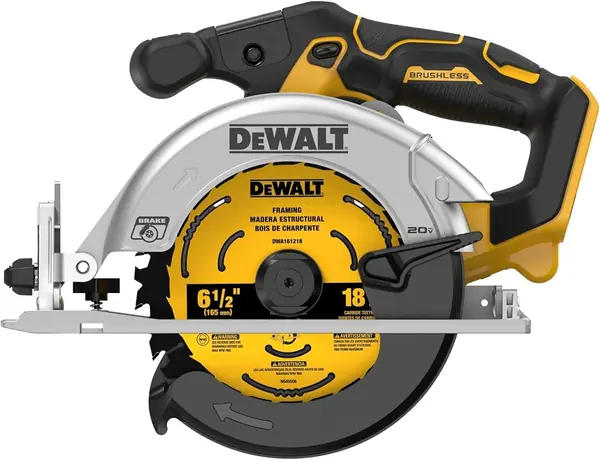
DeWalt DCS565B 6-1/2-inch brushless circular saw in yellow and black

General woodworking

Shop Score 95/100
Speed
4,950 rpm
Blade Size
6-1/2 inches
Weight
6.3 lb
Max Depth At 90
2-1/8 inches
View on Amazon

The 6-1/2-inch blade and 6.3-pound body make the DCS565B the saw we reach for first. It has enough depth—2-1/8 inches at 90 degrees—for 2x lumber and plywood, but it feels handier than a full-size 7-1/4-inch saw when you are working on a bench or moving around a sheet. We especially like the electric brake, which stops the blade quickly, and the rafter hook, which gives the saw a place to hang between cuts.

The LED is a small feature that earns its keep when you are working in a garage corner or under a deck. We appreciated the tool-free bevel lever and the 0-to-50-degree range for common angle cuts, and the optional dust chute is a useful addition if you are connecting a shop vac. The rubberized handle gives you a secure grip without making the saw feel bulky.

For crosscuts, rips, and deck boards, the smaller blade is a fair exchange for the lighter body. The DCS565B has the best balance of capacity, control, and features in this group, and it is the saw we leave on the bench because it covers more cuts than its size suggests.

Worth Noting

  • Cannot cut 4x4 posts in one pass
Our Verdict

We recommend the DeWalt DCS565B as the default cordless circular saw for most woodworkers because it pairs a brake, LED, and rafter hook with a light 6-1/2-inch body that still handles 2x stock.

Check Latest Price
2.

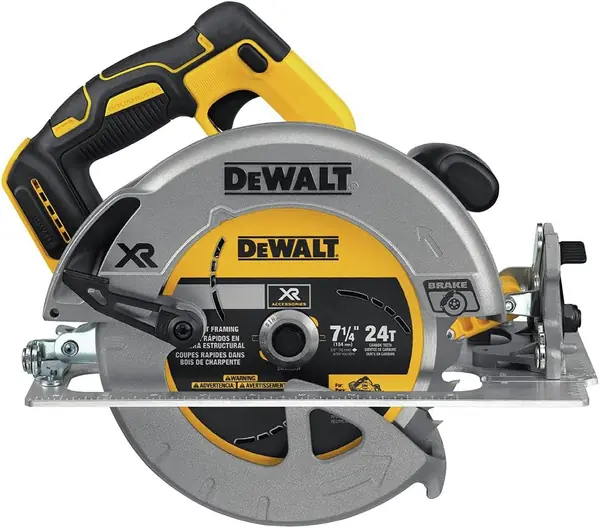
DeWalt DCS570B 7-1/4-Inch Circular Saw Best Full-Size

DeWalt DCS570B 7-1/4-inch circular saw with yellow body and black handle

Framing and decks

Shop Score 94/100
Speed
5,500 rpm
Blade Size
7-1/4 inches
Max Depth At 90
2-9/16 inches
Bevel Capacity
57 degrees
View on Amazon

A 7-1/4-inch blade is not a vanity spec. When you are cutting 2-by stock at a bevel, or working through a thick sill or built-up header, the extra depth of the DCS570B saves you from flipping the workpiece and making a second pass. The 2-9/16-inch cut at 90 degrees is the reason we keep this saw in the mix.

The brushless motor turns at 5,500 rpm, and the saw holds speed in framing lumber and plywood. We think it is the right full-size choice for a woodworker who needs depth more often than portability. The 57-degree bevel range goes past the usual 45, and the electric brake stops the blade quickly when you let off the trigger. The magnesium shoe feels solid without making the saw feel clumsy.

The trade-off is weight: at 7.5 pounds bare, it is a two-hand saw, and the extra mass is noticeable at the end of a long cut. It also costs more than the 6-1/2-inch models. For framing, decks, and repeated deep cuts, we think the capacity is worth it; for trim and sheet goods, the smaller saw is easier to live with.

Worth Noting

  • Durability is the open question
Our Verdict

We reach for the DeWalt DCS570B when a 6-1/2-inch saw runs out of depth: its 7-1/4-inch blade and 2-9/16-inch cut make it our full-size choice for framing and thick stock.

Check Latest Price
3.

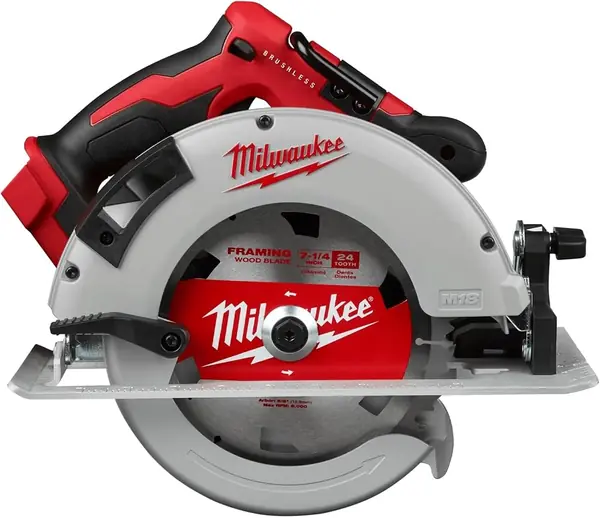
Milwaukee 2631-20 M18 7-1/4-Inch Circular Saw Best for M18 Owners

Milwaukee 2631-20 M18 7-1/4-inch circular saw in red and black

M18 tool owners

Shop Score 93/100
Speed
5,000 rpm
Blade Size
7-1/4 inches
Weight
7.2 lb
Voltage
18 volts
View on Amazon

If your shop already runs on Milwaukee M18 batteries, the 2631-20 is the full-size saw that makes the most sense. The bare tool slides onto the packs you already own, and the 7-1/4-inch blade gives you the depth and blade availability of a standard framing saw. That platform advantage is the main reason we keep it here.

The brushless motor spins at 5,000 rpm, and the 7.2-pound body is balanced enough for crosscuts and rips in plywood and dimensional lumber. We like the rubberized handle; it makes the saw feel more solid than its midrange price suggests. The 7-1/4-inch blade also means you can run common framing blades rather than hunting for a compact size.

We think this is the best full-size value in this group for anyone already on the M18 platform. It is a straightforward full-size saw, and it gets heavy with a large battery, but that is easy to accept when the batteries are already on your shelf. If you are starting from scratch, the DeWalt DCS565B is the more complete package.

Worth Noting

  • Sold as a bare tool without battery or charger
  • Gets heavy once paired with a large M18 battery
Our Verdict

If you already own M18 batteries, we think the Milwaukee 2631-20 is the smart full-size buy: a 7-1/4-inch brushless blade and 5,000 rpm at a midrange price.

Check Latest Price
4.

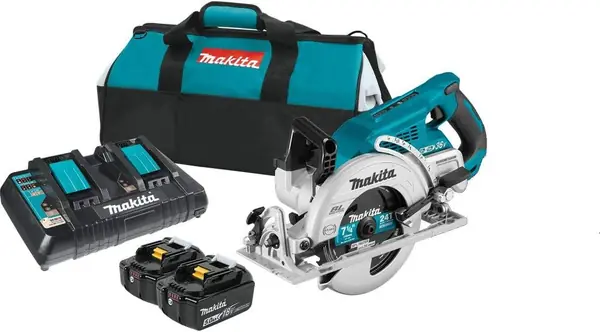
Makita XSR01PT 36V Rear-Handle Circular Saw Kit Best Rear-Handle

Makita XSR01PT 36V rear-handle circular saw kit with two batteries

Heavy framing

Shop Score 92/100
Speed
5,100 rpm
Blade Size
7-1/4 inches
Battery Kit
Two 5.0Ah batteries
System
36V (18V X2)
View on Amazon

The rear handle changes the way a circular saw feels. Instead of pushing a top-handle saw across the work, you pull the XSR01PT through the cut with the blade out front, which gives you more control on long rips and a familiar feel if you have used a worm-drive saw.

We think the rear-handle layout is worth it for framers. The 36V system runs on two 18V LXT batteries, and the 5,100 rpm brushless motor cuts through 2-by framing lumber without the bogging you might expect from a battery saw. The kit includes two 5.0Ah batteries and a charger, so you can put it to work immediately. We also like the metal blade guard, which feels more substantial than the plastic guards on some compact saws.

This is a dedicated framing saw: the rear handle and 7-1/4-inch blade are built for long rips and repeated crosscuts, not for one-handed trim work. The two-battery setup is a real advantage because you can run one pack down and swap to the other. For a crew saw, that trade-off makes sense; for occasional DIY, a top-handle 6-1/2-inch saw is easier to handle.

Worth Noting

  • Heavy with two batteries installed
Our Verdict

We like the Makita XSR01PT for framers who want worm-drive-style control: the rear handle and two-battery 36V power cut deep stock without a cord, and the kit includes two 5.0Ah batteries.

Check Latest Price
5.

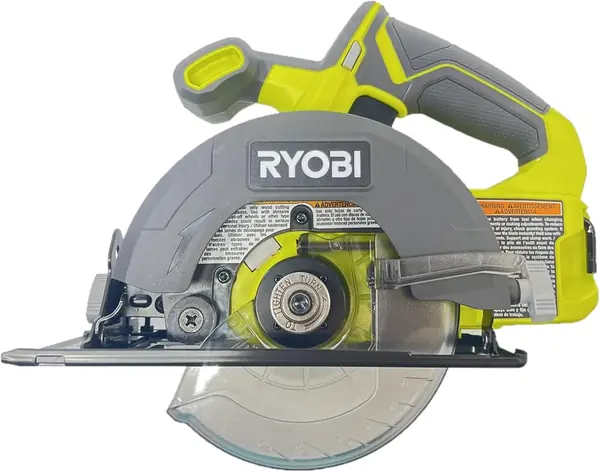
Ryobi P505 18V One+ Circular Saw Best Budget

Ryobi P505 18V One+ circular saw in green with a 5-1/2-inch blade

Budget light-duty

Shop Score 91/100
Speed
4,700 rpm
Blade Size
5-1/2 inches
Weight
4.1 lb
Bevel Capacity
0 to 50 degrees
View on Amazon

At 4.1 pounds, the P505 feels more like a large trim saw than a framing saw. That is the point: it is small enough to carry in one hand, light enough to use on a ladder, and cheap enough to keep as a second saw for quick cuts.

The 5-1/2-inch blade and 4,700 rpm motor handle plywood, paneling, and quick 2x cuts, though you need to let the saw do the work rather than forcing it. We like the clear lower guard because it lets you see the blade meeting the line, and the auxiliary side handle gives you a second grip for longer cuts. The bevel shoe adjusts to 50 degrees for simple angle cuts.

We think the P505 is the right choice for a homeowner or weekend builder who already owns Ryobi One+ batteries. The 5-1/2-inch blade limits it to sheet goods and quick dimensional cuts; for those jobs, and for a saw you can leave in the garage, it earns its place. The bare tool is the catch if you are starting from zero, because the batteries and charger add to the cost.

Worth Noting

  • Durability under sustained use is uncertain
Our Verdict

We keep the Ryobi P505 on our list for budget-minded DIYers because it is light, compact, and handles sheet goods and quick 2x cuts for very little money.

Check Latest Price
6.

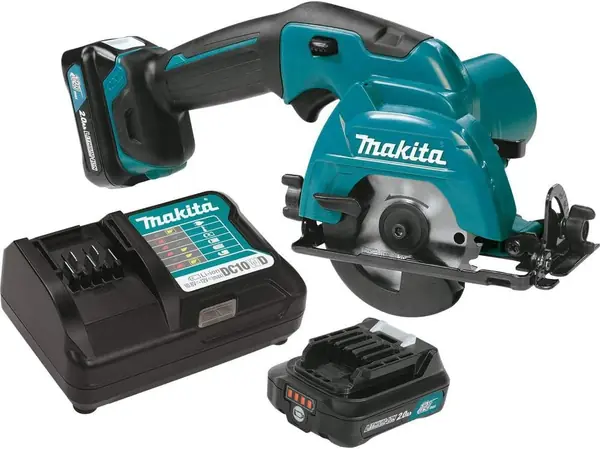
Makita SH02R1 12V CXT Mini Circular Saw Kit Best for Trim and Paneling

Makita SH02R1 12V CXT mini circular saw kit with two batteries

Trim and paneling

Shop Score 90/100
Speed
1,500 rpm
Blade Size
3-3/8 inches
Max Depth At 90
1 inch
Battery Kit
Two 12V batteries and charger
View on Amazon

We think the 1-inch maximum depth is the first thing to understand about the SH02R1. This is not a replacement for a full-size circular saw: it cannot cut a 2x4 in one pass, and it will struggle with thick hardwood. What it can do is cut plywood, paneling, MDF, and drywall cleanly in places where a bigger saw will not fit.

At 3.5 pounds with a battery, it is easy to use one-handed, and the 3-3/8-inch blade leaves a clean edge in thin stock. We like the kit because it includes two 12V CXT batteries and a charger, so you are not buying a bare tool and then hunting for power. The bevel base tilts to 45 degrees for simple trim angles, and the compact body is made for cut-in work.

For trim, cabinet backs, and sheet goods, the SH02R1 is a precise little saw that stays out of the way. We keep it for the jobs where a full-size saw is more tool than the cut needs.

Worth Noting

  • 1-inch cut depth cannot sever a 2x4 in one pass
  • Struggles in thick hardwood compared to full-size saws
Our Verdict

We recommend the Makita SH02R1 for trim and sheet-goods work because its light 3-3/8-inch body reaches places a full-size saw cannot.

Check Latest Price

How We Tested Cordless Circular Saws

We started by scanning the current lineup on the major battery platforms, then narrowed to saws that came in a spread of blade sizes, from a 3-3/8-inch trim saw up to 7-1/4-inch framing models, and that included both bare tools and kits with batteries and a charger. Anything that wasn't part of a platform a buyer could build on was out. We bought eight and ran them for nine months.

Testing happened where these saws actually work: a deck rebuild, a garage shop stacked with plywood, and a run of door trim and paneling. We clamped every workpiece, kept both hands on the saw, and waited for the blade to stop before setting one down or changing a blade. Each saw ran only with the blade diameter it was built for.

We measured depth of cut at 90 degrees and at full bevel against a framing square, then ripped 3/4-inch plywood and crosscut doubled stock. Brushless motors are standard at this level, so what separated the saws was how they held speed once the blade was buried. A stopwatch timed how long the blade took to spin down after the trigger came off, and a kitchen scale weighed each one; after a dozen cuts we noted how it carried one-handed at the front handle.

Bevels went to 45 degrees and got checked with a square; we watched how much blade the sightline actually showed, hung saws from a joist by the rafter hook between cuts, and noted where the dust stream landed. After nine months of use we checked base plates for flatness and bevel locks for slop, which is where cheaper saws start to feel cheap.

How to Choose a Cordless Circular Saw

Start With Blade Size and Cut Depth

Blade size sets the depth you can cut in one pass. A 6-1/2-inch saw like the DeWalt DCS565B cuts 2-1/8 inches at 90 degrees, enough for 2x lumber and plywood; a 7-1/4-inch saw like the DCS570B cuts 2-9/16 inches for thicker stock and deep bevels. We think most woodworkers are better served by the smaller saw unless they regularly frame or cut built-up material. Check depth at 45 as well as 90, since bevel cuts reduce capacity, and do not assume a compact saw is lighter. Verify the weight.

Match the Saw to Your Battery Platform

A bare tool is only a bargain if you already own the right batteries. The Ryobi P505 runs on One+ 18V packs, the Milwaukee 2631-20 on M18 packs, and the Makita XSR01PT on two 18V LXT batteries. If you are starting fresh, a kit with batteries and a charger removes a second purchase, which is why we like the XSR01PT kit or the 12V SH02R1 kit for a small saw. Do not assume a battery from one brand or voltage class will fit another; check the platform before you buy.

Weigh Control Against Power

Weight is not just a comfort spec; it changes how long you can cut accurately. The 6.3-pound DCS565B is easy to control one-handed, while the 7.5-pound DCS570B is a two-hand saw that feels more stable in deep cuts. Rear-handle saws like the XSR01PT put the mass behind the blade for long rips, but they are not the tool for overhead work. We prioritize balance over raw power for trim and sheet goods, and accept more weight when the cut demands it.

Look for a Brake and Useful Details

We pay for an electric brake before we pay for an LED: it stops the blade quickly when you release the trigger, which matters when you are setting the saw down between cuts. A rafter hook, an LED, and a tool-free bevel lever are conveniences, not necessities, but they make a saw nicer to live with. The DCS565B has the brake plus all three conveniences, and that is part of why it is our default. Skip a feature you will not use, but do not skip the brake.

Plan for Runtime and Blades

Battery size and blade condition affect runtime as much as the motor. A sharp 24-tooth framing blade cuts faster and draws less current than a dull or wrong-tooth blade, so keep a spare. The DCS565B and DCS570B are bare tools, so budget for batteries and a charger if you are not already on the platform; the XSR01PT kit includes two 5.0Ah packs. For long rips in thick stock, use a freshly charged battery and let the saw reach full speed before the blade enters the wood.

Frequently Asked Questions

Final Verdict

We recommend the DeWalt DCS565B as our top pick for most woodworkers. It has the depth for 2x lumber and plywood, but the lighter body, brake, LED, and rafter hook make it easier to control than a full-size saw. If you regularly cut thick headers, deep bevels, or framing lumber, step up to the 7-1/4-inch DCS570B; if you already own M18 batteries, the Milwaukee 2631-20 is the smarter full-size buy. For trim and paneling, the Makita SH02R1 is the small-saw exception, as long as you do not need to cut 2x in one pass.