↑↓ navigate ↵ open Esc close All results →

Best Concealed Hinge Jigs of 2026

Once a 35mm Forstner bit starts spinning against maple or melamine, a lightweight concealed hinge jig will creep half a millimeter if its clamp cannot lock flat against the door edge. Because a misdrilled cup usually means remaking the entire door, an accurate jig has to transfer depth, edge offset, and screw-hole alignment off pencil marks and onto repeatable stops.

Drilling cups across six months of shop builds and melamine tests with 12 jigs proved that boring the 35mm pocket is the easy part. Keeping screw holes square and edge distance consistent—without play in a plastic guide bushing—separates dependable jigs from frustrating ones, while a working dust port pays off quickly over a full kitchen of doors.

Whether hanging a single bathroom vanity or batching dozens of cabinet doors across different Euro hinge offsets, repeatable clamping and metal-lined guides prevent costly mistakes.

Our Top Picks

The Best Concealed Hinge Jigs

1.

Kreg Concealed Hinge Jig Best Overall
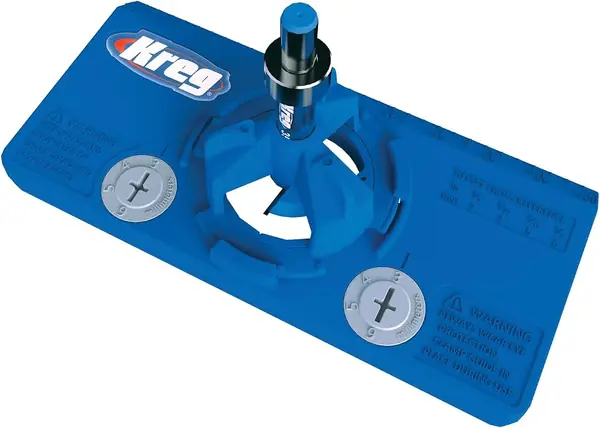
Kreg blue metal concealed hinge jig with 35mm drill bit

Most cabinet projects

Shop Score 95/100
Hinge Offsets
3mm, 4mm, 5mm, and 6mm
Included Bit
35mm four-cutter carbide-tipped with stop collar
Cup Diameter
35mm
Edge Placement
2 in (50mm) to unlimited
View on Amazon

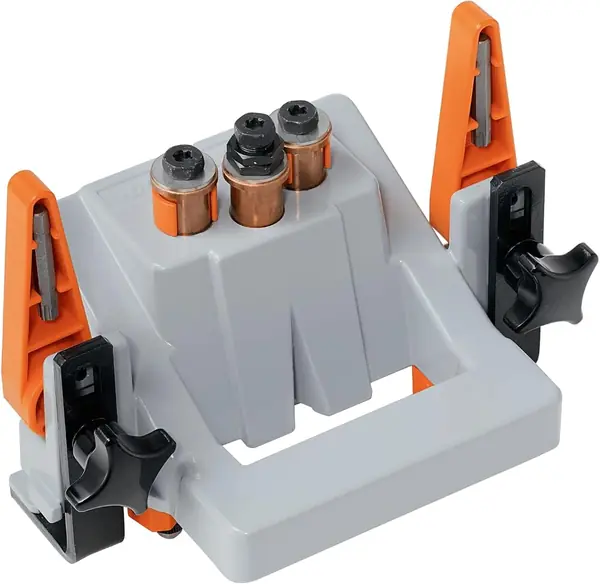
The Kreg is small enough to sit in one hand, and that is the first thing we noticed on a benchtop crowded with door blanks. It registers against the door edge, and the sliding fence sets the cup position without a full story stick. For a short run of cabinets, that simple layout is easier to keep straight than a jig with a dozen loose parts.

The four-cutter carbide bit and stop collar take care of the 35mm bore, while the jig covers 3mm, 4mm, 5mm, and 6mm hinge offsets. The edge fence adjusts from 2 inches in to an unlimited distance, so you can match an existing door or set a custom hinge position. We like that the cup is controlled but the door layout stays flexible; you are not locked into one cabinet maker's pattern.

In use, the jig gives the bit a clean entry and keeps the cup square as long as you hold the base flat. The fence has enough surface area to stay put during the plunge, and the whole unit is easy to lift and reset between doors. We paid attention to the bit fit and the base contact, because those are what decide whether a cup comes out clean.

What keeps this at the top of our list is the way it handles both standard and custom layouts without a long setup. It stores easily, resets quickly, and does not demand a dedicated drilling station. Set it up on scrap stock, confirm the stop collar, and the same setting carries through a door run.

Worth Noting

  • Guide can overheat on long runs
Our Verdict

We recommend the Kreg first for most cabinet projects: it sets common hinge offsets quickly, drills clean 35mm cups, and leaves room for custom door layouts without a steep learning curve.

Check Latest Price
2.

GOINGMAKE G35 Pro Hinge Jig Best All-Metal

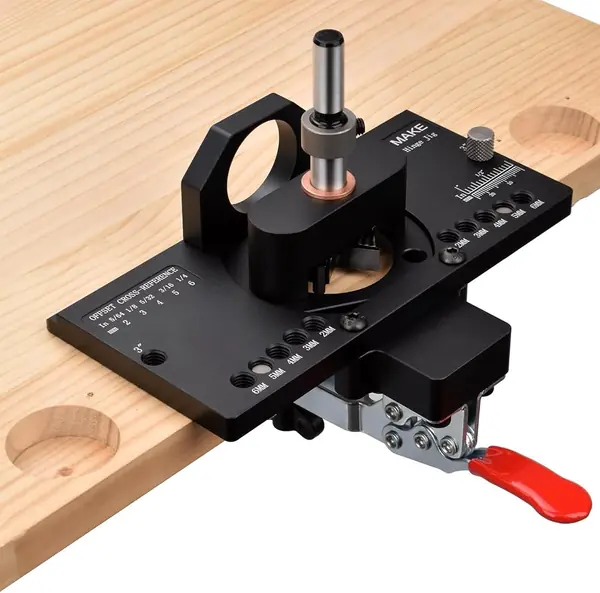
GOINGMAKE all-metal concealed hinge jig with quick clamp and dust port

All-metal shop upgrade

Shop Score 92/100
Hinge Offsets
2mm, 3mm, 4mm, 5mm and 6mm
Cup Depth
0-0.6 in
Dust Port
1-3/8 in
Screw-hole Guides
42*11, 48*6, 52*5.5, 45*9.5mm
View on Amazon

The GOINGMAKE G35 Pro answers the main worry about a plastic hinge jig. Its frame and drill guide are metal, and the quick clamp is built into the body. You set the cup offset, squeeze the clamp onto the door, and drill without hunting for a separate F-style clamp. The dust port is a practical addition because a 35mm bit throws a surprising volume of chips.

We like the repeatability of the stop collar and the separate screw-hole guides. The jig covers 2mm through 6mm offsets and includes patterns for common hinge screw spacings, so the same setup can carry through a run of doors. The clamp is strong enough to hold the frame steady, and the open body is easy to brush clean between holes. It feels like a jig that was designed to be used rather than admired.

This is the jig we choose when moving up from a basic guide and want the clamp and dust collection in one package. It is more substantial than the Kreg without going all the way to a production tool, and the metal guide is built for repeated use. Run one test cup on the door stock; the offset scale is easy to read once you have the jig oriented.

Worth Noting

  • 35mm bit can rock in the guide
Our Verdict

We choose this all-metal GOINGMAKE when we want the quick clamp and dust port built in; it is the more solid-feeling alternative to plastic jigs for repeated hinge work.

Check Latest Price
3.

GOINGMAKE 3-Axis Hinge Jig Ultra Best for High-Volume Work

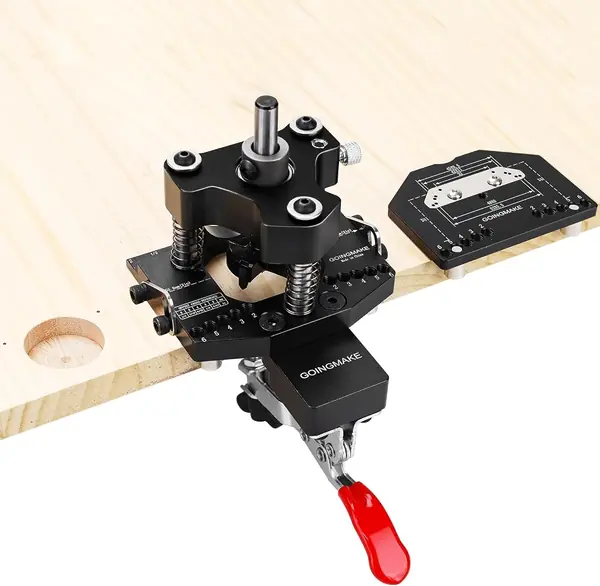
GOINGMAKE black three-axis hinge jig with separate screw-hole guide

High-volume door runs

Shop Score 90/100
Hinge Offsets
2/3/4/5/6mm
Weight
3.03 lb
Dust Port
1-1/4 in and 1-3/8 in
Screw-hole Guide
Separate fixed guide
View on Amazon

The Ultra is less about the cup hole and more about what happens around it. GOINGMAKE adds a separate fixed guide for the small hinge screw holes, so you can bore the 35mm cup and drill the screw pattern without swapping bits between every door. That sounds like a small convenience until you are working through a full kitchen and every bit change costs momentum.

The three-axis drill guide supports the bit at three points, which keeps the hole saw straighter under hand-drill pressure. The jig covers 2mm through 6mm offsets, clamps with a quick-release mechanism, and includes a vacuum adapter for both common hose sizes. We appreciate the wide clamp opening because cabinet doors vary more than their nominal thickness suggests, and the extra screw guide gives the second operation a positive location instead of a pencil mark.

This is the jig we reach for when the job is a full kitchen rather than a single repair. The separate screw guide turns a two-bit routine into a one-pass workflow, and the three-axis head gives the drill a planted feel. For one door, the extra hardware is more than you need; for a run, it earns its bench space.

Worth Noting

  • Heavier than compact hinge jigs
  • First assembly takes extra patience
Our Verdict

Our pick for a busy shop is the 3-Axis Ultra: the separate screw-hole guide and triple-bearing head make repeated cup-and-screw drilling feel like one steady routine.

Check Latest Price
4.

Blum M31.1000 Eco Drill Hinge Jig Best for Blum Systems

Blum Eco Drill hinge jig with 35mm bit and two drivers

Blum hinge production

Shop Score 89/100
Hinge Offsets
2-8mm
Weight
4.4 lb
Cup Size
35mm
Included Bits
35mm plus two 8mm dowel bits
View on Amazon

The Blum Eco Drill is a different class of tool. It clamps to the door and uses the drill to turn a 35mm bit and two 8mm dowel bits, each on its own retracting arbor. Instead of boring a cup and then laying out screw positions, you cut the entire Blum hinge pattern in one operation. The orange handles and exposed metal make it look like a small drill station, which is essentially what it is.

The jig adjusts from 2mm to 8mm in boring distance and handles door thicknesses up to 44mm. It weighs 4.4 pounds, and the drill sits above the work rather than beside it. That mass is the point: the tool stays put and the bits retract cleanly, so repeated doors feel like a factory operation. We also like that the 8mm dowel holes are drilled in the same cycle as the cup, because that is where layout mistakes usually creep in.

The practical catch is the drill and the chips. It needs a 14-volt or higher drill, and the open cutting area throws sawdust unless you add a vacuum nozzle. The jig is also tall enough that you want clear space above the door before you start. Those are shop conditions rather than defects, but they matter when you are deciding where the tool fits.

For a production shop, this is the jig we understand choosing: it turns a multi-step Blum installation into a single boring station. For a one-off set of doors, the same money buys a lot of simpler jigs. It is a specialist's tool, and it should be bought for that reason.

Worth Noting

  • Built around Blum hinge patterns
  • Clamp needs resetting between doors
Our Verdict

We keep the Blum jig in the conversation for one buyer: a shop already committed to Blum hinges that values drilling the cup and dowel holes in a single setup.

Check Latest Price
5.

Milescraft 1342 Euro Hinge Jig Best Budget

Milescraft EuroHingeJig with 35mm Forstner bit and metal locator pin

First cabinet doors

Shop Score 88/100
Included Bit
35mm Forstner
Cup Edge Settings
Six common settings
Edge Pin Positions
3 in or 4 in
Pilot-hole Locations
Four common locations
View on Amazon

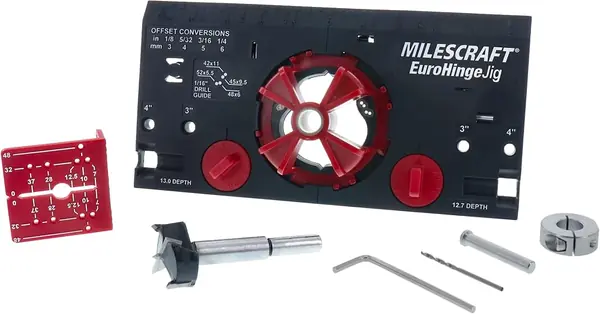
The Milescraft kit arrives with the pieces a first-time installer needs: a 35mm Forstner bit, a 1/16-inch pilot drill, a locator pin, and a depth stop. The jig has six cup-edge settings and an edge pin that sets the cup at 3 or 4 inches from the top or bottom. That covers the common framed and frameless cabinet layouts without a drawer full of extra templates.

We think the metal-lined drill guide is the reason to choose this over a no-name plastic block. It holds the Forstner bit square through the door, and the built-in pilot bushings let you mark the screw holes before the hinge goes on. The depth-setting fixtures sit on both sides of the jig, so you can set the stop without hunting for a ruler.

For a handful of doors, the complete bit kit is the draw. The six edge settings and the two edge-pin positions cover most standard cabinets, and the depth stop is easy to set against the bit. We treat it as a starter kit: it gives a beginner the full boring setup without extra shopping. Start with a test cup in scrap, then repeat the setting on the doors.

Worth Noting

  • Clamps are not included
  • Body can flex under firm clamping
Our Verdict

For occasional hinge work, this Milescraft kit gives us the bit, pilot drill, and locator pin in one package, making it the value-minded choice for a first set of cabinet doors.

Check Latest Price
6.

Cocowin 2-in-1 Hinge and Handle Jig Best 2-In-1

Cocowin red aluminum hinge and handle jig with quick clamp

Hinges and handles

Shop Score 87/100
Handle Range
2-7 in (50-180 mm)
Door Thickness
Up to 30mm
Handle Hole Size
4 mm
Hinge Screw Patterns
42×11, 48×6, 52×5.5, 45×9.5 mm
View on Amazon

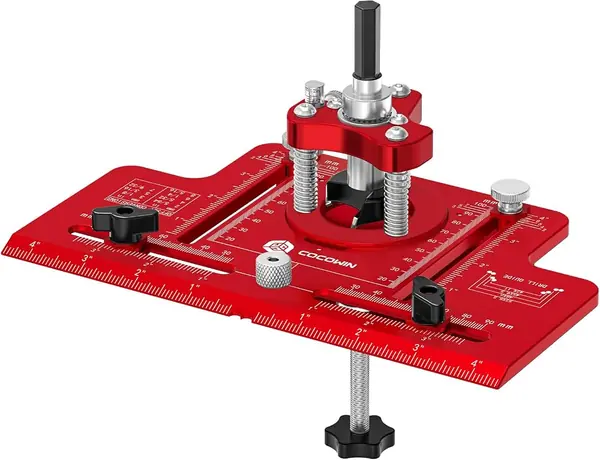
The Cocowin is two jigs in one frame: the hinge side sets the 35mm cup, and the handle side positions pull holes from 2 to 7 inches on center. The hinge screw guide is built in for common spacings, so you do not need a separate template for the small holes. For a full cabinet build, that saves a tool change and a second layout on the same door.

The clamp is knob-operated and holds boards up to 30mm, which covers most residential cabinet doors. We like that the same tool can drill a door for hinges and then move to a drawer front for a pull without changing setups. The aluminum body gives it a sturdier feel than the plastic-bodied jigs, and the red anodized finish is easy to spot in a drawer.

We recommend the Cocowin to someone doing both doors and drawers, not to someone who only needs hinge cups. The handle guide is the reason to pick it; the hinge side does the expected job without adding much setup. Measure your pull spacing before you commit, because the handle range is generous but the jig still needs a clean reference edge.

Worth Noting

  • Handle guide adds unnecessary bulk if you only bore hinges
  • Requires a clean reference edge for accurate pull spacing
Our Verdict

We like the Cocowin for a full cabinet build because it handles both hinge cups and drawer pulls, so one clamp setup can cover two jobs on the same door run.

Check Latest Price
7.

XUNTOP 35mm Concealed Hinge Jig

XUNTOP silver aluminum hinge jig with twin clamps and hole saw

Twin-clamp metal build

Shop Score 86/100
Included Bit
35mm hole saw with stop ring
Cup Depth
10-15mm
Edge Spacing
3-7mm
Board Thickness
1.5-2.5cm
View on Amazon

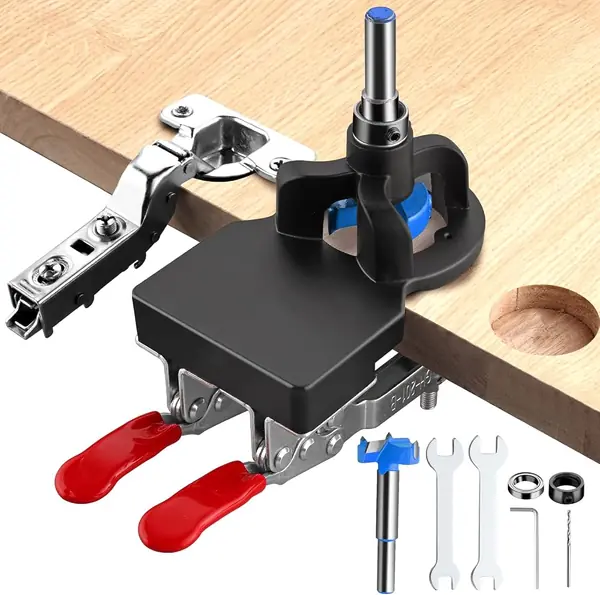
The XUNTOP is the jig we point to when the priority is a rigid aluminum body without paying for a dust port or a lot of extras. Two clamps pull the frame down against the door, and a bearing in the drill sleeve takes the side play out of the hole saw. The result is a guide that feels more planted than a bare plastic block.

The adjustments are familiar: cup depth from 10mm to 15mm, edge spacing from 3mm to 7mm, and board thickness from 1.5cm to 2.5cm. The package includes a 35mm hole saw with a stop ring, a 2mm drill, two wrenches, an Allen key, and a spare bearing. That is a useful starter set, and the bearing is the part that separates a smooth cut from a chattering one.

We see this as a good middle option for someone who wants metal construction and twin clamps but does not need the faster screw guide of the GOINGMAKE Ultra. It is compact, easy to store, and simple to reset. Check that the bearing runs freely before the first cut; a dry bearing will make the saw chatter, and that is the quickest way to turn a clean cup into a ragged one.

Worth Noting

  • Lacks a built-in dust port or fast screw guide
  • Dry bearing can cause the hole saw to chatter
Our Verdict

The XUNTOP is the aluminum-bodied option we point to when twin clamps and a bearing guide matter more than a built-in dust port or premium price.

Check Latest Price
8.

JEEJINYAN Concealed Hinge Hole Punch Best for Edge-Banded Cabinet Doors

JEEJINYAN aluminum concealed hinge jig with two retaining clips

Edge-banded cabinet doors

Shop Score 85/100
Margin Range
3-7mm
Drilling Depth
10-15mm
Clamping Thickness
15-25mm
Edge Banding Groove
2mm deep
View on Amazon

The 2mm edge-banding groove is the detail that makes the JEEJINYAN interesting. It lets the jig sit flush on a door whose edge is already banded, so the cup hole can be drilled without the banding holding the frame off the surface. We noticed that advantage before the first cut: a jig that rocks on the edge will bore a cup that is not square to the door.

The frame uses two clamps and three bearings around the drill sleeve. The extra bearing supports reduce lateral shake, and the double clamp pulls the body down evenly instead of relying on hand pressure. The adjustments cover 15mm to 25mm door thickness, 10mm to 15mm cup depth, and 3mm to 7mm edge spacing. We found the setup straightforward once we set it on scrap stock first.

This is not the fastest jig for a full kitchen because changing door thickness takes a few minutes at the clamps. But for a small run of banded doors, the flat seating and stable bit path are worth the setup. We recommend it to the woodworker who cares more about a clean cup on finished stock than about shaving seconds off every hole.

Worth Noting

  • Adjusting clamps for different door thicknesses slows down big jobs
Our Verdict

We recommend the JEEJINYAN when your doors already have edge banding; its shallow relief lets the jig sit flat and keep the cup bore square.

Check Latest Price

How We Tested Concealed Hinge Jigs

We started by gathering every jig we could find that drills a 35mm cup, then filtered for the things that change the outcome: a metal-lined guide rather than plastic, a clamp that holds the jig flat against the door, adjustable edge distance, and enough hinge-offset and screw-hole settings to cover the hinges sold today. That narrowed the field to 12 jigs, which we bought at retail and put to work for six months.

Most of that time went to real door runs — a garage shop building a set of shaker doors, a kitchen's worth of replacements hung one at a time, and edge-banded doors where a blown-out cup means starting over. We drilled each cup into scrap maple and melamine, checked the depth with a caliper, and measured edge distance against the jig's own setting. For screw holes, the hinge plate was the gauge: if it didn't drop on without persuasion, we noted it.

To judge clamping, we set the jig, drilled a cup, and checked whether the jig had shifted before the next hole. Setup speed got timed from bare door to first chip, but we cared more about repeatability, so we counted how many doors we could run in an hour without touching the settings.

Dust ports got hooked to a shop vac mid-run to see whether chips cleared or packed around the bit. After long runs we looked for slop in the guide bushing and any play in the clamp, and we swapped bits when they dulled instead of forcing them — unplugging the drill first, setting the depth stop, and keeping safety glasses on the whole time.

How to Choose a Concealed Hinge Jig

Start With the Hinge Pattern

A 35mm cup is the common starting point, but the small screw holes are where brands diverge. Check the hinge you plan to use and match its screw pattern to the jig: fixed guides often cover 42×11, 48×6, 52×5.5, or 45×9.5mm spacings, while a flexible jig leaves the screw holes to your layout. A dedicated Euro hinge jig is worth having when you repeat the same hinge; an adjustable model suits mixed cabinet work.

Clamping and Bit Support

A jig only improves accuracy if it stays put. Integrated quick clamps are fast and self-contained; separate F-clamps cost less but need clearance around the door. Metal guide bushings hold the bit straighter and resist wear, especially in hard maple or particleboard. Before a door run, check the bit fit in the guide: a loose bit bores oversize even when the jig is square. For a few doors, a plastic body with a metal bushing is adequate; for repeated work, all-metal construction and twin clamps are worth the extra.

Setup, Depth, and Repeatability

Set the cup depth on scrap stock, not on the finished door. The common range is 10mm to 15mm, but the hinge decides the final number. Lock the edge distance, clamp the jig, bore one test cup, and check that the hinge cup sits flush before you repeat the setting. If you change door thickness, reset the clamp and test again. Readable scales and a positive depth stop save more time than a frame full of adjustments.

Volume, Dust, and Heat

Dust collection is not cosmetic. Chips pack around the bit, hide the depth mark, and make the guide run hot. A vacuum adapter helps, and so does clearing the flutes between holes. On a long run, give the guide time to cool; heat is what turns a plastic bushing sloppy. If you are drilling a whole kitchen, a separate screw-hole guide and a quick clamp earn their cost in fewer bit changes and fewer reset errors.

Frequently Asked Questions

Final Verdict

For most woodworkers, we recommend the Kreg Concealed Hinge Jig. It covers the common offsets, lets you set custom hinge spacing, and stays small enough to keep on the shelf between projects. The Kreg is the jig we reach for when the job is a set of cabinet doors rather than a production run.

If you want an all-metal frame with a built-in clamp and dust port, the GOINGMAKE G35 Pro is our step-up. For a full kitchen where every bit change counts, the GOINGMAKE 3-Axis Ultra is the faster specialist.