↑↓ navigate ↵ open Esc close All results →

Best Drill Press Chucks of 2026

Buyers obsess over spindle runout and table flatness while treating the chuck as an afterthought, even though a worn or poorly seated chuck will turn an accurate drill press into an oversized-hole generator. You hear the wobble before a caliper ever catches it, and a mismatched spindle taper or a speck of grit on the arbor can mimic a defective part.

Compatibility settles half the shortlist before a chuck ever spins, which is why testing 12 chucks over eight months on JT33, MT1, and MT2 spindles—swapping them across a benchtop press, a floor model, and a lathe—put mounting fit first. Once the taper matches cleanly, jaw grip, low runout, keyed versus keyless convenience, and capacity up to 5/8 inch determine how steadily the machine handles both brad-point bits and large twist drills.

Our Top Picks

The Best Drill Press Chucks

1.

HHIP 3700-0102 JT33 Drill Chuck Best Overall
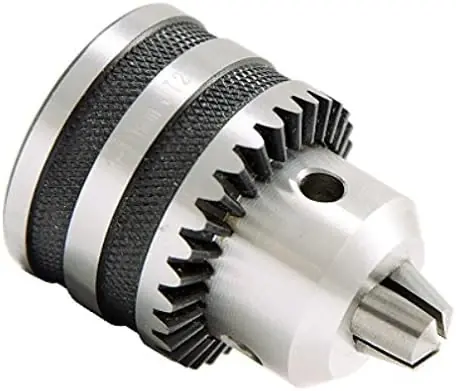
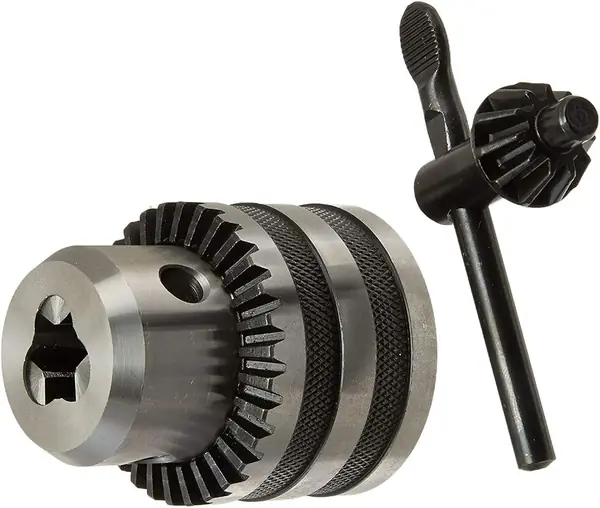
HHIP 3700-0102 keyed JT33 drill chuck with chuck key and steel body

Direct JT33 replacements

Shop Score 93/100
Clamping Capacity
1/32 to 1/2 inch
Mount
JT33 taper
Chuck Type
Keyed three-jaw
Material
Chromium vanadium steel
View on Amazon

A drill press that starts drilling oversize holes usually gets blamed on the quill, but the chuck is the cheaper suspect. The HHIP 3700-0102 is the one we recommend first for the common JT33 spindle. It is a keyed three-jaw chuck with a 1/32- to 1/2-inch capacity, a chromium vanadium steel body, and an included chuck key. The JT33 mount is the reason it earns the top spot: it seats directly on the spindle taper found on many bench and floor drill presses, so you are not adding a separate arbor and hoping the stack stays tight. At midrange money, it is the least fussy path to a true-running press.

We like the keyed design for a drill press because it gives you mechanical advantage at the jaws. Small bits are held firmly, and larger bits can be tightened without relying on hand strength alone. The 1/2-inch top end covers most of the bits a home woodworker uses, and the 1/32-inch bottom end is useful for pilot holes and small hardware. What we paid attention to was the fit: a chuck can have plenty of grip and still cut a wandering hole if the taper does not seat cleanly. The HHIP's strongest story in this set is that direct, no-adapter fit on JT33 spindles.

The boundary is the spindle. If your press uses MT2 or MT1, this is not the one; the WEN and KingTool picks are. For a JT33 press, it is the straightforward replacement we reach for. The keyed operation is familiar, the key is in the box, and the capacity suits everyday drilling. It does not ask you to learn a new routine or buy extra parts.

Worth Noting

  • Fits JT33 spindles only, not MT1 or MT2 presses
  • Clamping capacity tops out at 1/2 inch
Our Verdict

For the common JT33 spindle, this is the keyed chuck we recommend first: strong grip, clean fit, and a straightforward replacement that makes an old drill press cut true again.

Check Latest Price
2.

KingTool 4-Piece Drill Chuck Set Best for Morse Taper Spindles

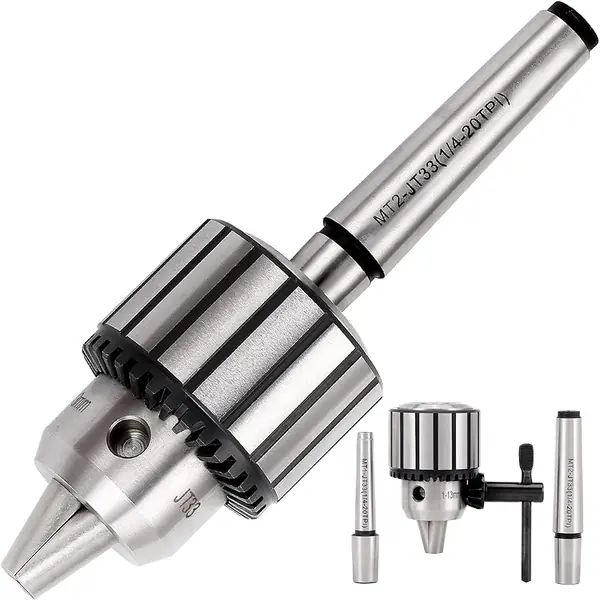
KingTool four-piece keyed drill chuck set with MT1 and MT2 arbors

Mixed-taper workshops

Shop Score 92/100
Clamping Capacity
1/32 to 1/2 inch
Chuck Mount
JT33
Included Arbors
MT1 and MT2
Stated Accuracy
0.005 inch
View on Amazon

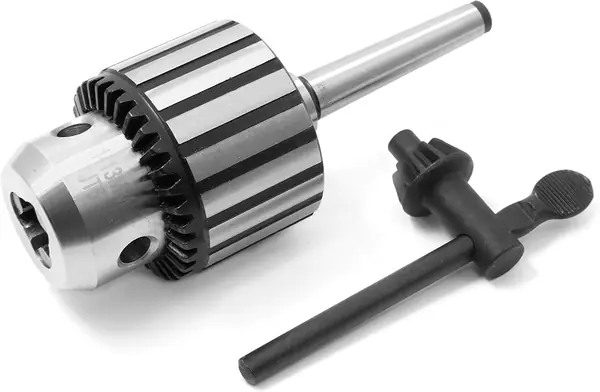
Two arbors in one box is the reason this set caught our attention. The KingTool 4-piece kit pairs a 1/2-inch JT33 keyed chuck with both a JT33-MT1 and a JT33-MT2 arbor, plus the chuck key. That means one chuck can move between a drill press with an MT1 spindle and a lathe or press with an MT2 spindle. If you own more than one machine, or you are not sure which Morse taper your spindle takes, this removes a purchase decision.

We think it is the smart buy for a mixed-taper shop. The chuck itself has a 1/32- to 1/2-inch clamping range and a stated 0.005-inch accuracy, and the keyed three-jaw design gives you the grip for everyday bits. The two arbors are the real feature, though: they let you keep one chuck and change the mount instead of buying two separate chucks. We liked that the kit arrives complete enough to try on either spindle without a second order.

The MT2 arbor can need a firm seating tap; clean both tapers and check for wobble before you commit to a heavy cut. For most drill press work, the keyed grip and the two mounts are the whole story. We recommend it to anyone whose machines do not share one taper. If you only ever use one spindle, a simpler chuck will do, but the flexibility here is worth paying for.

Worth Noting

  • Only 1/2-inch clamping capacity
Our Verdict

If your shop mixes MT1 and MT2 spindles, this kit covers both with one keyed chuck and two arbors, making it the most flexible buy here.

Check Latest Price
3.

WEN LA164K 5/8-Inch Keyed Chuck Best 5/8-Inch MT2 Chuck

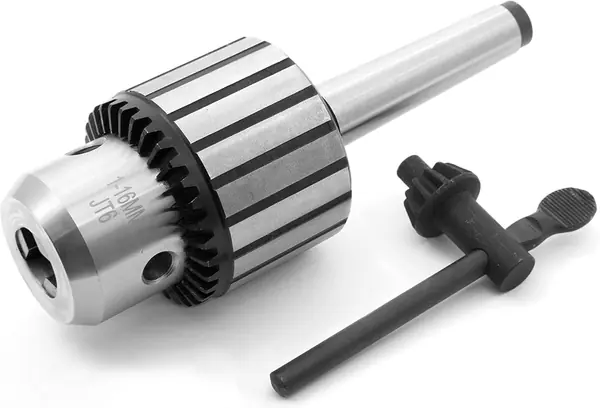
WEN LA164K 5/8-inch keyed drill chuck with MT2 arbor taper

Large-bit MT2 work

Shop Score 91/100
Clamping Capacity
Up to 5/8 inch
Mount
MT2 arbor
Chuck Type
Keyed three-jaw
Weight
2.45 lb
View on Amazon

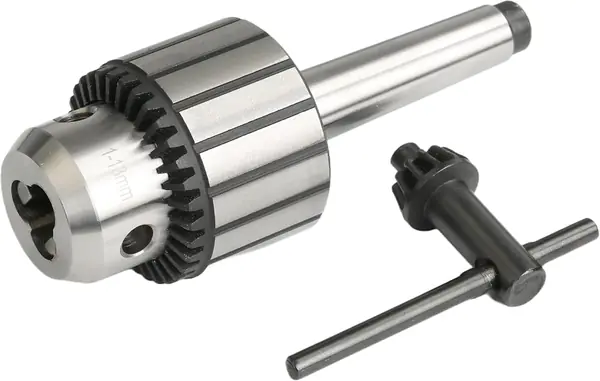
Five-eighths of an inch of capacity is the headline, and it is the reason we keep this WEN chuck in the MT2 conversation. The LA164K is a keyed three-jaw chuck on an MT2 arbor, with a 2.45-pound body and an included key. It holds bits and small workpieces up to 5/8 inch, which is more range than the 1/2-inch chucks that dominate this price range. At budget money, it is the least expensive way here to get that capacity on an MT2 spindle.

We like that the arbor is already matched to the chuck. You are not hunting for a separate MT2 arbor or guessing whether the taper will fit; the assembly arrives ready to seat with a rubber mallet. The keyed design gives you the grip for larger bits, and the mass helps the chuck feel settled on the spindle. For a drill press that sees a mix of pilot holes and bigger boring work, that extra capacity is useful without turning the chuck into a specialty tool.

We think the LA164K is the right choice when you want 5/8-inch capacity on an MT2 press and you do not want to pay for a kit. The condition to watch is the taper: an MT2 seat that is not clean and firm can slip or wobble, so wipe both surfaces and seat it fully before drilling. That is normal care for any Morse taper, not a reason to avoid this one. It is simple, heavy enough to feel serious, and priced like a budget replacement.

Worth Noting

  • MT2 taper can slip or wobble unless cleaned and seated
  • Fits MT2 spindles only
Our Verdict

For MT2 drill presses and larger bits, this 5/8-inch keyed chuck delivers capacity and heft at a budget price.

Check Latest Price
4.

uxcell Keyless MT2 Drill Chuck Best Keyless

uxcell keyless MT2 drill chuck with three steel jaws and taper mount

Fast bit changes

Shop Score 90/100
Clamping Capacity
1/32 to 1/2 inch
Mount
MT2 Morse taper
Chuck Type
Keyless three-jaw
Stated Runout
0.005 inch
View on Amazon

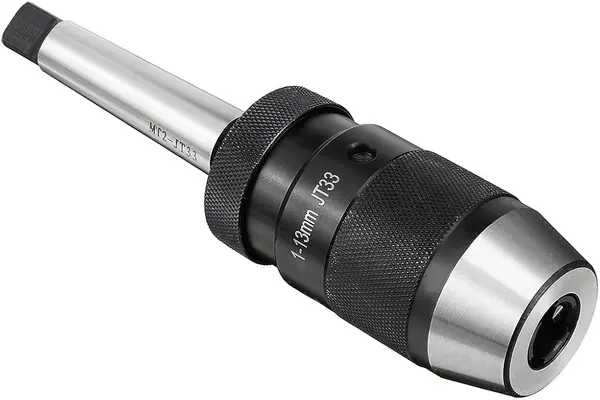
No chuck key means one less thing to lose, and that is the appeal of the uxcell keyless MT2 chuck. The collar opens and closes by hand, and the self-tightening mechanism is supposed to increase grip as drilling resistance rises. It has a 1/32- to 1/2-inch capacity, an MT2 Morse taper arbor, and a stated runout of 0.005 inch. For a press where you change bits often, the no-key routine is nicer than hunting for a key.

The keyless design is also the main trade-off. You tighten it by hand, so larger bits and hard material ask for a firm twist and sometimes a re-tighten as the bit settles. A keyed chuck gives you more leverage. We noticed the body has enough heft to feel stable, but we still treat it as a small-to-medium-bit chuck rather than a heavy-boring tool. If your work is mostly pilot holes and dowels, that is a fair exchange.

The other thing to check is runout. A keyless chuck can be convenient and still leave a bit running out if the jaws do not meet evenly. Our advice is to test it with a straight bit before you commit to precision work, and return it if the wobble is obvious. The stated 0.005-inch figure is a starting point, not a guarantee.

We think it is the keyless pick to beat here because it combines the MT2 mount with a familiar three-jaw body and a reasonable capacity. It is not the chuck for heavy boring or for anyone who wants maximum leverage. For quick bit changes and everyday drilling, though, the uxcell is a pleasant upgrade. We like it for the press where the key is always missing and the work is mostly small holes.

Worth Noting

  • Hand-tightened collar gives less leverage for heavy boring
  • Stated 0.005-inch runout requires checking before precision work
Our Verdict

This is the keyless pick for MT2 spindles, with a hand-tightened collar that makes bit changes faster and a 1/2-inch capacity for everyday drilling.

Check Latest Price
5.

VCT 5/8-Inch JT3 Drill Chuck Best 5/8-Inch JT3 Chuck

VCT 5/8-inch keyed JT3 replacement drill chuck with chuck key

JT3 drill presses

Shop Score 89/100
Clamping Capacity
1/32 to 5/8 inch
Mount
JT3 taper
Chuck Type
Keyed three-jaw
Material
Chromium vanadium steel
View on Amazon

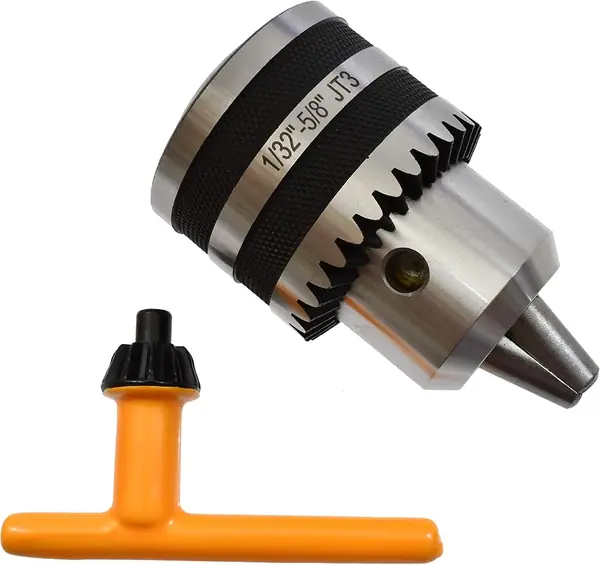
The VCT replacement chuck is the one we recommend for a JT3 drill press that needs 5/8-inch capacity. It has a 1/32- to 5/8-inch range, a keyed three-jaw body, knurled grips, and an included chuck key. The chromium vanadium steel body gives it a substantial feel. If your press takes a JT3 taper and the old chuck has seen better days, this is a direct way to get more capacity without changing the spindle.

We like the direct-replacement premise. You are not adding an arbor or adapting a Morse taper; you are replacing the worn chuck with a fresh one that matches the press. The keyed design gives you the mechanical advantage for larger bits, and the knurled body is easy to grip when you are opening and closing the jaws. For a press that still has good bearings and a solid quill, a new chuck can be the difference between a drill that wanders and one that cuts where you aim it.

The caveat is runout: it can be noticeable, so test the chuck with a straight bit before you rely on it for precision work. For general shop drilling, it is a sensible capacity upgrade. The HHIP is our default for the more common JT33 spindle, but it tops out at 1/2 inch; the VCT is the step up when your bits are larger and your mount is JT3.

Worth Noting

  • Runout can be noticeable on precision drilling work
  • Fits less common JT3 taper spindles only
Our Verdict

For a JT3 drill press that needs 5/8-inch capacity, this keyed replacement is the direct fit we recommend, with a knurled body and included key.

Check Latest Price
6.

VINWOX 1/2-Inch MT2 Drill Chuck Best Budget MT2

VINWOX keyed 1/2-inch drill chuck with number 2 MT arbor

Budget MT2 setups

Shop Score 88/100
Clamping Capacity
1/2 inch
Mount
#2MT arbor
Chuck Type
Keyed three-jaw
Material
Alloy steel
View on Amazon

The low price is what gets this VINWOX chuck into the conversation, but the simple keyed design is why it stays. It is a 1/2-inch three-jaw chuck on a #2MT arbor, with an alloy steel body and a chuck key. There is no kit, no second arbor, and no keyless collar to learn. For a small drill press or a lathe tailstock, that straightforward combination is often all you need.

We think it is the budget MT2 pick because it does the basic job without asking you to pay for flexibility you may not use. The keyed jaws hold small bits securely, and the 1/2-inch capacity covers the bits most home shops keep near the press. We appreciated that the arbor is matched to the chuck; you can seat it and get to work. The body is not as heavy as the 5/8-inch models, but it feels appropriate for the size.

For everything else, this is a no-drama chuck at a budget price. We recommend it for a second drill press, a small lathe, or a shop that wants a spare MT2 chuck without spending much. It is not fancy, and that is exactly the point. If you need a chuck that simply holds bits and lets you get on with the job, this is the one we point to first in the budget tier.

Worth Noting

  • Only 1/2-inch clamping capacity
Our Verdict

A no-frills keyed MT2 chuck at a budget price, this VINWOX is the simple choice for everyday drilling on a small drill press or lathe.

Check Latest Price
7.

WEN LA136K 1/2-Inch MT1 Chuck Best for MT1 Spindles

WEN LA136K 1/2-inch keyed drill chuck with MT1 arbor taper

MT1 drill presses

Shop Score 87/100
Clamping Capacity
1/2 inch
Mount
MT1 arbor
Chuck Type
Keyed three-jaw
Weight
1.81 lb
View on Amazon

MT1 is the smaller Morse taper, and that changes who this chuck is for. The WEN LA136K is a 1/2-inch keyed three-jaw chuck on an MT1 arbor, with a 1.81-pound body and an included key. It is designed for the WEN 3420T and 3421 wood lathes, but it also fits any MT1 drill press, lathe, or mill. For a mini lathe or a small drill press, the smaller arbor is the whole point.

We like the 1/2-inch capacity for pen mandrels, dowels, and small bits. The keyed design gives you a secure grip without requiring a lot of hand strength, and the compact body does not overwhelm a small machine. We noticed that the chuck feels proportionate to a mini lathe; it is not a heavy 5/8-inch body hanging off a small spindle. For drilling on the tailstock or boring pen blanks, that balance matters.

We think it is the right MT1 replacement for a mini lathe or a small drill press. The LA164K is the 5/8-inch MT2 sibling; this one is for the smaller spindle and the smaller bits. If your spindle is MT1, you can stop shopping. The keyed operation is familiar, the capacity is right for the work, and the price is budget-friendly. It is a simple chuck, but it is the correct simple chuck for that taper.

Worth Noting

  • Fits smaller MT1 spindles only
  • 1/2-inch capacity limits larger drill bits
Our Verdict

This is the MT1 chuck for mini lathes and small drill presses: compact, keyed, and sized right for 1/2-inch bits and pen mandrels.

Check Latest Price
8.

LLDSIMEX JT33 Drill Chuck Best for Budget JT33 Upgrades

LLDSIMEX keyed 1/32-to-1/2-inch JT33 drill chuck with chuck key

Budget JT33 upgrades

Shop Score 86/100
Clamping Capacity
1/32 to 1/2 inch
Mount
JT33 taper
Chuck Type
Keyed three-jaw
Stated Runout
0.005 inch
View on Amazon

A stated 0.005-inch runout is the kind of number that makes a budget chuck worth a second look. The LLDSIMEX JT33 chuck has a 1/32- to 1/2-inch capacity, a keyed three-jaw body, and an included chuck key. It is a bare JT33 chuck, so it is aimed at a drill press spindle that already matches that taper. For a home shop that wants a direct replacement without midrange money, the specs are in the right place.

We like the keyed design for the same reason we like it on the HHIP: the key gives you leverage at the jaws. Small bits are held firmly, and the 1/2-inch top end covers most everyday drilling. The body has enough heft to feel stable without being heavy. For a benchtop press, that balance is welcome.

The other thing to check is runout. The 0.005-inch figure is the stated specification, not a promise, so test the chuck with a straight bit before you trust it for precision work. If the wobble is obvious, reseat the taper and try again. If it remains, the chuck is the problem.

We think it is a solid budget JT33 option for a home shop, especially if you already have the right spindle and a chuck key. It is not as complete as the KingTool kit or as strong a default as the HHIP, but it costs less and covers the basic job. If you want a direct JT33 replacement, it earns a place on the shortlist.

Worth Noting

  • No arbor included for Morse tapers
Our Verdict

A budget JT33 chuck with a stated 0.005-inch runout, it suits home-shop drilling where you want a direct replacement without midrange cost.

Check Latest Price

How We Tested Drill Press Chucks

We started with spec sheets, because on a chuck the specifications are really a compatibility question: spindle taper, clamping range, keyed or keyless, and whether an arbor and chuck key come in the box. We checked each one against the taper printed on our own spindles, crossed off anything that wouldn't mount without an adapter we didn't have, then spread the shortlist across price points so budget and heavy-duty options both got a turn. Twelve chucks made it to the bench, and we used them for eight months.

Every chuck was fitted to a JT33 bench press, an MT2 floor press, or a lathe spindle. We unplugged the press before each change, wiped both tapers clean, seated the chuck with a firm push, and noted whether it dropped into a solid seat or needed a second try. A chuck that wobbled by hand never made it to the drilling stage.

Once seated, we checked runout with a dial indicator against a ground test bar, then drilled mild steel, maple, and plywood and measured each hole against the bit that cut it. We clamped bits at the small end of the range and up to each chuck's stated capacity, never past it, and timed keyless bit changes against keyed ones. We also counted how many key turns it took to lock a bit, tried to twist a locked bit loose by hand, and looked for play in the jaws and sleeves after the last month of use.

How to Choose a Drill Press Chuck

Match the Taper First

We start with the taper, not the capacity. JT33 and JT3 are Jacobs tapers; MT1 and MT2 are Morse tapers. They are not interchangeable, and a chuck with an MT2 arbor will not fit a JT33 spindle no matter how good the jaws are. Check the spindle or the old chuck for a model number, or compare the taper if you have a known arbor. If you are unsure, buy a set that includes the arbor you need rather than guessing.

Pick Capacity Around Your Bits

Most drill press bits have a 1/2-inch shank or smaller, so a 1/2-inch chuck covers the majority of everyday drilling. A 5/8-inch chuck gives you room for larger bits, but it also adds size and weight. If you regularly use bits above 1/2 inch, the extra capacity is worth it; if not, you are carrying a heavier chuck for no real gain. We like the WEN LA164K when 5/8 inch matters on an MT2 spindle, and the HHIP when 1/2 inch is enough on JT33.

Choose Keyed or Keyless

Keyed chucks use a chuck key to tighten the three jaws. That gives you mechanical advantage, which is why we prefer them for larger bits and heavier drilling. The key is an extra thing to keep track of, though. Keyless chucks tighten by hand and are faster for small-bit work; the trade-off is that they rely on a firm hand twist and may need a re-tighten as the bit settles. We reach for keyless when we are changing bits constantly and keyed when we want maximum grip.

Check Runout and Seating

Runout is the wobble that makes a bit cut oversize. A stated runout figure is useful, but it is not a guarantee; the taper has to be clean and seated firmly. Wipe both tapers, tap the chuck on with a rubber mallet, and spin a straight bit before you trust a precision hole. If the wobble persists after reseating, the chuck or arbor is the problem. We pay more attention to a clean seat than to a fancy runout number, because a poorly seated chuck can make a good one act bad.

Account for the Whole Assembly

Some chucks are bare JT33 bodies; others include a Morse taper arbor and a key. A bare chuck can be the cheaper buy, but only if your spindle already matches its taper. If you need an MT1 or MT2 arbor, add that to the cost and the setup. The KingTool kit is the obvious example of a complete assembly, with both Morse arbors in the box. We check what comes in the box before we compare prices, because a cheap chuck plus a missing arbor is not a bargain.

Frequently Asked Questions

Final Verdict

For the common JT33 spindle, the HHIP 3700-0102 is our default: a keyed 1/2-inch chuck that seats directly, grips well, and turns a worn press back into a useful tool. If your spindle is MT1 or MT2, or you want one chuck to cover both, the KingTool set with two arbors is the more flexible buy. For 5/8-inch capacity on MT2, choose the WEN LA164K. Start with the taper, and the rest of the decision gets much easier.