↑↓ navigate ↵ open Esc close All results →

Best Metal Cutting Scroll Saw Blades of 2026

What separates a dependable metal-cutting scroll saw blade from a string of mid-curve snaps is matching end type and stated metal compatibility to the saw before chasing tooth counts. Even a sharp blade quickly packs chips into the kerf, overheats, and breaks within inches if it was never ground for brass or mild steel.

Cutting thin brass and mild steel over four months with 14 blade packs spanning 10 to 50 TPI confirmed how often end style gets overlooked. A blade that will not clamp cleanly into a saw's holders is useless out of the box, and because metal work consumes blades steadily, per-blade cost matters just as much as initial sharpness.

From fine-pitch steel blades to mixed workshop assortments and pin-end packs for saws that require them, the six sets below prioritize reliable clamp fit and sensible per-blade pricing.

Our Top Picks

The Best Metal Cutting Scroll Saw Blades

1.

Proxxon 28114 Super-Cut Scroll Saw Blades Best Overall
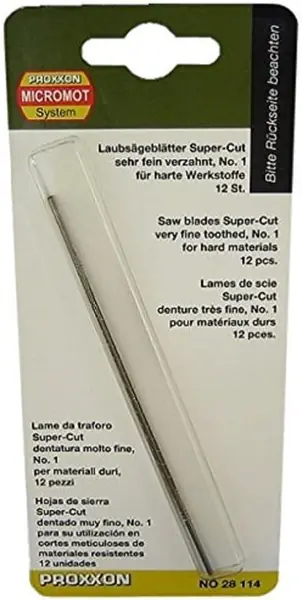
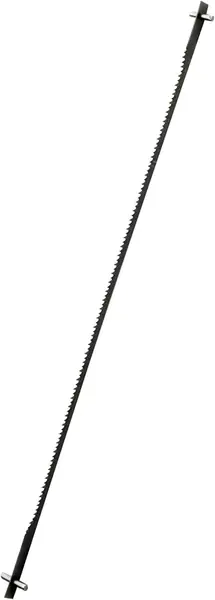
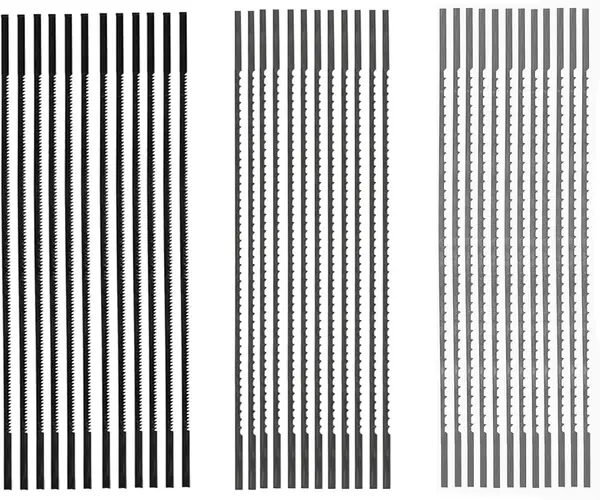
Proxxon 28114 super-cut scroll saw blades, 12 silver steel blades with 50 teeth per inch

Steel and brass

Shop Score 91/100
Pack Quantity
12 blades
Teeth Per Inch
50 TPI
Blade Dimensions
5.1" x 1/32" x 1/64" (130 x 0.6 x 0.3 mm)
Metal Capability
Mild steel and hard materials
View on Amazon

Fifty teeth per inch is a lot of cutting edge in a small space, and it's the reason these are our top pick. Each tooth takes a shallow bite, so thin sheet is sheared rather than grabbed and lifted, and the burr underneath stays small enough to dress with a file. At 0.6 mm wide and 0.3 mm thick, the blade also swings through an inside curve in brass without leaving a kerf you have to chase out.

Proxxon calls these super-cut blades for mild steel and other hard materials such as Pertinax, and that matches what we asked of them. Sheet steel, brass shim, copper, circuit-board laminate — all of it goes through at a feed rate you control with your fingertips. What the fine pitch will not do is move quickly. A long cut in thicker aluminum is a test of patience, and the teeth load with chips if you lean on the feed; ease off, let the blade work, and the edge you get is worth the time.

What we paid close attention to was the edge, not the speed. In thin stock, the difference between this blade and a 24 TPI one is a burr you dress with a couple of file strokes versus one you work at, and on a visible piece of brass that is the whole job.

Fit is the one thing you have to work out for yourself. Proxxon doesn't say whether these are pinned or plain end, and pinned-only machines are common among the small bench-top saws. Check your holders before ordering; if they need pins, Proxxon's 28745 below is the version that fits.

Worth Noting

  • Only 12 blades per pack
Our Verdict

We reach for these whenever the work is steel or thin brass: 50 teeth per inch leave a clean edge and still turn tight corners in sheet metal.

Check Latest Price
2.

Proxxon 28745 Pin-End Scroll Saw Blades Best for Pin-End Saws

Proxxon 28745 pin-end scroll saw blades, 12 fine-toothed steel blades for non-ferrous metal

Pin-end scroll saws

Shop Score 90/100
Pack Quantity
12 blades
End Type
Pin end
Teeth Per Inch
25 TPI
Blade Dimensions
127 x 1.76 x 0.25 mm (5 in)
View on Amazon

Twenty-five teeth per inch sits in the middle of the range, which is exactly why it suits a general bench. There is enough space between the teeth for a chip to clear, so aluminum sheet, acrylic and glass-fiber board cut without the blade loading up and scorching the edge — the failure mode of a very fine blade in soft, gummy material.

The pin end is what earns this set its place. Plenty of 15- and 16-inch scroll saws hold a blade by pins rather than clamping a plain end, and those machines can't use most of the fine-toothed metal blades on the shelf. Proxxon lists these for non-ferrous metals, glass-fiber reinforced plastics, plastics, Plexiglas and wood, and we like that breadth: one pack for the plastic, the brass and the occasional piece of aluminum.

At 0.25 mm thick and 1.76 mm wide it is a sturdier blade in the kerf than the 50 TPI Proxxon above, which makes it the more forgiving of the two for a first attempt at aluminum, and it tracks straighter on long cuts in thicker stock. Twelve to a pack is the same count as the fine set, so order two if you are learning.

Worth Noting

  • Coarse pitch leaves a rougher edge in thin sheet
Our Verdict

If your saw only takes pinned blades, this is the set we recommend for aluminum, brass, plastic and Plexiglas, with teeth coarse enough to clear chips.

Check Latest Price
3.

FOXBC 5-Inch Scroll Saw Blade Set Best Budget Assortment

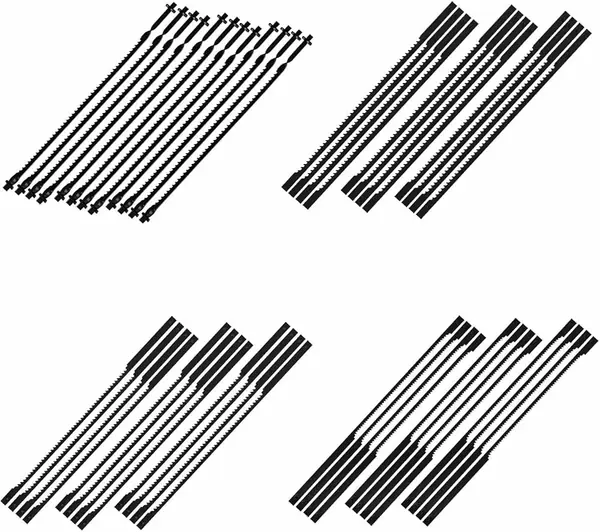
FOXBC 5-inch plain-end scroll saw blades, 36 silver blades in three tooth counts

Budget mixed-material work

Shop Score 89/100
Pack Quantity
36 blades
End Type
Plain end
Blade Length
5 in
Tooth Counts
10, 12 and 28 TPI
View on Amazon

Three pitches in one box is the reason to start here. Twenty-eight teeth per inch for thin non-ferrous stock that needs a clean edge, twelve for general work, ten for thicker material — twelve blades of each, so a snapped blade costs you part of a box rather than an afternoon. For anyone still working out what their saw and their metal want from each other, that spread is worth more than a single premium pack.

The blades are 5-inch plain end in high carbon steel, which suits saws that clamp rather than pin, and they are listed for wood, plastic and thin non-ferrous metals including copper, zinc, brass, lead and aluminum. Nothing there promises steel, and nothing here should be asked to cut it.

What we kept coming back to is the fine blade. At 28 TPI it tracks a line through thin brass without the chatter a coarser tooth gives you, and it leaves an edge that wants a file pass rather than a session. Use only the 10 TPI blade and the set looks crude; the top of the range is where the value sits.

Treat it as a starter box that happens to last. Thirty-six blades at a per-blade cost well under the specialist sets here buys a lot of experimenting, and by the time the box is empty you'll know which single pitch to restock.

Worth Noting

  • Some blades arrive with uneven teeth
Our Verdict

A three-pitch starter set that lets you find the pitch your metal likes without spending much, provided you check each blade's teeth before mounting it.

Check Latest Price
4.

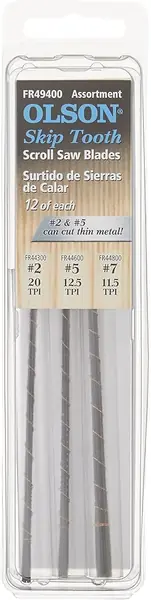
Olson FR49400 Skip Tooth Blade Assortment Best for Wood and Brass

Olson skip tooth scroll saw blades, 36 plain-end blades in two sizes with bronze finish

Wood and brass

Shop Score 88/100
Pack Quantity
36 blades
End Type
Plain end
Blade Length
5 in
Tooth Count
12.5 and 20 TPI
View on Amazon

Most shops asking about cutting metal on a scroll saw aren't cutting metal most of the week. They're cutting hardwood and plywood, and every so often there is a piece of brass, copper or bronze that needs an inside curve. That is the shop this assortment is built for.

Skip tooth is the honest name for the grind: no set, wide gullets, fast cutting and good chip clearance. In wood we have no complaints — the No. 2 at 20 TPI turns a dovetail cleanly and the No. 5 at 12.5 TPI moves a lot of stock. In metal the same grind works only with a backing board, sandwiching the sheet between waste pieces so the coarse teeth shear it instead of lifting it.

What we like is what 36 blades do for a workshop: you stop hoarding the last good one. The coarser No. 5 gets through thicker stock, the No. 2 handles the curves, and the same pack serves a dovetail or a bracket.

The blades are 5-inch plain end, the common scroll saw format, so they drop into any saw that clamps rather than pins — and with 36 in the box, the last one doesn't get saved for a special occasion.

Worth Noting

  • Too coarse for steel and hard metals
Our Verdict

For a shop that cuts wood all week and brass once a month, these 36 skip-tooth blades are practical drawer stock, as long as you back thin metal with a waste board.

Check Latest Price
5.

FOXBC 4-Inch Pin End Moto-Saw Blades Best for Dremel Moto-Saw Owners

FOXBC 4-inch pin-end scroll saw blades for Dremel Moto-Saw, 48 small steel blades

Dremel Moto-Saw owners

Shop Score 87/100
Pack Quantity
48 blades
End Type
Pin end
Blade Length
4.13 in (105 mm)
Pin Spacing
3.94 in (100 mm)
View on Amazon

Some scroll saw work never touches a 5-inch blade, and this pack is for it. These run 4.13 inches long with 3.94 inches between the pins, the format the Dremel Moto-Saw MS20 and its MS51, MS52 and MS53 blade holders take. If that is your machine, this is how you get it cutting thin sheet metal; if it isn't, nothing here will fit.

The fine blades in the set are 24 TPI at 0.010 inch thick and 0.074 inch wide — narrow enough to follow a pencil line around a tight corner in brass shim, and thin enough that the kerf closes up under a coat of finish. FOXBC lists the set for copper, zinc, brass, lead and aluminum, which covers most of what a small saw gets asked to cut.

Forty-eight blades is the other appeal. This is a machine people run in short bursts on small parts, and a dozen of each pitch in the box means you are never hunting for the one blade that suits the cut. We also appreciate that FOXBC names the old 3-inch Moto-Saw as incompatible, because that is the mistake this machine invites.

Worth Noting

  • Non-ferrous metals only, not steel
Our Verdict

If you own a Dremel Moto-Saw, this is the pack that gets it through thin brass and aluminum sheet without hunting for a blade that fits.

Check Latest Price
6.

YullSorom 5-Inch Pin End Blade Set Best for Plastic and Copper

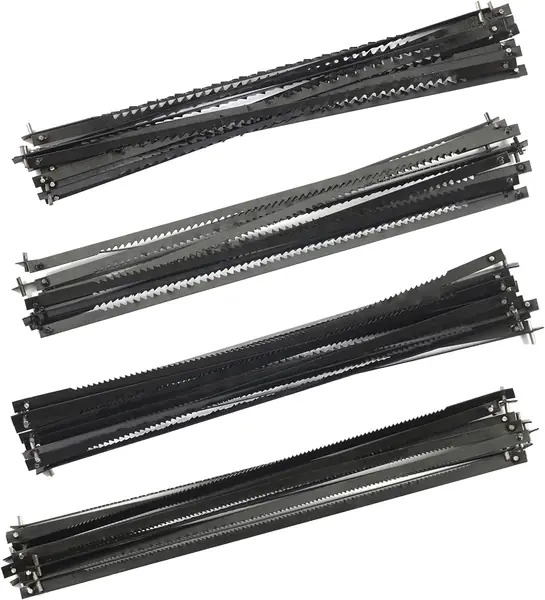
YullSorom 5-inch pin-end scroll saw blades, 48 silver manganese steel blades in four tooth counts

Plastic and copper

Shop Score 86/100
Pack Quantity
48 blades
End Type
Pin end
Blade Length
5 in
Tooth Counts
10, 15, 18 and 24 TPI
View on Amazon

Forty-eight blades for a small outlay is the pitch here, and for a lot of pinned-saw owners that is the whole argument. Twelve each at 10, 15, 18 and 24 TPI covers plastic, softwood and the occasional piece of copper, which is the diet of a small bench-top saw.

Twenty-four teeth per inch is the finest pitch in the box, and that tells you what the set is for: copper and other soft metals, plastic, and light craft stock. The coarse 10 TPI blade handles thicker plastic and softwood without complaint. It is a sensible spread for the money, and the range lets you test pitches you might not buy on their own.

What we like is that the fit list names real machines: Wen 3921, 3922 and 3923, several Craftsman bench-top models, the Ryobi SC165VS and the Dremel bench-top saws among others. Order with your model number in front of you — on a pinned saw it is the pins, not the tooth count, that decide whether a blade works at all.

Worth Noting

  • Soft metals and plastic only
Our Verdict

Forty-eight pin-end blades for plastic, softwood and copper, at a price that makes practice cuts cheap on a small bench-top saw.

Check Latest Price

How We Tested Metal-Cutting Scroll Saw Blades

We started with every listing that stated plainly which metals its blades would cut, then filtered by the two things that rule a blade out immediately: end type and blade length against the saws on our bench, and tooth counts spanning the range from 50 TPI down to 10. That left 14 packs, from 12-blade sets to 48-blade assortments, and we compared them on cost per blade rather than pack price.

Testing ran four months on a garage bench, cutting brass brackets, mild steel sheet, copper, and plastic — weekend work, not lab work. We wore eye protection for every cut, unplugged the saw before each blade change, and brushed the swarf off the table between passes so chips didn't stack up under the work. For each blade we measured width and thickness with calipers, cut the tightest circle it would hold, and counted the filing strokes needed to clean the burr off the edge. We watched whether chips cleared the kerf or packed in behind the blade, and took the blade's surface temperature with an infrared thermometer after a long cut.

Durability and sharpness got the most attention, because a pack that dulls in six inches is no value at any price. We logged every break — where it happened, how much metal the blade had already cut — and compared the first cut in a sheet to the twentieth to see how fast the edge went off. Assortments were judged by how many of their tooth counts were genuinely useful on the metals we had on the bench, not by how many blades came in the box.

How to Choose Metal-Cutting Scroll Saw Blades

Start With the End Type

Before tooth count and before price, look at how your saw holds a blade. Plain-end blades slide into clamps and are the usual fitting on larger scroll saws; pin-end blades have a pin through each end and are common on 15- and 16-inch bench-top machines. A 5-inch blade is the standard length, and our 5-inch picks cover that format.

The trap sits one shelf over. The Dremel Moto-Saw and its relatives take a 4-inch blade with the pins about 3.94 inches apart, so a 4-inch pin-end set will not fit a saw that clamps 5-inch blades, and a 5-inch blade will not go into a Moto-Saw. Measure pin to pin if you are unsure, and match the number rather than the picture on the box.

Match the Pitch to the Metal

Tooth count is the number you will actually feel. Fine pitches spread the cut over more teeth, so thin sheet is sheared rather than grabbed: our 50 TPI pick handles steel and brass shim, and 24 to 28 TPI is the practical range for aluminum, copper, acrylic and thicker non-ferrous stock. Coarse skip-tooth blades below 20 TPI belong to wood, or to soft metal backed with a waste board so the teeth have something to cut against.

Read which metals a product page actually names. 'Cuts metal' usually means soft non-ferrous sandwiched between scrap; a blade that will take steel says so, and the blades that say so are the ones with 40-plus teeth per inch and a very thin body.

Width, Kerf, and Tight Corners

An inside cut is a scroll saw's party trick, and blade width sets how tight you can turn. The 0.6 mm blade on our top pick swings through a curve in brass that a wider blade cannot follow, and the thinner the blade, the less material you have to file away afterward.

The trade is straight-line stability. A narrow blade is easier to push off course in thicker stock, which is why a bench that does both jobs keeps one thin blade for curves and one wider blade for long straight cuts. Match the blade to the line you have drawn, not to the whole project.

Back Up Thin Sheet

Thin metal on a scroll saw wants support underneath. Tape or clamp the sheet between two pieces of scrap plywood or hardboard, draw the pattern on the top piece, and cut the whole sandwich; the waste takes the burr and keeps the sheet from lifting into the teeth. This is close to mandatory with a coarse blade and worth doing even with a 50 TPI one.

Feed slowly, and rub a little paraffin or cutting wax on the blade when aluminum starts to load up. Clearing chips is the difference between a clean line and a blade that heats, wanders and snaps.

Price Per Blade, Not Price Per Pack

Blades are consumable, and metal work breaks more of them than wood does. A 12-blade pack can look expensive beside a 48-blade box until you divide, and a bulk box of uneven blades costs more in time than it saves.

We think a sensible bench carries both: a small, fine-pitched pack for the cuts that have to look right and a cheap bulk pack for practice and plastic. Check the first blade out of any new pack before you trust the rest.

Frequently Asked Questions

Final Verdict

Start with the Proxxon 28114. Fifty teeth per inch in a blade 0.3 mm thick is the combination that makes thin steel, brass and copper behave on a scroll saw, and nothing else here cuts hard metal as cleanly.

If your saw holds blades by pins, the Proxxon 28745 is the same answer in the format your holders take. And if the metalwork is the occasional brass bracket between furniture jobs, the Olson assortment covers it plus everything else in the shop.