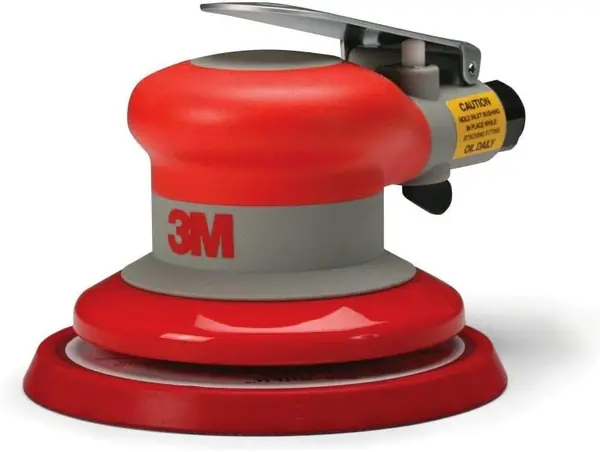
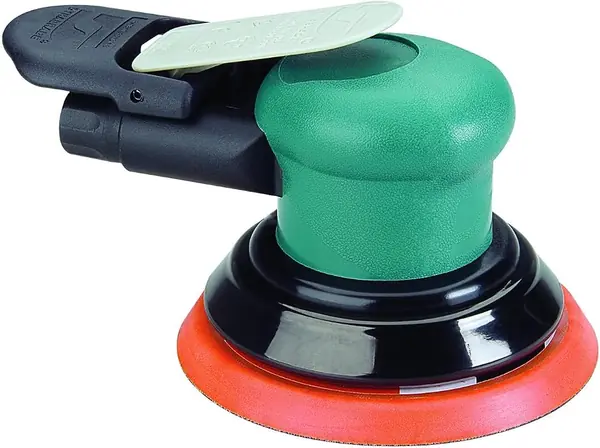
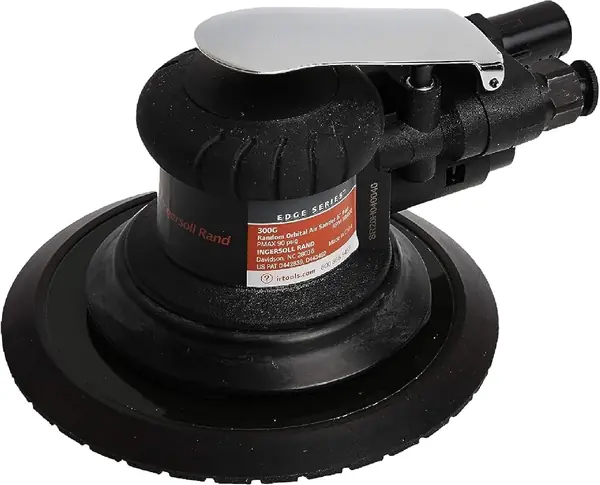
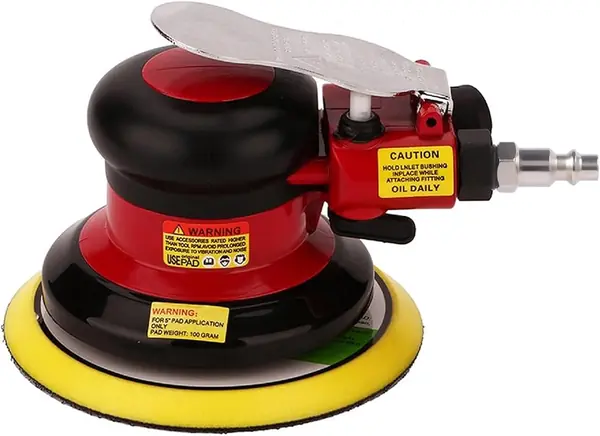
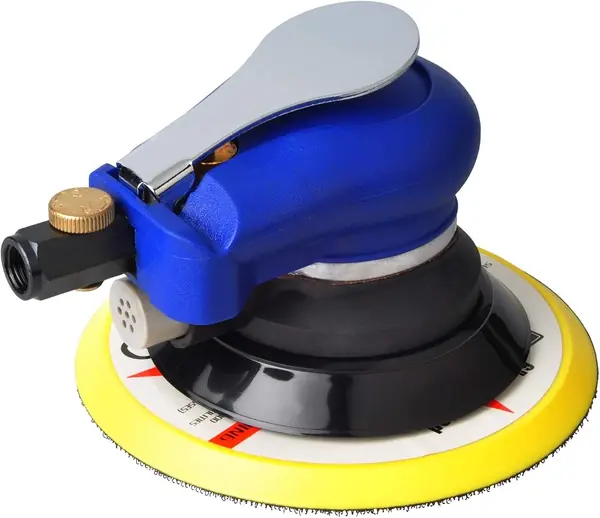
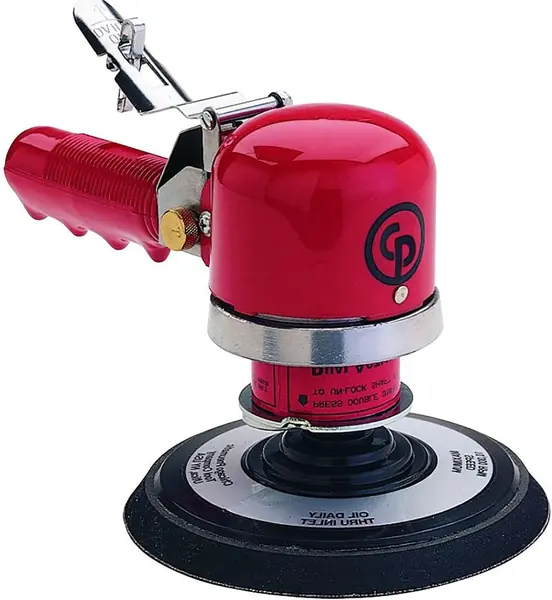
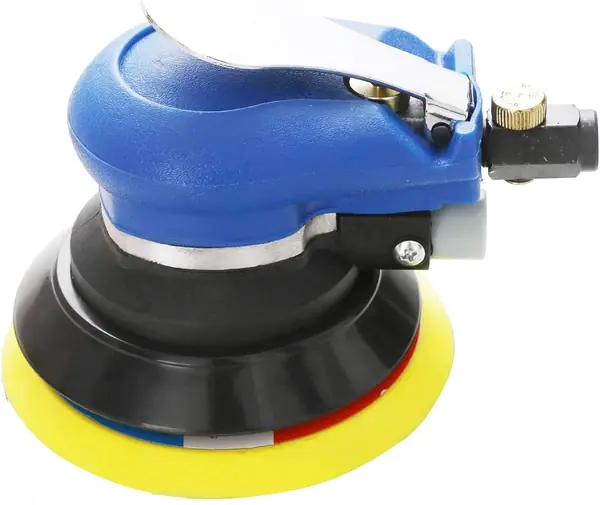
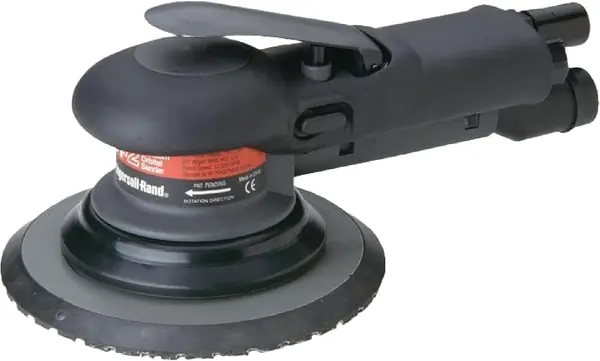
Ingersoll Rand 4151 Air Sander Best Overall
- Free Speed
- 12,000 rpm
- Pad Diameter
- 6 inches
- Orbit Diameter
- 3/16 inch
- Dust Collection
- Vacuum-ready port
Dust is the part of air sanding nobody warns you about. A non-vacuum sander throws a fine cloud across the shop, and in a small woodworking space that cloud settles on everything you just finished. That is the reason the Ingersoll Rand 4151 is our top pick: it is vacuum-ready, pulling air through and around the pad so a shop vacuum or a central system catches the dust at the source and grit stays out of the motor. The 3/16-inch orbit is the finishing size, small enough to leave a smooth surface instead of the pigtail marks a coarser orbit can leave, and 12,000 rpm keeps the pad moving under a light hand.
At 1.9 pounds it is light enough to run up a cabinet side or overhead without your shoulder complaining, and the palm grip and low vibration showed in how long we could sand before we wanted a break. Air demand runs about 8 CFM, so check what your compressor delivers at 90 PSI before you commit — a small portable will run it in short bursts, and a shop compressor will run it all afternoon.
Two practical notes before you order. The vacuum and hose are not in the box, so price those in with the tool. And this configuration takes stick-on discs rather than hook-and-loop, so buy paper with the dust holes already punched; if you step through five grits on every project, the hook-and-loop version of the same sander is worth tracking down. The air inlet also sits close to the vacuum port, and a swivel fitting sorts out the hose routing.
What We Like
- Vacuum-ready port catches dust at the pad
- 12,000 rpm motor with a fine 3/16-inch orbit
- 1.9-pound body is easy to run overhead
Worth Noting
- Vacuum and hose are not included
We recommend the 4151 as the woodshop default: it hooks to your vacuum, sands flat panels quickly, and stays comfortable through a long finishing session.
Check Latest Price