↑↓ navigate ↵ open Esc close All results →

Best Rabbet Router Bits of 2026

A sloppy bearing and chatter-prone carbide can tear out birch plywood veneer along a rabbet long before a cabinet back or drawer bottom ever gets fitted. Because the joint itself is just a stepped shoulder along a board's edge, buyers routinely grab the cheapest bit on the rack and end up fighting scorched oak and uneven depths.

Cutting pine, white oak, and birch ply with a dozen rabbet bits over eight months on both a compact trim router and a router table showed that shank size dictates workflow from the start. Quarter-inch shanks match handheld trim routers, whereas half-inch shanks require a full-size collet and track noticeably smoother under heavy passes.

Bearings also warrant scrutiny, since loose or undersized collars drift off line and small rings vanish easily in a drawer. Depending on whether you prefer changing a collar stack on one body or swapping dedicated cutters, the seven options below deliver clean shoulders without tear-out.

Our Top Picks

The Best Rabbet Router Bits

1.

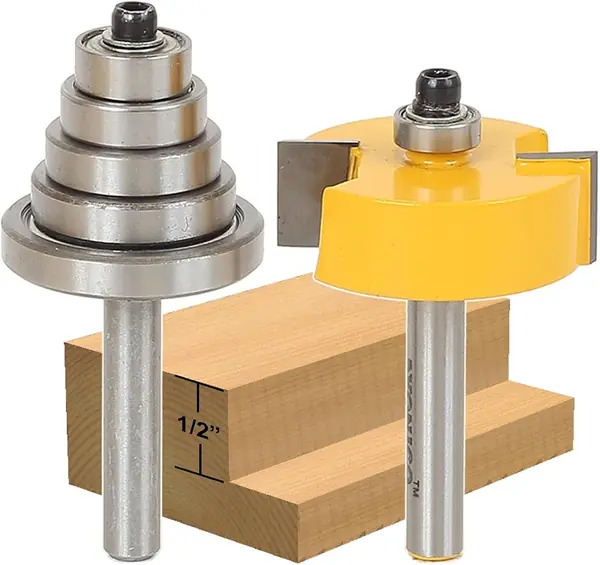
Freud 32-504 Rabbeting Bit Set Best Overall
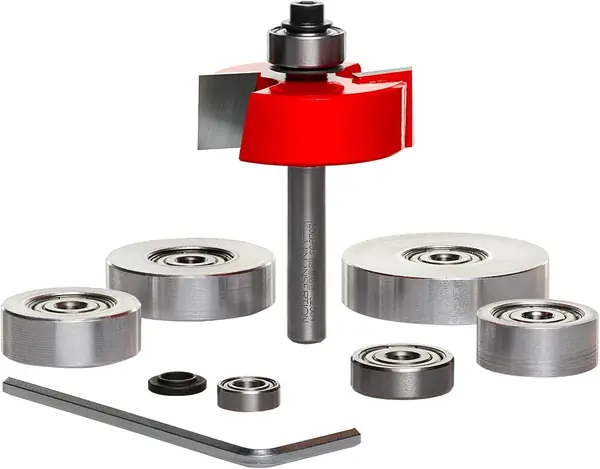
Freud 32-504 rabbeting bit set with interchangeable bearings and 1/4-inch shank

All-around shop use

Shop Score 94/100
Shank
1/4 inch
Rabbet Depths
1/8 to 1/2 inch
Cutter Diameter
1-3/8 inches
Max RPM
16,000
View on Amazon

A stack of interchangeable bearings takes the Freud 32-504 from a 1/8-inch shoulder behind a cabinet back out to a half-inch rabbet on built-up molding, and it gets there without a second bit or a second setup. One 1/4-inch shank, one wrench, and enough depths to cover the rabbets most of us actually cut.

That range with that little fuss is why it is our top pick. The bearings swapped in about a minute each, seated square, and spun free; the carbide left clean shoulders on both faces of 3/4-inch plywood and red oak, with no tearout at the exit corner. Nothing about the bit called attention to itself, which is close to the highest thing we can say about a router bit.

The 1/4-inch shank is the other half of the case for it. It fits trim routers, palm routers, and the small collet on a full-size machine, so the bit travels between setups without an adapter, and handheld along a cabinet side it stays flatter than a half-inch bit. If your work is hundreds of feet of rabbet on a table, the heavier shank of the Freud 32-522 or the Whiteside 1955 will feel steadier, and that is the only real trade here.

Get in the habit of checking each bearing for free spin before it goes on the bit, and keep the spares in a small bag with the wrench. Bearings are the part that wears, and a set this size means several of them are loose in a drawer by the second project.

Worth Noting

  • 16,000 RPM ceiling rules out fixed-speed routers
Our Verdict

We recommend it as the default: one bit, a bearing for every depth from 1/8 to 1/2 inch, and a shank that fits the router already on your bench.

Check Latest Price
2.

Whiteside 1955 Multi Rabbet Set Best for Table-Mounted Routers

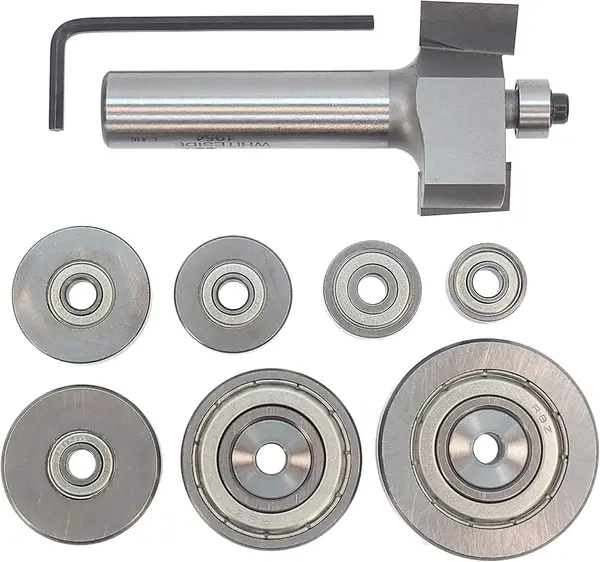
Whiteside 1955 multi rabbet router bit set with eight bearings and plastic case

Table-mounted routers

Shop Score 93/100
Shank
1/2 inch
Bearings
8 included
Rabbet Depths
Flush trim to 1/2 inch
Cutter Diameter
1-3/8 inches
View on Amazon

Eight bearings, eight depths, and 1/16-inch steps between most of them: the Whiteside 1955 is built for the cut that has to hit a number rather than come close to one. Flush trim sits at one end of the range, a half-inch rabbet at the other, and a 1-3/8-inch cutter with a half-inch cutting length in between.

On the table it earned its keep. The cutter sliced red oak and 3/4-inch plywood without fuzzing the cross-grain shoulder or burning the long grain, and both faces of the rabbet came off the bit ready for a light sanding. The bearings are honed flat, swap with the included hex wrench, and go back into their slots in a hinged plastic case, which matters more than it sounds when the rabbet you need is 1/16 inch off the one you just cut.

We recommend it without hedging to anyone cutting rabbets by the dozen: the half-inch shank carries the load through a long run and the fine bearing steps mean the shoulder lands where the drawing says. And it is the only bit in this group that goes all the way down to flush trim, which turns the same cutter into a pattern bit for trimming veneer or edge banding.

Worth Noting

  • 1/2-inch shank only fits full-size collets
Our Verdict

Our choice for repetitive joinery: eight depths in 1/16-inch steps, bearings that stay flat and quiet, and the only set here that reaches flush trim.

Check Latest Price
3.

Freud 32-522 Rabbeting Bit Best Value for 1/2-Inch Collets

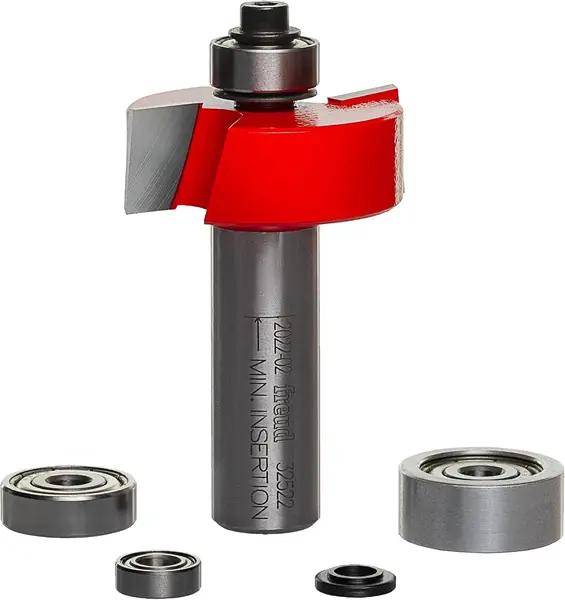
Freud 32-522 rabbeting bit with 1/2-inch shank and interchangeable bearings

Full-size router collets

Shop Score 92/100
Shank
1/2 inch
Rabbet Depths
5/16 to 1/2 inch
Cutting Height
1/2 inch
Overall Length
2-1/4 inches
View on Amazon

Four bearings, a half-inch cutting height and a 1/2-inch shank: we point anyone with a full-size router at this Freud first, because it cuts the rabbets that turn up in real work for a good deal less than the premium sets. It is the value pick of the group, and it does not feel like one in the cut.

The bit itself is straightforward: two flutes, a 1-3/8-inch diameter, 2-1/4 inches of overall length that keeps the body clear of the collet when you are working close to a fence, and carbide that arrived sharp. It took a half-inch-deep rabbet in red oak in two passes with a clean shoulder and no burn, and the bearing seats flat enough that the depth holds between cuts.

Where it earns its keep is repetition: a run of drawer boxes, a stack of face frames, a molding that needs the same shoulder every time. Four depths, one wrench, a shank that does not wander. Changing bearings takes a minute, and the roller comes off and goes back on without the fuss that makes people stop changing depths altogether.

Worth Noting

  • Starts at 5/16 inch, so no shallow rabbets
Our Verdict

We like it for full-size routers: four depths, a stiff half-inch shank, and cuts that come off the bit ready for a light sanding.

Check Latest Price
4.

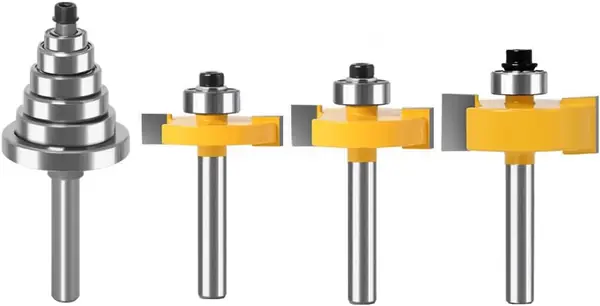
Yonico 14705q Rabbeting Bit Set Best Budget Single-Bit Set

Yonico 14705q rabbet router bit with six bearings and 1/4-inch shank

First rabbeting bit

Shop Score 89/100
Shank
1/4 inch
Bearings
6 included
Rabbet Depths
1/8 to 1/2 inch
Cutting Height
1/2 inch
View on Amazon

In a trim router, a 1-3/8-inch rabbeting bit is a lot of cutter to spin, and the Yonico 14705q is the set we hand people working with a small machine. Fed in light passes it cuts clean; pushed hard, it lets you know.

Six bearings from 3/8 inch to 1-1/8 inch give it the same 1/8-to-1/2-inch depth spread as the Freud sets, and the C3 micro-grain carbide arrived sharp enough to leave a polished shoulder in hard maple and splinter-free edges in plywood. It is our budget pick because the cut does not feel budget: no chatter at the entry, no burn on the long grain, no fuzz on the exit corner.

The case is the quiet luxury here. A fitted box holds the bit and all six bearings, so the depth you want is the depth you can find, and the whole thing drops into a drawer between projects. At this price we treat the cutter as a consumable: use it hard, and when the edge finally goes, replace it rather than hunting for a shop that will regrind a small bit.

Worth Noting

  • Bearing retaining screws strip if over-tightened
Our Verdict

We hand this to anyone starting out: six bearings, a fitted case, and an outlay that makes a first rabbeting bit an easy yes.

Check Latest Price
5.

WSOOX 3-Piece Rabbet Router Bit Set Best Multi-Bit Set for Thin Stock

WSOOX three-piece rabbet router bit set with six bearings in a plastic box

Drawers and frames

Shop Score 88/100
Shank
1/4 inch
Bearings
6 included
Cutting Heights
1/4, 3/8 and 1/2 inch
Cutter Diameter
1-3/8 inches
View on Amazon

Three bits, not one. WSOOX splits the job across 1/4-, 3/8- and 1/2-inch cutting heights, each on its own carbide cutter, with six bearings shared among them. It is a different idea from the single-bit sets here, and for thin material it is the better one.

The bearings run from 3/8 inch to 1-1/8 inch, so depth comes the usual way, with a smaller bearing cutting deeper, and all three cutters use the same stack. What changes with the bit is the width of the cut. Drop to the 1/4-inch cutter for a drawer bottom or a frame rabbet and there is far less steel in the wood, which a small router notices immediately.

In pine and plywood the cut came out clean, and the coating did what it claims: chips slid off the body instead of packing onto it. The bearings came off and went back with the supplied wrench, and the whole set lives in a small plastic box.

For a shop that builds drawers, boxes and frames from stock under 3/4 inch, this is the set we recommend ahead of the single-bit options, and the narrow cutters are the entire reason. On cabinet sides and 3/4-inch plywood, though, one half-inch bit with a full bearing stack gives you the same rabbets with less to keep track of, which is where the Freud 32-504 takes over.

Worth Noting

  • Short shank leaves little to clamp
Our Verdict

Our pick for thin stock: three cutting heights let you cut narrow rabbets without wrestling a half-inch bit through a drawer side.

Check Latest Price
6.

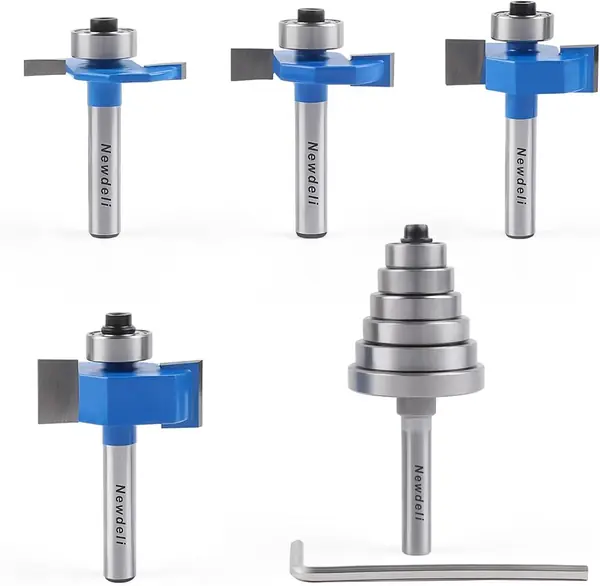
Newdeli 4-Piece Rabbet Router Bit Set Best for Budget Box Building

Newdeli four-piece rabbeting router bit set with six bearings and 1/4-inch shanks

Budget box building

Shop Score 86/100
Shank
1/4 inch
Bearings
6 included
Cutting Heights
1/8, 1/4, 3/8 and 1/2 inch
View on Amazon

Four cutters instead of the usual three, and the extra one is the 1/8-inch cutting height, the bit for thin stock, drawer bottoms and picture-frame rabbets. That makes this the most flexible of the inexpensive sets, and the six bearings give it the same depth adjustment the others have.

In cherry and plywood the cutters left square shoulders and clean faces, and the short bodies stay rigid in a trim router. Six bearings and four cutters pack into one small case, and that case is the reason the set stays usable: loose bearings are how a four-bit set quietly becomes a one-bit set.

Worth Noting

  • Factory-torqued bearing screws resist first removal
Our Verdict

The budget set we point to when you need four cutting heights, including the 1/8-inch bit that thin stock and frame work call for.

Check Latest Price
7.

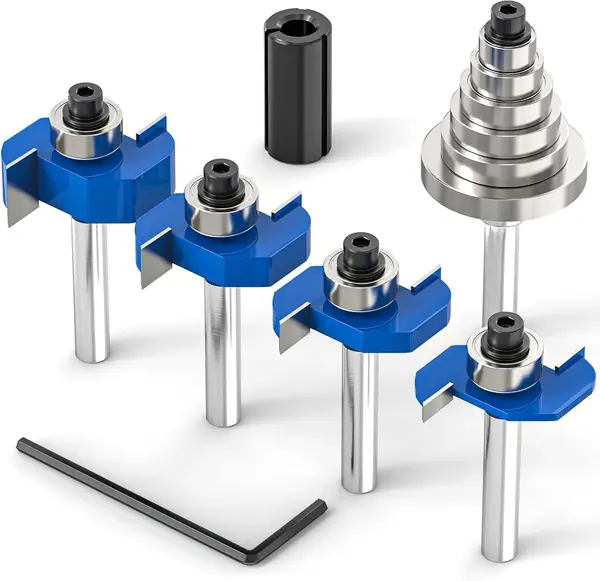
MEIGGTOOL 4-Piece Rabbet Router Bit Set Best for 1/2-Inch Collet Routers

MEIGGTOOL four-piece rabbet router bit set with six bearings and collet adapter

1/2-inch collet routers

Shop Score 85/100
Shank
1/4 inch
Bearings
6 included
Cutting Heights
1/8, 1/4, 3/8 and 1/2 inch
Included Adapter
1/2-to-1/4-inch collet
View on Amazon

A 1/2-to-1/4-inch collet adapter is the odd item in this box, and it is the reason to look here if your router only came with the big collet. The adapter lets the 1/4-inch-shank bits run in a half-inch collet, which is a solution in the box rather than another purchase.

The rest is familiar budget territory: four cutters at 1/8-, 1/4-, 3/8- and 1/2-inch cutting heights, six bearings, coated bodies and a quarter-inch shank. The edges arrived sharp, and the rabbets we cut in soft maple and plywood came off clean on both faces with no fuzz on the cross-grain shoulder.

Of the inexpensive four-bit sets, this one has a reason to exist beyond price, and the adapter is it. A native quarter-inch collet still grips better than a reducer sleeve, so check the clamp and take a test cut on scrap before you trust the depth. If you already own the small collet, the Newdeli set gives you the same four cutters with money left over.

Worth Noting

  • Included reducer sleeve grips less securely than a native quarter-inch collet
  • Costs more if you already own a quarter-inch collet
Our Verdict

We suggest this for the adapter: it lets a quarter-inch-shank set run in a half-inch collet without another order.

Check Latest Price

How We Chose and Tested the Best Rabbet Bits

We started by collecting every rabbet set we could find in 1/4-inch and 1/2-inch shanks, then trimmed the field on specs and price: maximum RPM rating, bearing count and range, cutting height, and whether the set came in a case worth keeping. A dozen made the cut, from single bits with a full stack of bearings to multi-bit kits, and from budget imports to cutters from long-established American shops.

For eight months they lived in the shop. We cut rabbets for cabinet backs and drawer bottoms in 1/4-inch plywood, ran half-inch-deep rabbets in white oak and maple for shelves and face frames, and pushed each bit to the widest cut its height allowed to see where it ran out. Every bit went into a compact trim router and a table-mounted full-size machine, which is how we sorted out shank fit, cutter diameter, and how much router the wide cuts really ask for.

Bearings got the closest attention, because they wear out and go missing well before the carbide does. We spun each one dry before the first cut, swapped collars with whatever wrench came in the box, confirmed every bearing screw seated snug, and watched for collars that slipped or wobbled under load. Sharpness we judged by the cut itself: whether white oak end grain came off in ribbons or fuzz, and whether plywood tore out at the exit corner as the months added up.

Storage counted too, so we tracked which bearings went back into a case and which wandered into a drawer. Before any bit touched wood, we checked its maximum RPM against the router's top speed, seated the shank to the maker's minimum clamp depth, and wore eye protection throughout; a loose bearing or keeper at router speed is not a small problem.

How to Choose a Rabbet Router Bit

Match the Shank to the Router You Own

Shank diameter eliminates half the field before you look at anything else. A quarter-inch shank fits trim routers, palm routers, and the small collet on a full-size machine; a half-inch shank fits only a full-size collet, and it is the better choice for a bit that lives in a table, where the extra steel quiets chatter on long runs. Check the collet you actually have, not the one you assume came with the router.

Speed matters as much as diameter. Every bit carries a maximum RPM, and a single-speed trim router can run well past the rating on a 1-3/8-inch cutter. If your router has no speed dial, check the number on the bit before you buy and plan on lighter passes.

Bearings Set the Depth, Cutting Height Sets the Width

The cutter is wider than the bearing that guides it, and half the difference between those two diameters is how deep the rabbet cuts. Swap in a smaller bearing and the bit cuts deeper; that is the whole mechanism, and it is why a finer bearing step gives you more control. The Whiteside 1955 runs eight bearings in 1/16-inch steps, which is the difference between a rabbet that fits undersized plywood and one that leaves a visible step.

Cutting height is the other axis, and it is what separates the multi-bit sets from the single-bit ones. A half-inch cutting height is the widest rabbet that bit can cut; the WSOOX and Newdeli sets add quarter- and eighth-inch cutters for thin stock, drawer bottoms and frame moldings. If everything you build is 3/4-inch stock, one bit covers it, and extra bearings in the same 3/8-to-1-1/8-inch spread buy you nothing.

The Bearings Are the Wear Part

Bearings take the heat and the grit, and one that stops spinning freely will score the workpiece edge instead of rolling along it. Spin each bearing before the first cut, brush the dust out after a session, and check the retaining screw. Use a hex key that fits the screw properly, because a loose key is the fastest way to round a head, and snug the screw rather than leaning on the wrench.

Two or three light passes also keep a bearing alive longer than one heavy pass. A full half-inch-deep rabbet in oak is a lot of load on a quarter-inch shank, and much of that load lands on the bearing. If the motor note drops or the shoulder starts to burn, you are taking too much at once.

One Bit With Bearings, or a Set of Bits?

A single bit with a bearing stack is cheaper, lighter, and leaves you one setup to learn. A set of bits with fixed cutting heights lets you keep a common rabbet dialed in and handles thin material without a workaround, but it means several cutters and a handful of near-identical bearings to keep track of.

Our rule is to count the stock thicknesses you actually build with. If two or more of them are under half an inch, the multi-bit set earns its place; otherwise a single bit with a wide bearing range does everything you need, and the money is better spent on a sharper cutter and a bearing set that steps finely.

Frequently Asked Questions

Final Verdict

For most shops the Freud 32-504 is the rabbet router bit to buy: one bit, a bearing for every depth from 1/8 to 1/2 inch, and a quarter-inch shank that fits the router already on the bench. It is the least fussy way to cover the rabbets in cabinets, drawers and frames.

Step up to the Whiteside 1955 if the router lives in a table and you cut rabbets by the hundred foot, where the half-inch shank and the 1/16-inch bearing steps pay for themselves. And if you build from quarter-inch stock, the WSOOX set's narrow cutters do a job neither of those bits can.