↑↓ navigate ↵ open Esc close All results →

Best Random Orbital Sander Backing Pads of 2026

When an abrasive disc creeps off center or sails across the shop halfway down a board, the fault usually lies beneath the paper rather than with the adhesive or backing. A sander's backing pad controls three things at once: its hook or PSA face anchors the paper, its foam or urethane body dictates how flat the platen tracks, and its bolt or thread pattern determines whether it mounts to your machine at all.

Running 14 replacement pads on 5- and 6-inch random orbital sanders over four months confirmed that hook faces should be treated as wear items. Once flattened nylon hooks lose bite, discs slip, friction spikes, and heat builds against the wood; meanwhile, mismatched 5/16"-24 threads or off-spacing screw holes turn any pad into dead weight regardless of foam quality.

Sorted first by mount type — covering thread-on plates, brand-specific screw-on pads, hook-and-loop and PSA faces, and single or twin packs — and second by pad firmness and edge taper, the eight replacements here keep holding discs after weeks of steady sanding.

Our Top Picks

The Best Random Orbital Sander Backing Pads

1.

Makita 743081-8 5-Inch Backing Pad Best Overall
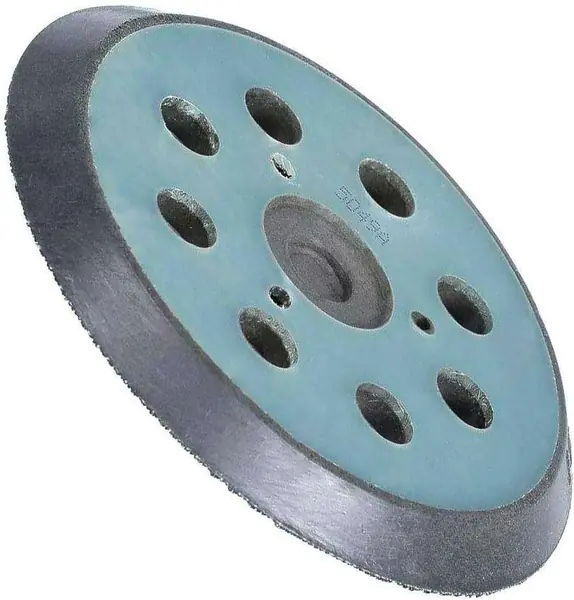
Makita 743081-8 five-inch round hook-and-loop backing pad for random orbit sanders

Makita 5-inch sanders

Shop Score 94/100
Diameter
5 inches
Dust Holes
8
Attachment
Hook and loop
Compatible Model
Makita BO5010
View on Amazon

Genuine replacement parts can feel like a tax, but the Makita 743081-8 earns its keep the moment you line up the screw holes: it drops onto the Makita BO5010-style 5-inch random orbit sander without fuss and puts you back to sanding. The eight-hole pattern matches the original, so the 5-inch paper and dust collection you already own keep working together. That continuity matters more than any single feature here, because a replacement pad that forces a new paper inventory is not much of a replacement.

We paid close attention to the hook face because that is where a replacement pad usually disappoints. The loop held our discs firmly through grit changes, and the pad seated flat without the wobble that makes a tired sander feel worse than it is. The rubber body has enough give to follow a gentle curve but stays flat enough for edge work. It is a straightforward part, and it does the straightforward thing well.

The wear point is the hook surface, and it is the part that eventually gives out; some pads wear early. We treat this as a consumable and keep a spare on the shelf. It also costs more than the aftermarket copies, which is the price of buying the factory-shaped part. That premium is worth it if you own the Makita and want the original screws and paper to line up; if you own a different brand, the screw pattern is the first thing to check.

Worth Noting

  • Costs more than aftermarket replacement pads
  • Hook surface can wear before the backing
Our Verdict

We recommend this genuine Makita pad for anyone restoring a 5-inch Makita random orbit sander: it fits like the original and installs in minutes.

Check Latest Price
2.

NEIKO 30267A 6-Inch Flex Pad Best for 6-Inch Thread-On DA Sanders

NEIKO 30267A six-inch flexible-edge hook-and-loop backing pad with 5/16-24 thread

6-inch DA sanders

Shop Score 93/100
Diameter
6 inches
Face
Hook and loop
Thread
5/16-24
Edge
Flexible tapered
View on Amazon

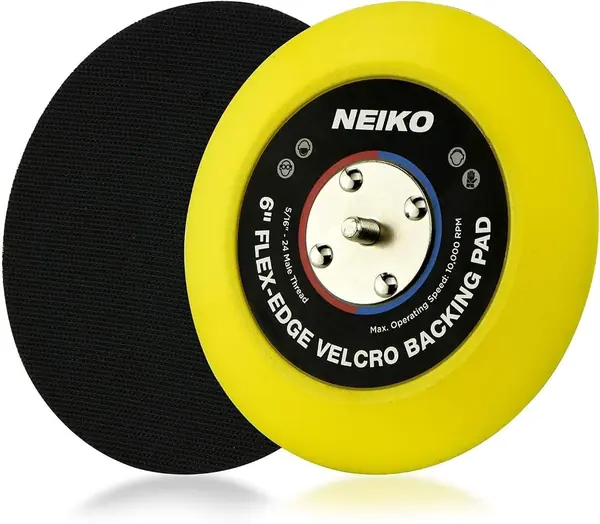
A flexible edge is the reason to choose this NEIKO pad over a stiff backing plate: it lets the paper follow a curve instead of fighting it. The 6-inch pad uses a 5/16-24 thread, so it spins onto most air sanders, DA polishers, and buffers without an adapter. We like that combination for contoured work, body lines, and any job where a flat pad wants to dig in at the edge.

The polyurethane body has a 29-degree flex rating and a tapered rim, which is enough to conform without turning mushy. In our use, the hook face held discs securely and the pad ran smoothly at speed. It is not a precision flat-panel pad; the flexible edge will round over a sharp corner if you lean on it. That is the trade-off, and it is the right one for curved work.

At this price, it is an easy spare to keep in the drawer, and the single pad has enough surface area for a 6-inch DA. The limitation is the mount: a 5/16-24 thread will not fit a four-screw electric sander, so check your spindle before ordering. If you have a thread-on tool and you sand curves as often as flats, this is the pad we reach for.

Worth Noting

  • Thread mount will not fit four-screw sanders
  • Can wear early under heavy use
Our Verdict

For a 6-inch DA or polisher with a 5/16-24 spindle, this flexible NEIKO pad is the value pick we keep coming back to.

Check Latest Price
3.

Poweka Bosch 5-Inch Replacement Pad Best for Bosch 5-Inch Sanders

Poweka five-inch eight-hole hook-and-loop replacement pad for Bosch random orbit sanders

Bosch 5-inch sanders

Shop Score 92/100
Diameter
5 inches
Dust Holes
8
Attachment
Hook and loop
Compatible Series
Bosch ROS10/ROS20
View on Amazon

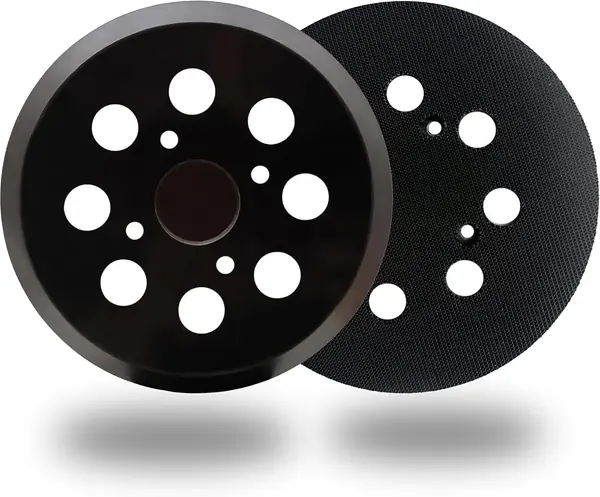
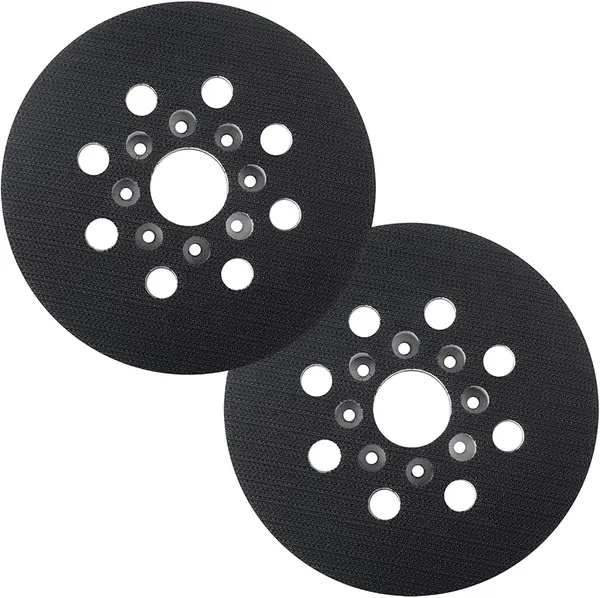
A two-pack turns a consumable replacement into a spare you can keep on the shelf, and that is the practical appeal of this Poweka set. The pads are cut for the Bosch ROS10 and ROS20VS, with an eight-hole pattern that matches the sander's dust collection. We like that the fit is specific rather than universal; the pad sits flat, the screws line up, and the paper has a proper surface to grab.

The high-density hook is the part that matters, and it held our discs without the creeping that makes a sander chatter. The rubber body has a hard durometer, which suits flat panels and edge work better than soft contours. It is not the pad for every Bosch sander, though; the screw pattern and hole count are for the models listed, and a different Bosch needs a different part.

Two pads also mean you can finish a project before you need to reorder, which is the quiet advantage of this set. The installation is a four-screw job with the existing hardware, and the pad seats without shimming. If you own a ROS10 or ROS20VS and your old pad has stopped holding paper, this is the straightforward fix.

Worth Noting

  • Fits only the listed Bosch models
Our Verdict

If you own a Bosch ROS10 or ROS20VS, this two-pack is the straightforward fix we recommend for tired hook-and-loop.

Check Latest Price
4.

Bosch RS6046 6-Inch Hard Pad Best for Bosch 6-Inch Sanders

Bosch RS6046 six-inch hard hook-and-loop backing pad for dual-mode random orbit sanders

Bosch 6-inch sanders

Shop Score 91/100
Diameter
6 inches
Dust Holes
6
Attachment
Hook and loop
Mount
Bosch dual-mode
View on Amazon

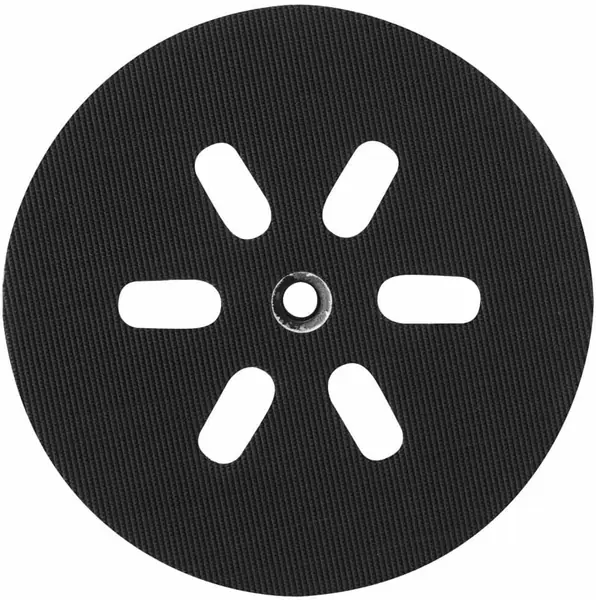
A hard backing pad is the right tool for flat panels, and the Bosch RS6046 is built around that job: a 6-inch rubber body with a six-hole pattern and a firm face that does not flex away from the work. It is made for the Bosch 1250DEVS, 3727DEVS, 3727DVS, and ROS65VC dual-mode sanders, and it seats with the original mounting hardware.

We like the hard durometer for leveling a panel and for fast stock removal; the pad stays flat instead of crowning under pressure. The rubber body also takes some of the vibration out of the tool, which makes a heavy 6-inch sander easier to control. It is not a contour pad. If you need to follow a curve, a flexible edge like the NEIKO is the better choice.

The rubber body has a solid feel that suits a heavy 6-inch sander, and the six-hole pattern keeps the dust path aligned. It is a dedicated flat-sanding part; the hard face will not feather into a tight curve the way a flexible pad does. For flat-panel work on a Bosch 6-inch sander, the OEM shape and six-hole alignment make it the one we trust.

Worth Noting

  • Hook face can wear before the rubber body
Our Verdict

For Bosch 6-inch dual-mode sanders, this hard OEM pad is the one we trust for flat panels and fast stock removal.

Check Latest Price
5.

CASOMAN 5-Inch DA Backing Plate Best Value 5-Inch Thread-On

CASOMAN five-inch polyurethane DA backing plate two-pack with hook-and-loop face

5-inch DA tools

Shop Score 90/100
Diameter
5 inches
Face
Hook and loop
Thread
5/16-24
Maximum Speed
12,000 RPM
View on Amazon

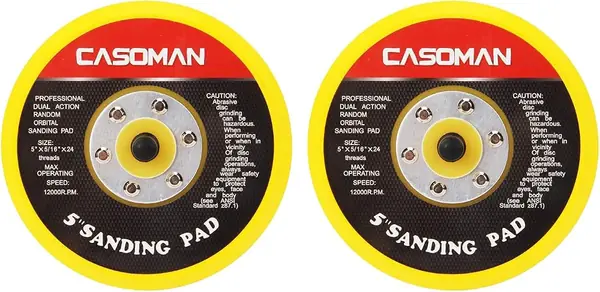
A 5-inch thread-on pad is a simple part, but the CASOMAN set gets the details right: two pads, a 5/16-24 spindle, and a 12,000 RPM ceiling that covers most DA work. The polyurethane body is heat-resistant and balanced, which matters when you are running a polisher or sander for a long session. We like that the set gives you a spare without making you hunt for a matching pair.

The hook face is strong enough to hold a disc through a pass, and the pad spins true without the vibration that makes a DA tiring to hold. The polyurethane body stays balanced when the tool heats up, which is the quality we notice most in a pad at this price. It is a non-vacuum design, so it is not the pad for a dust-collection sander.

For a 5-inch thread-on tool, this is the value pick in our group. The two-pack means you can keep one pad clean and one in service, and the 12,000 RPM rating gives you headroom on most DA sanders and polishers. If you have a 5/16-24 spindle and want a balanced pad without paying premium prices, this is the one we choose.

Worth Noting

  • Non-vacuum face has no dust holes
  • Thread mount will not fit four-screw sanders
Our Verdict

This two-pack is our value pick for 5-inch thread-on DA sanders and polishers, with a strong hook face and a high speed rating.

Check Latest Price
6.

Dura-Gold 6-Inch PSA Backing Pad Best PSA 6-Inch

Dura-Gold six-inch PSA vinyl-face backing plate with low-profile tapered edge

PSA disc users

Shop Score 89/100
Diameter
6 inches
Face
PSA vinyl
Maximum Speed
12,000 RPM
Thickness
10 millimeters
View on Amazon

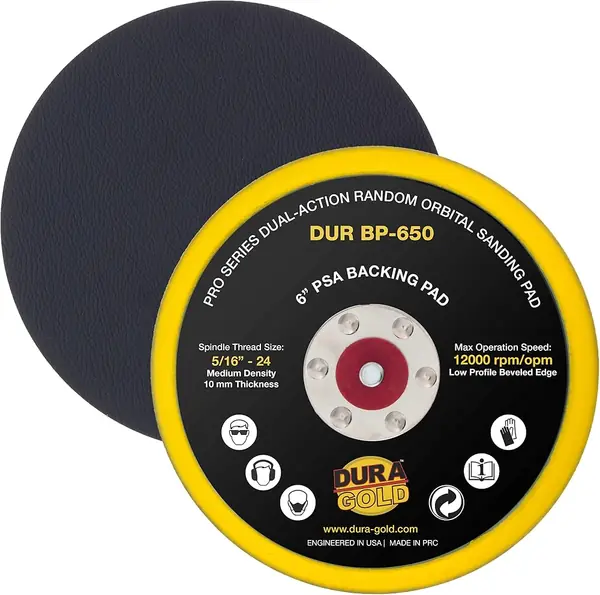
PSA discs are a different workflow, and the Dura-Gold plate is built for it: a vinyl face grabs sticky-back paper without a hook-and-loop layer, and the low-profile 10mm body keeps the sander close to the work. The 6-inch pad has a tapered edge and a 12,000 RPM rating, so it suits a DA sander or polisher running PSA discs.

We like the flat, fast surface this pad gives a 6-inch DA. There is no hook layer to flex or clog, and the vinyl face releases a spent disc cleanly when you peel it up. The 10mm body is stiff enough to stay flat on a panel, and the tapered edge lets you work close to an edge without gouging.

For a 6-inch DA user who already runs PSA, the Dura-Gold is a clean, well-balanced plate at a fair price, and the 12,000 RPM rating gives it room on a fast sander. We keep it for flat panels and paint prep, where the low-profile face shines.

Worth Noting

  • PSA face only, so hook-and-loop discs will not work
  • Low-profile pad gives less cushioning on contours
Our Verdict

If you run PSA discs on a 6-inch DA, this low-profile Dura-Gold plate is the one we pick for a flat, fast surface.

Check Latest Price
7.

Tockrop 5-Inch Ridgid Replacement Pad

Tockrop five-inch eight-hole hook-and-loop replacement pad for Ridgid R2600 and R2601

Ridgid R2600/R2601

Shop Score 88/100
Diameter
5 inches
Dust Holes
8
Maximum Speed
9,200 RPM
Compatible Models
Ridgid R2600, R2601
View on Amazon

The Tockrop pad is a direct-fit replacement for the Ridgid R2600 and R2601, and that is the reason to look at it: four screw holes, an eight-hole dust pattern, and a shape that matches the OEM part. If your original pad has stopped holding paper, this is the least dramatic way to get the sander back in service.

The extra-hard backing is the feature we appreciate most. It resists flexing under pressure, so the pad stays flat on a panel instead of crowning in the middle. The soft rubber layer underneath takes some of the vibration out of the tool, and the high-density hook gives a disc a firm surface to grab.

The screw-hole spacing is the first thing we check. The pad is sold for the R2600 and R2601, but the holes can be off on some examples, and a pad that does not sit flush is not a replacement. Test-fit it before you tighten the screws, and return it if the pattern does not match your old pad.

When it fits, the hard backing and eight-hole pattern make a tired Ridgid feel like a working sander again. It is not a contour pad; the extra-hard backing stays stiff, which is what you want on a flat panel but not on a tight curve. That is the trade-off for a low-cost direct-fit spare. If you want to keep a Ridgid alive through weekend projects, this one does the job.

Worth Noting

  • Hook face can let discs creep
Our Verdict

For Ridgid R2600 and R2601 owners, this is the exact-fit spare we reach for when the original pad gives out.

Check Latest Price
8.

Dynabrade 56106 5-Inch PSA Pad Best for PSA DA Sanders

Dynabrade 56106 five-inch vinyl-face PSA backing pad with urethane body

PSA DA sanders

Shop Score 87/100
Diameter
5 inches
Face
PSA vinyl
Thread
5/16-24
Thickness
3/8 inch
View on Amazon

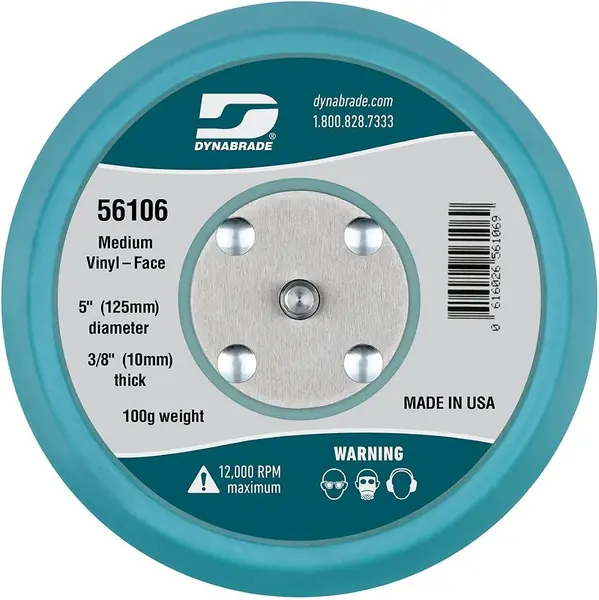
Dynabrade's 56106 is the industrial-grade option here: a 5-inch vinyl-face pad with a 3/8-inch urethane body and a 5/16-24 thread. It is a non-vacuum design, which tells you it is aimed at PSA discs and a clean, flat surface rather than a dust-collection sander.

The single-piece hub is the design detail we appreciate most. It is weight-mated to run smooth, and the medium-density urethane takes some of the chatter out of a DA without turning the pad mushy. The vinyl face holds a sticky-back disc flat, which is what you want for paint prep and finish sanding.

The 3/8-inch body is the part we notice in the hand: it gives the pad a cushioned feel that is different from a hard backing plate. That cushion is not the same as a soft interface pad, and it will not follow a tight curve, but it makes a long sanding session less buzzy.

The non-vacuum vinyl face is the boundary: this is a PSA-only pad with no dust holes, so it is for a finish tool rather than a dust-collection sander. We still keep it for finish work because the single-piece hub runs calmer than the cheaper plates here. If you want dust extraction, choose a pad with holes; if you are running PSA discs on a dedicated finish tool, the balance is what you are buying.

Worth Noting

  • Premium price for a wear part
Our Verdict

This is the premium 5-inch PSA pad for a DA user who wants a smooth-running, flat vinyl face and does not mind spending more.

Check Latest Price

How We Tested Backing Pads in the Shop

We built the shortlist from compatibility charts rather than search results, pulling part numbers that matched the 5- and 6-inch sanders already on our bench. Before ordering, we checked each pad's thread — 5/16"-24 on the thread-on plates — and its screw-hole spacing against the actual tool, dropping anything we couldn't mount. Fourteen pads came in: singles and two-packs, hook-and-loop and PSA, hard and flexible-edge.

Every pad swap started with the sander unplugged. We timed installation, checked whether the screws lined up without wallowing out the holes, and noted whether hardware came in the box. Then we mounted a fresh disc, hooked up dust collection, put on eye protection, and ran each pad at the tool's top speed — never above the pad's own rating — feeling for wobble through the handle. During edge work we watched for discs creeping toward the rim and tallied any that let go mid-pass.

Most of the four months happened on a white oak tabletop, a stack of cabinet doors, and a car fender we were feathering filler on — work that separated stiff plates, which kept panels dead flat, from flexible tapered edges that followed a curve without gouging it. After each session we lined the dust holes up against the sander's port to see which patterns clogged first.

Durability got judged at the end of every session by running a thumb across the hook face to feel whether it still had bite, and by looking at the foam edge for crumbling where it met the backing plate. A pad that matted out inside a month dropped regardless of what it cost; a two-pack whose spare still gripped in month four earned its spot. We're still running the finalists on current projects and will update if a hook face gives out early.

How to Choose a Random Orbital Sander Backing Pad

Match the Mount Before Anything Else

A backing pad is not a universal part, even when a listing calls it that. Count the screws on your old pad, measure the center-to-center spacing, and note whether the sander uses a threaded spindle. The Makita and Poweka pads use model-specific screw patterns; the Bosch RS6046 is made for a specific list of Bosch 6-inch sanders. The NEIKO and CASOMAN pads use a 5/16-24 thread for DA sanders and polishers. A thread-on pad will not fit a four-screw electric sander, and a four-screw pad will not fit a threaded spindle. Check the mount first, because no hook-and-loop face can make up for the wrong attachment.

Pick Hook-and-Loop or PSA

Your abrasive supply decides this one. Hook-and-loop is the flexible choice: press a disc on, peel it off, and switch grits without adhesive residue. PSA, or pressure-sensitive adhesive, uses a vinyl face and sticky-back discs; it gives a flatter, faster surface and is common on DA sanders and auto-body work. The Dura-Gold and Dynabrade pads here are PSA; the Makita and Poweka are hook-and-loop. Do not buy a PSA pad if your shelf is full of hook-and-loop discs. If you change grits constantly, hook-and-loop is the easier workflow; if you run a production sequence of PSA discs, the vinyl face is worth it.

Match Diameter and Dust Holes

Five-inch and six-inch pads are not interchangeable. The pad diameter has to match the sander's orbit and the paper you own, and the dust holes have to line up with the sander's extraction path. A 5-inch eight-hole pad on a sander set up for six holes will not pull dust efficiently, and a 6-inch pad on a 5-inch sander is simply the wrong size. Count the holes and measure the pad before ordering. If you are switching paper sizes, buy the pad and a matching box of discs together so you do not end up with a stack that fits nothing.

Choose Stiffness and Edge Profile for the Work

Hard pads are for flat panels, edge work, and fast stock removal; flexible pads follow curves, body lines, and contoured furniture parts. The Bosch RS6046 is a hard 6-inch pad for flat sanding, while the NEIKO 30267A has a tapered flexible edge for contoured work. A flexible edge can round over a sharp corner if you lean on it, so match the pad to the shape you sand most. Balance matters too: a pad that runs smooth at speed is easier to control than one that chatters, especially on a DA.

Check Speed Rating and Treat the Hook Face as a Wear Part

Every pad has a maximum speed, and the number has to meet or exceed what your sander turns. The CASOMAN and Dura-Gold pads are rated to 12,000 RPM; the Tockrop is rated to 9,200 RPM. Exceeding the rating is not a shortcut to faster sanding. The hook face is the part that wears out first, so keep a spare and replace the pad when discs start creeping or flying off. A pad that no longer holds paper is not a pad you can fix with more pressure.

Frequently Asked Questions

Final Verdict

Our default is the Makita 743081-8 for 5-inch Makita random orbit sanders: the factory screw pattern and eight-hole layout make it the least fiddly replacement in this group. If you run a 6-inch DA with a 5/16-24 spindle, the NEIKO 30267A gives you a flexible edge for less money. Bosch ROS10 and ROS20VS owners should go straight to the Poweka two-pack, which fits that sander without adaptation.