↑↓ navigate ↵ open Esc close All results →

Best Stud Finders of 2026

Electronic density scanners and magnetic fastener locators solve the same wall-mounting problem in completely different ways. Electronic units read density shifts behind drywall, tile, or plaster to map framing width, whereas magnetic locators catch the screws holding the wall up without ever needing batteries.

Across nine months of hanging gallery walls, TV mounts, and garage cabinets with 14 tools on fresh drywall, old plaster, and tile, models that display a stud's full width saved the most test holes. Single-mode scanners work fine on uncomplicated modern walls, while multi-sensor bars and strong magnets handle thicker or inconsistent surfaces.

Live-wire alerts add a useful layer of caution near outlets and switches, though tripping the breaker and verifying the spot before drilling stays good shop practice.

Our Top Picks

The Best Stud Finders

1.

Franklin Sensors ProSensor M210 Best Overall
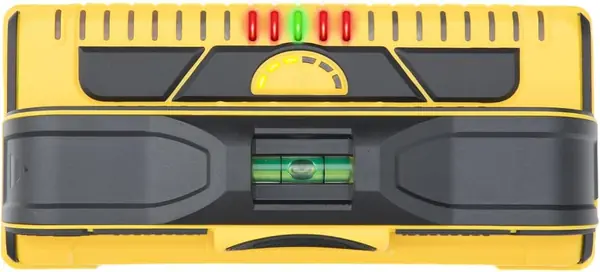
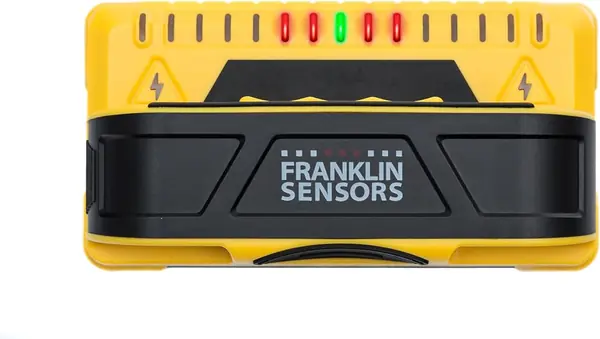
Franklin Sensors ProSensor M210 electronic stud finder with full-width LED display

Heavy wall mounts

Shop Score 94/100
Batteries
2 AA required
Live Wire Detection
Yes
Sensor Count
13
Maximum Scan Depth
1.7 inches
View on Amazon

Thirteen sensors is the number that matters here: the ProSensor M210 lights up the whole width of a stud rather than a single beep at the center. That full-width LED strip is what makes it feel less like guesswork, especially when you're lining up a cabinet rail or a TV bracket and need the edges, not just a general area.

We recommend it as the default because it removes the two things that make cheap scanners frustrating: calibration and ambiguous readings. Press and hold the button anywhere on the wall, and the M210 starts scanning; the display shows the stud, its edges, and the center. The 1.7-inch depth is the deepest here, which gives it an advantage on thicker drywall, paneling, and some plaster.

Live-wire detection is the other feature we paid close attention to. It isn't a substitute for turning off the breaker, but the warning is useful before you drive a screw near an outlet. The tool is 11.4 ounces, so it feels substantial in hand, and it runs on two AA batteries. Keep a pair in your toolbox and it's ready.

It's the most expensive pick in this group, and for a single picture hook that capability is overkill. For a run of shop cabinets, a wall-mounted clamp rack, or anything heavy, the clearer view of the stud is worth it. That's the trade we keep coming back to.

Worth Noting

  • Two AA batteries are not included
Our Verdict

For shelves, cabinets, or a TV, we trust the M210's full-width display and live-wire warning more than any other scanner here.

Check Latest Price

2.

Franklin Sensors ProSensor M150 Best Electronic Value

Franklin Sensors ProSensor M150 electronic stud finder with LED display

Drywall renovations

Shop Score 93/100
Batteries
2 AAA required
Live Wire Detection
Yes
Sensor Count
9
Maximum Scan Depth
1.5 inches
View on Amazon

The M150 is the M210's smaller sibling, and for straightforward drywall work it's the one we recommend first. You still get a nine-sensor LED display that shows the full width of the stud, plus live-wire detection, but the body is smaller and the maximum depth is 1.5 inches instead of 1.7.

That half-inch difference matters less than it sounds on standard half-inch or five-eighths drywall. Where we noticed it is on thicker plaster or a layered wall, where the M210's extra reach gives you more margin. If your project is hanging shelves, a mirror, or a TV on ordinary drywall, the M150 reads clearly and doesn't leave you hunting for the stud center.

Operation is the same press-and-hold routine, with no calibration. We like the LED bar for marking both edges before drilling, and the live-wire warning is easy to see without breaking your scan. It runs on two AAA batteries, and the lower price makes the simpler package easy to accept.

Compared with the M210, you give up depth and some screen area, not the full-width view that makes either scanner useful. For a drywall-focused toolbox, that's the right trade. For a renovation with unknown layers, spend for the M210.

Worth Noting

  • Not compatible with rechargeable AAA batteries
Our Verdict

We like the M150 for drywall projects that need live-wire detection, since it shows the full stud without the top pick's premium.

Check Latest Price
3.

Rack-A-Tiers Stud Ball Best Magnetic for Thick Walls

Rack-A-Tiers Stud Ball magnetic stud finder with round body and finger loop

Thick walls

Shop Score 92/100
Batteries
None
Weight
1.6 oz
Magnet Pull
27 lb
Detection Surfaces
1/2- or 5/8-inch drywall, ceramic tile, up to 3/4-inch plywood
View on Amazon

A 27-pound pull magnet in a round plastic ball sounds like a novelty until you slide it across a wall and it snaps to a screw head. The Stud Ball uses that strong rare-earth magnet to find the fasteners holding drywall to wood or metal studs, and the spherical shape puts the pull right where you can feel it.

It works through half-inch and five-eighths-inch drywall, ceramic tile, and up to three-quarter-inch plywood, which makes it more useful on finished surfaces than a plain bar magnet. We like the finger loop for control, and when it finds a screw it stays put on the wall so you can grab a pencil and mark the spot. There are no batteries, no calibration, and no electronics to fail.

We reach for it on thick, painted walls and tile where an electronic scan can get noisy. It only finds fasteners, so it confirms a stud where a screw or nail is, not the full width of the framing. That limit is why it's a layout tool rather than a complete safety scanner, but as a fast, battery-free locator it has the strongest stated pull here.

Worth Noting

  • No live-wire or pipe warning
Our Verdict

We reach for the Stud Ball on thick, finished walls where its 27-pound magnet can find a fastener and hold the spot without batteries.

Check Latest Price
4.

Jurgen K 5-in-1 Stud Finder Best Budget Electronic

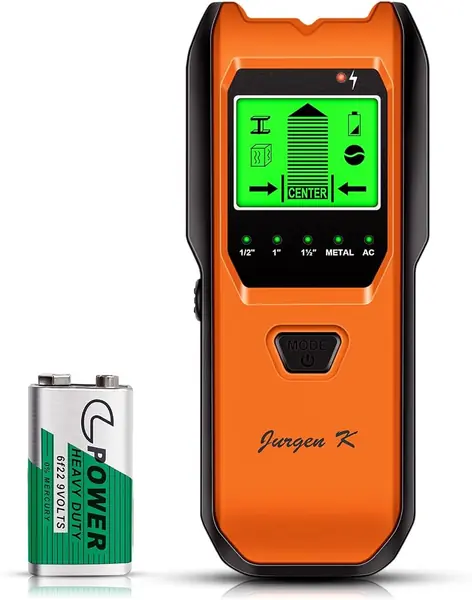
Jurgen K stud finder in tropical orange with LCD screen and grip

DIY wall projects

Shop Score 91/100
Live Wire Detection
Yes
Battery
9V included
Scan Modes
5
Maximum Stud Depth
1.5 inches
View on Amazon

If you're new to wall scanning and want one tool that covers studs, metal, and live wires, the Jurgen K is the one we hand over first. It has five modes, a backlit LCD, and an audio alarm, and it comes with the 9-volt battery.

We like that it doesn't make you guess what it's seeing. The screen shows the mode, signal strength, and stud position, and the beep gives you a second cue when you're in a tight spot. Auto calibration keeps setup short, and the grip is comfortable enough for a long afternoon of shelf and cabinet work.

The depth range covers half-inch, one-inch, and 1.5-inch stud scans, plus metal, AC wire, and pipe detection. That's a lot of capability for a budget scanner, and the included battery means it works out of the box. It isn't as refined as the Franklin models, but for a first-time DIYer or a household that needs one scanner for occasional projects, it's an easy recommendation.

Worth Noting

  • Calibration is needed before each scan
Our Verdict

A first-time DIYer gets stud, metal, and live-wire scanning from the Jurgen K without paying for a premium tool, which is why we recommend it.

Check Latest Price
5.

Kreg Magnetic Stud Finder with Laser-Mark Best for Layout Work

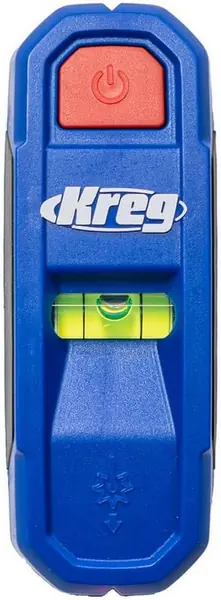
Kreg magnetic stud finder with laser, blue body, bubble level and marking notches

Cabinet layout

Shop Score 90/100
Batteries
None
Level
Built-in bubble
Magnets
2 rare-earth
Laser Class
Class 2, 1 mW or less
View on Amazon

The laser is the reason to look at the Kreg: it throws a line down the wall so you can mark a row of holes without juggling a level. We recommend it for cabinet rails, shelf standards, and any layout where the stud is only half the job.

Two rare-earth magnets hold the tool on the wall, and the bubble level and marking notches let you line up a bracket before you drill. The body is small enough for a pocket, and there's no battery or calibration to manage. We found the laser especially useful for transferring a stud line across a cabinet run, where a pencil mark alone can drift.

The magnetic grip is the weak point. On smooth, painted drywall it holds well; on textured walls or thick paint it can slide or drop, so you may need to hold it with one hand while you mark with the other. For a woodworker who values layout, a magnet that needs a steady hand is a fair trade.

Worth Noting

  • Does not detect live wiring
Our Verdict

We choose the Kreg when layout matters as much as finding the stud, because its laser and level turn a hit into a straight line.

Check Latest Price
6.

The Original StudBuddy Best for Quick Drywall Jobs

The Original StudBuddy orange magnetic stud finder in a small handheld shape

Quick drywall jobs

Shop Score 89/100
Batteries
None
Weight
1.6 oz
Surfaces
Drywall and wood
Detection
Drywall screws and nails
View on Amazon

The StudBuddy is the tool we hand someone who has never used a stud finder: slide it across the wall, feel the pull, and mark the screw head. There's no button, no calibration, and no battery to check.

At 1.6 ounces it disappears in a pocket, and when it finds a screw it stays on the wall as a marker while you grab a pencil. The magnet is strong enough for ordinary painted drywall, and the low price makes it easy to keep one in a kitchen drawer and another in the shop. It's the simplest tool here.

We keep it for quick drywall checks. On textured or heavily painted walls the magnet can slide instead of holding, so steady it and confirm a second screw before you commit. It also only finds fasteners, not stud edges, so you're marking a screw line and inferring the framing. For quick drywall jobs that's enough; for a precise cabinet layout, choose an electronic scanner.

Worth Noting

  • Not intended for lath and plaster
Our Verdict

We keep the StudBuddy for quick drywall jobs where a battery-free pocket tool is all you need.

Check Latest Price
7.

HANMATEK SF1 Stud Finder Best for Varied Wall Materials

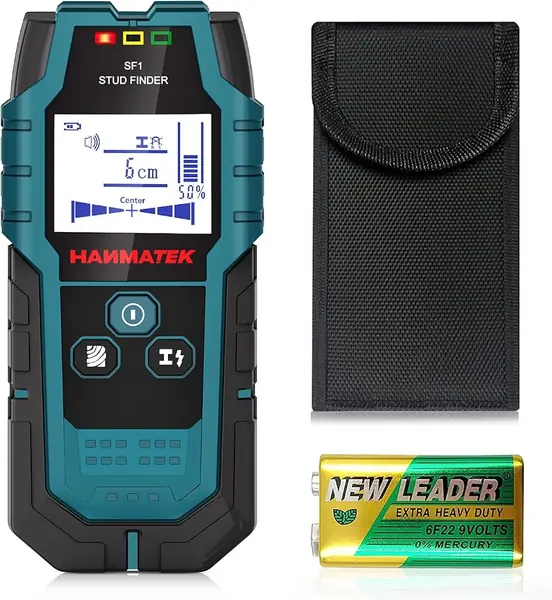
HANMATEK SF1 blue stud finder with LCD screen and mode buttons

Varied wall materials

Shop Score 88/100
Deep Wood Depth
1.5 inches
Exact Wood Depth
0.8 inch
Protection Rating
IP66
Ferrous Metal Depth
4.7 inches
View on Amazon

The HANMATEK's pitch is range: separate exact and deep wood modes, a metal scan that reaches deeper than most, and an AC wire mode, all on one LCD.

Exact mode is for finding the edge of a stud close to the surface, while deep mode reaches farther into thicker walls. We like having both because you can start shallow and only add depth when the wall demands it. The screen shows signal strength and depth, and the audible alarm can be switched off when you don't want to announce every scan.

The metal mode reads ferrous metal up to 4.7 inches and non-ferrous metal up to 3.94 inches, which is useful for finding conduit, rebar, or pipes before drilling. The body is sealed to IP66, so dust and splashes aren't an immediate worry. It takes a little practice to move between modes without staring at the buttons, but the logic is consistent once you've done it a few times.

We recommend it for a shop or older home where walls vary in thickness and you want more than one wood depth. It isn't as simple as the Franklin scanners, and the control set is busier than a magnetic locator. If you mostly hang pictures on standard drywall, that extra range is more tool than you need; if you're drilling into unknown walls, it earns its place.

Worth Noting

  • Bulkier than a pocket magnet
Our Verdict

The HANMATEK makes sense for varied walls where you want separate shallow, deep, and metal modes, and we think it's the more capable budget alternative.

Check Latest Price
8.

StudPoP Moving Magnet Stud Finder Best for Old Plaster Walls

StudPoP moving magnet stud finder with round magnet and popper mechanism

Old plaster walls

Shop Score 87/100
Batteries
None
Signal
Click and lifting popper
Magnet Size
1 inch
Construction Types
Wood, metal, plaster, tile, double-layer sheetrock
View on Amazon

The StudPoP doesn't ask you to feel a faint magnetic tug; it clicks and lifts a small popper when it crosses a fastener.

That difference matters on old walls. A plain magnet can attract so gradually that you're never sure whether you've found a screw or just moved into a slightly more magnetic patch. The StudPoP's internal mechanism does the interpreting for you, and the click is easy to hear in a quiet room and easy to feel through the body.

It's a 1-inch magnet with no batteries, and it's designed for wood studs, metal studs, plaster, tile, and double-layer sheetrock. We like that broad claim for renovation work, though it still depends on a fastener being there to react to. On a wall with no screws or nails in the right place, it won't invent a stud for you.

We recommend it for older homes and patchy walls where a standard electronic scanner gets confused. It doesn't show stud width, and it's a one-trick tool compared with a multi-mode scanner. The trick is a good one, though: a clear click beats a vague pull when you're standing on a ladder with a pencil in your teeth.

Worth Noting

  • No live-wire or pipe alerts
Our Verdict

We like the StudPoP for old walls where a plain magnet's pull is hard to read, because it announces the hit with a click.

Check Latest Price

How We Tested Stud Finders

We started with specs and owner reviews, then sorted candidates by sensing method: multi-sensor electronic scanners, single-mode electronic units, and magnetic fastener locators. From that pool we bought 14 tools and spent nine months using them the way a homeowner does — hanging a gallery wall, mounting a TV bracket, laying out upper cabinets in a garage, and patching a room after a renovation. Testers also worked on an old plaster apartment and a tiled bathroom wall, because a tool that reads clean drywall beautifully can go silent on either.

So we'd have a right answer to check against, we first mapped each wall by pulling an outlet cover and drilling pilot holes along a known stud line, then taped over the marks and had testers scan blind. We scanned the same wall three times at three heights and noted whether the reading landed in the same place, whether the tool showed the stud's edges and center or just one beep, and how often it flagged a corner bead, a pipe, or a duct as framing. Live-wire detection was checked against a known hot circuit, always with the breaker off before anything was drilled.

A few things only showed up in use. Magnetic locators were judged on whether they stuck to the wall on their own and how many fasteners in a row they found, and we tried them on thick plaster and tile to see if the pull held. We scanned one-handed from a step stool, slipped each tool into a jacket pocket to judge size and weight, and dropped them from waist height onto concrete. We also logged battery type and whether it came in the box, plus every calibration reset and false alarm. The eight that made the list were the ones whose readings we trusted on a second and third pass.

How to Choose a Stud Finder

Start With the Sensing Method

Electronic scanners read density changes through the wall and can show stud edges, center, and live AC wiring. Magnetic locators find the screws or nails holding the drywall and stop there. We reach for electronic when the mounting job is heavy or the wall is unknown, and for magnetic when we want a fast, battery-free check on ordinary drywall. A magnetic locator such as the StudBuddy is not intended for lath and plaster, so don't treat it as a universal old-house tool.

Look for Width, Not Just a Beep

A single beep or a narrow sensor tells you something is there; it doesn't tell you where the stud begins and ends. For cabinet rails, TV brackets, and shelf standards, a display that lights the full stud width saves you from centering a screw in the hollow. The Franklin M210 and M150 both show the whole stud, and that's the feature we prioritize over extra modes. A center-only readout can still work, but you'll mark and probe more.

Match Depth to the Wall

Standard interior drywall is often half or five-eighths inch thick, and most scanners handle it easily. Depth matters when you're dealing with double-layer drywall, paneling, tile, or plaster. A deep mode can reach 1.5 to 1.7 inches, while a strong magnetic locator can pull through five-eighths-inch drywall or tile. Don't assume deeper is always better: deep mode can pick up conduit or pipes, so start shallow and go deeper only if the first pass is unclear.

Plan for Batteries, Calibration, and Marking

Electronic scanners need batteries, and some models are not compatible with rechargeables; check the battery type before you buy a pack. They also need a clean spot for calibration, away from metal and studs. Magnetic locators skip both, which is why they can live in a drawer and work years later. If you mark a lot of layouts, a built-in level or laser is worth paying for; the Kreg's laser line is the clearest example here. Otherwise, a pencil and a strip of tape do the job.

Frequently Asked Questions

Final Verdict

After testing both electronic scanners and magnetic locators, we keep coming back to the Franklin Sensors ProSensor M210 as the best default. It shows the full stud, reaches deeper than the other picks here, and warns about live wiring, so it handles the mounts that actually matter.

If your walls are ordinary drywall and you want to spend less, the M150 is the sensible step down. For a single picture or a quick shelf on drywall, the StudBuddy is the battery-free tool we keep in the drawer; for a cabinet run or a TV mount, start with the M210.