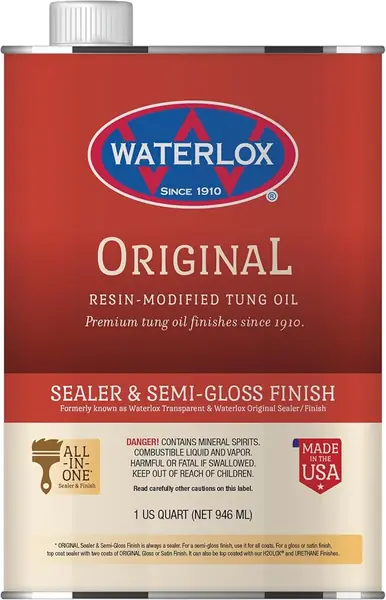
Waterlox Original Sealer and Finish Best Overall
- Sheen
- Satin, medium luster
- Coverage
- Up to 125 sq ft per coat
- Finish Type
- Tung-oil varnish
- Container Size
- 1 quart
Water beads on a cured Waterlox film instead of soaking into the wood, and that single behavior is why it leads this list for a bathroom. It is a tung-oil varnish that builds a thin, elastic film over the surface, so the film takes the splashes, the toothpaste drips, and the wet glass set down without a coaster while the wood underneath stays dry. On the parts of a vanity that actually get wet — the top, the backsplash edge, the front rail — nothing else here makes a stronger case.
What we like most is how forgiving the application is. Thin coats, wiped or brushed on, no sanding between them, and no brush marks to chase because the finish levels as it goes. It also develops the look we want on furniture: a medium luster that calms toward satin over a few months instead of sitting there glossy. Touch-ups are the quiet bonus — a scratch or a worn patch takes another thin coat and blends in, no stripping involved.
The smell is the part to plan around. This is a solvent varnish with real fumes, so it is warm-weather work: window open, exhaust fan running, the rest of the house shut off with a towel under the door. Once cured it is considered non-toxic, which matters in a room where toothbrushes live. If your vanity is maple or another pale wood and you want it to stay pale, look at a water-clear topcoat instead — this one warms everything it touches.
What We Like
- Water beads up on the cured film
- No sanding between coats saves hours
- Scratches take a fresh coat and blend
Worth Noting
- Several coats a day apart
We recommend Waterlox for a vanity top that takes real splashing: it builds a film that beads water, goes on without sanding between coats, and takes spot repairs.
Check Latest Price