↑↓ navigate ↵ open Esc close All results →

Best Wood Glues for Furniture Repair of 2026

What separates a lasting chair repair from a wobble that returns next month is rarely clamp force—it is whether the right viscosity reaches deep into the socket and cures harder than the surrounding timber. Most furniture failures announce themselves slowly as a tenon works loose under everyday weight long before anything splits.

Fresh adhesive will not bond over cured residue, so scraping every loose tenon and mortise clean proved non-negotiable across six months of testing 14 bottles. Open working time and full clamp time run on separate clocks as well, and ANSI water-resistance ratings should match whether the piece lives in a dry parlor or damp porch.

Four formulas cover tight indoor repairs needing thin flow and fine tips, everyday household fixes, and slow-setting assemblies where half a dozen legs and stretchers must align before clamping.

Our Top Picks

The Best Wood Glues for Furniture Repair

1.

Titebond III Ultimate Wood Glue Best Overall
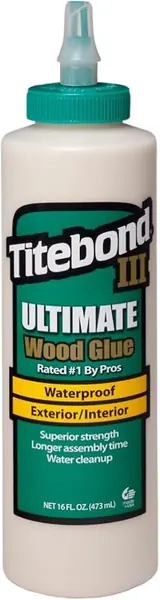
Titebond III Ultimate wood glue in a 16-ounce bottle of tan waterproof PVA formula

All-purpose furniture repair

Shop Score 96/100
Bottle Size
16 fluid ounces
Water Resistance
ANSI/HPVA Type I (waterproof)
Tensile Strength
4,000 psi
Working Time
8 minutes
View on Amazon

Eight minutes of working time sounds generous until you're kneeling on a kitchen floor with a chair rung in one hand, a clamp in the other, and nothing lined up yet. That window is why this bottle leaves the shelf first for us: you can seat a loose tenon, sight the joint, and still have time to get a clamp pad where you want it before the glue grabs. Its listed strength, 4,000 psi, is the highest figure among the glues here.

The bigger deal for furniture is what happens after a spill. Titebond III passes ANSI/HPVA Type I, the specification that lets a maker call a glue waterproof rather than merely water resistant, so a repaired kitchen chair or a table that lives near the sink stops being the weak point in the room. It's unaffected by finishes and wipes clean with water while it's still wet, which is the difference between a ten-second cleanup and an afternoon of scraping a hardened ridge off a leg.

In our glue-ups it behaved the way a good PVA should: thin enough to work into a tight mortise, thick enough not to run down a vertical face. We noticed the working time most on repairs where you glue and clamp in sequence rather than all at once, and that is exactly the situation a first-time repair tends to be.

If the piece never sees moisture and the joint is tight and simple, the Original formula below gets you out of the clamps sooner. For everything else, including the repair you only want to do once, this is the bottle we point people toward.

Worth Noting

  • Tan glue line can show on pale woods
Our Verdict

The bottle we reach for first on a loose chair rung or a split drawer: eight minutes to line the joint up, then a waterproof bond that shrugs off kitchen spills.

Check Latest Price
2.

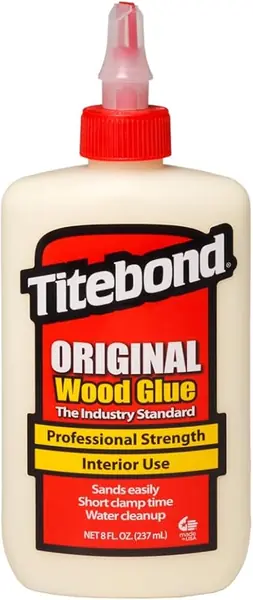
Titebond Original Wood Glue Best for Tight Interior Joints

Titebond Original wood glue in an 8-ounce bottle of yellow aliphatic resin

Tight indoor joints

Shop Score 95/100
Bottle Size
8 fluid ounces
Water Resistance
Not water resistant
Tensile Strength
3,600 psi
Finish Compatibility
Unaffected by most stains and finishes
View on Amazon

Where the III gives you eight minutes to arrange things, this one grabs and moves on. On interior furniture that's a feature rather than a compromise: a tight, clean joint comes out of the clamps quickly, and if you own four clamps and the repair wants six, a fast set is how you get through it in two passes.

What keeps us coming back is the finishing behavior. The aliphatic-resin film sands to powder instead of balling up on the paper, and it's unaffected by most stains and finishes, so a repair on a stained table leg doesn't turn into a refinishing job. At 3,600 psi it's rated below the III, and on a chair rail or a drawer box that's still a bond stronger than the wood around it.

Speed is the catch as much as the selling point. Two pieces and one clamp is a gift; five pieces and a clock is a countdown. The fix is to dry-fit everything, lay the clamps within reach, and work in a single pass — do that and the fast set stops being a problem.

It's also the least expensive bottle here, which matters if you're buying glue for one repair and may not open it again for a year. Ours gets used on drawer bottoms, cabinet frames, and anything indoors that needs a glue line you won't find under stain.

Worth Noting

  • Interior use only with no water resistance
Our Verdict

For tight indoor joints this is the one we want: it sets fast, sands flush, and disappears under stain, a classic yellow glue still earning its place.

Check Latest Price
3.

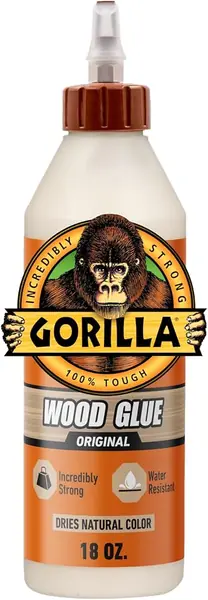
Gorilla Wood Glue Best Budget

Gorilla Wood Glue in an 18-ounce bottle of tan water-resistant PVA adhesive

Budget household repairs

Shop Score 94/100
Bottle Size
18 fluid ounces
Water Resistance
ANSI/HPVA Type II
Clamp Time
20 to 30 minutes
Full Cure
24 hours
View on Amazon

For the amount of glue you get for the money, nothing else in this guide comes close: 18 ounces at the lowest price here. If you want one bottle on the shelf for whatever works loose next — a kitchen chair, a drawer bottom, a shelf bracket — this is the practical answer, and it's the one we keep in the house rather than the shop.

It isn't just cheap. The formula passes ANSI/HPVA Type II, the same water-resistance standard Titebond II meets, so a bench on a covered porch or a planter box is within its range. Clamp time is listed at 20 to 30 minutes with full cure in 24 hours, which makes an evening repair realistic: glue at seven, clamps off before bed, load it tomorrow. It cures without foaming, so the bond line stays flat and takes paint or stain without a raised ridge.

We expected to treat it as the cheap backup and ended up reaching for it on most household repairs, where the joint is tight, the load is light, and getting a clamp on matters more than a lab number. It won't rescue a gapped joint or one with a film of old finish on it — no glue on this page will — but for the repairs most people actually face, that's a fair trade for the size and the price.

Worth Noting

  • Bottle tip collects cured glue between projects
Our Verdict

The one we buy by volume: lowest cost per ounce here, with a Type II rating that covers porch furniture and kitchen chairs.

Check Latest Price
4.

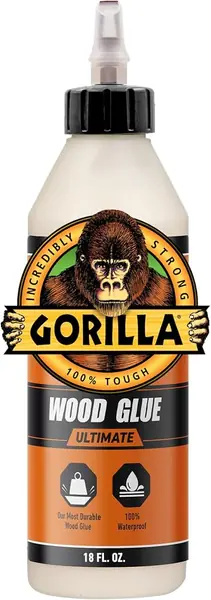
Gorilla Ultimate Waterproof Wood Glue Best for Complicated Glue-Ups

Gorilla Ultimate Waterproof Wood Glue in an 18-ounce bottle of natural-color PVA adhesive

Complicated glue-ups

Shop Score 93/100
Bottle Size
18 fluid ounces
Water Resistance
100% waterproof
Clamp Time
20 to 30 minutes
Open Time
Up to 15 minutes
View on Amazon

Fifteen minutes of open time is the longest on this page, and on a repair with four pieces, two clamps, and one pair of hands, that extra stretch over the Titebond III is the difference between a square frame and a fight with a slipping rail.

The rest of the bottle backs up the ambition: a 100% waterproof rating rather than water resistant, an application temperature down to 50 degrees Fahrenheit for a cold garage, and a clamp time of 20 to 30 minutes with a full cure in a day. We rate the working window highly. For a repair that has to go together in stages — a chair back, a frame with several joints — it's the most forgiving glue in this set.

The bottle is where our enthusiasm cools. This formula can arrive thickened, and it skins over in the neck between projects, so a squeeze turns into a wrestling match at the worst possible moment, halfway through a clamp-up. Check that the glue runs freely when it arrives, wipe the cap threads before they go back on, and store it upright.

For a two-piece repair, the Titebond III does the same job with fewer surprises. The extra working time earns its keep on the assemblies you can't rehearse in one pass.

Worth Noting

  • Formula can arrive thickened and hard to squeeze
  • Skins over inside the bottle neck between projects
Our Verdict

Fifteen minutes of open time is more than any other glue here gives you, and the bond is fully waterproof, which is worth the fuss on complicated assemblies.

Check Latest Price

How We Tested Wood Glue for Furniture Repair

Our shortlist started with spec sheets rather than shelf talkers. We sorted candidates by what the manufacturer actually claims—water-resistance type, open time, clamp time, cure time, and bottle size—then bought 14 bottles that covered the full spread, so we weren't comparing a waterproof outdoor formula against an interior-only one. Testing ran for six months, long enough to come back to the same bottle after it had sat on a shelf.

The repairs happened where furniture actually breaks: a stack of wobbly dining chairs, a split drawer front, loose dowels in a bookshelf, and a patio chair that lives outside. For each one we scraped and picked the old glue out of the joint first, then noted whether the bottle's tip let us put glue where we aimed it or flooded the joint. We timed open time by spreading a bead and checking it with a fingertip every minute, unclamped test pieces at 20 and 30 minutes to see what had grabbed, and sanded the squeeze-out at the 24-hour mark to see whether it clogged the paper or sanded flush.

For strength we glued blocks of hardwood and softwood, let them cure a full week, then broke them with a hammer and recorded whether the wood splintered or the glue line let go—most failures are the joint, not the glue. Water resistance went to a soak test in a bucket, and reversibility went to a heat gun to see whether an old joint could be opened without wrecking the wood. We kept track of which bottles turned gummy at the tip between sessions and which were still usable months in, and compared cost per repair rather than cost per ounce—a big bottle you never finish isn't a bargain.

How to Choose Wood Glue for Furniture Repair

Match the Rating to Where the Furniture Lives

The water-resistance rating is the only line on the bottle that tells you where a repair can go. An interior-only glue like Titebond Original is fine for a dining chair or a drawer box; anything that sees standing water, a covered porch, or a regular wipe-down wants a Type II glue like Gorilla Wood Glue; a piece that stays outdoors wants Type I, which is what Titebond III carries. The trap is the word resistant — it is not waterproof, and a planter built with a Type II glue will eventually give at the joint.

Working Time and Clamp Time Are Different Clocks

Open time, sometimes called working time, is how long you have to position parts before the glue grabs. Clamp time is how long the clamps stay on, and full cure is when the joint reaches its rated strength. The three get quoted interchangeably and they shouldn't. A repair with several joints wants the longest open time available, which is why 15 minutes earns a place for tricky assemblies; a simple two-piece repair is the opposite case, and a fast-setting glue such as Titebond Original gets the clamps off sooner. Rehearse the clamp-up dry before any glue comes out of the bottle.

The Joint Usually Fails Before the Glue Does

Most failed repairs come down to the surfaces rather than the adhesive. Cured PVA will not stick to cured PVA, so old glue has to come off — scrape or sand back to bare wood on both faces. Finish, wax, and dust do the same damage, and over-clamping squeezes glue out until the bond is starved. What a joint needs is a thin, even film and firm pressure, not crushing pressure. On an antique held together with hide glue, warm water softens the old joint instead of fighting it.

Buy a Bottle You Will Finish

PVA has a shelf life, and a bottle that skins over in the neck is money in the trash. If you repair furniture a few times a year, an 8-ounce bottle is the sane purchase and a gallon is not the bargain it looks like. Store it upright, wipe the tip and threads before the cap goes back on, and keep it out of a freezing garage — Titebond II is listed as freeze/thaw stable, but not every formula here makes that claim.

Frequently Asked Questions

Final Verdict

If you're buying one bottle to repair furniture, make it Titebond III Ultimate. Eight minutes of working time covers the repairs where you need a free hand, the Type I rating means the joint survives spills and weather, and it wipes clean before it sets.

Keep Titebond Original for tight indoor joints where fast clamp-up and an invisible sanding line matter more, and Gorilla Wood Glue when the priority is the most glue for the least money.