↑↓ navigate ↵ open Esc close All results →

Best Wood Glue Rollers of 2026

Spreading glue with a scrap card works until a wide panel exposes the flaw: adhesive pools in one corner, skins over across the center, and forces clamps onto a half-set seam. A rubber brayer lays down a uniform film in a single pass so every board slides home while the glue stays wet.

Four months of rolling PVA across panels, veneer, and laminate with 14 brayers—plus thorough post-session washouts—showed drum width driving real-world utility more than package claims. Two-width sets proved smarter than single rollers, pairing a narrow drum for edge banding and narrow frames with a wide roller for tabletops; rigid steel frames and solid handles also held alignment across wallpaper paste and ink work without binding.

From compact two-inch edge rollers to paired wide-and-narrow kits, these five brayers spin smoothly and lay down an even coat.

Our Top Picks

The Best Wood Glue Rollers

1.

Falling in Art 2-Inch Rubber Roller Best Overall
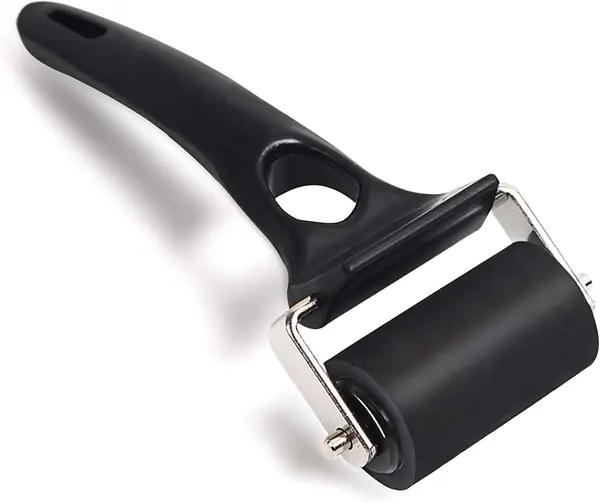
Falling in Art black rubber roller with a curved plastic handle and stainless steel frame

Edge gluing

Shop Score 95/100
Frame
Stainless steel
Handle
Curved non-slip plastic
Roller Material
Hard rubber
Roller Width
2 inches
View on Amazon

A glue roller earns its keep on the coat it leaves, and this one lays down a thin, even film instead of a puddle you have to chase with a finger. The drum is two inches wide on a stiff stainless frame, under a curved plastic handle with an indent where your thumb sits, so you can steer it along a single joint line without your hand cramping.

What sold us is how little the tool asks of you mid-glue-up. It rolls fluidly rather than pushing a ridge ahead of the drum, the narrow face lets you feel where the glue is going on a long edge, and the handle gives you somewhere to press when you want a slightly heavier coat. We think that control is worth more than width for the joints most of us actually glue: rails, stiles, dowels, and edge banding.

PVA rinses off the rubber under warm water while it's still wet, and the steel wipes dry. It is also the least expensive pick here, and the only one that arrives on its own, so the money goes into a single well-made tool rather than a set. For a full panel glue-up, though, a two-inch drum means a lot of passes; that's the job for the four-inch roller in the AKIRO set.

Worth Noting

  • Narrow two-inch drum takes many passes on full panels
Our Verdict

Our pick for edge joints, dowels, and narrow stock: it lays a thin, even coat, rolls without fighting you, and rinses clean under the faucet.

Check Latest Price
2.

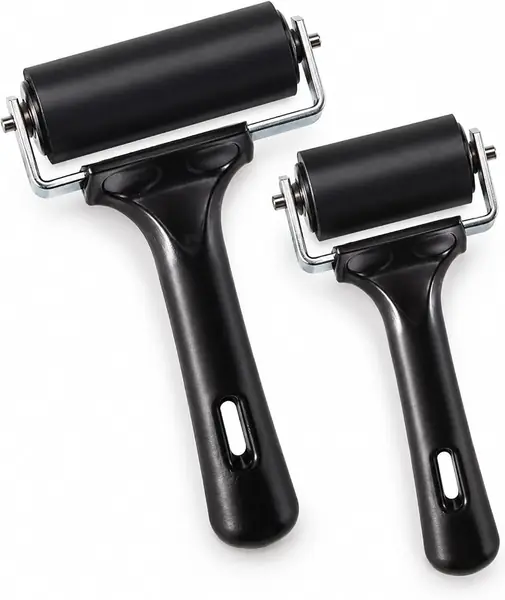
AKIRO 4-Inch and 2.2-Inch Roller Set Best for Panel Glue-Ups

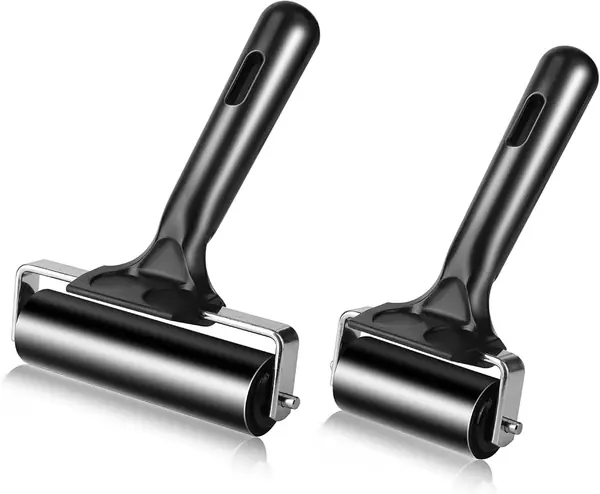
AKIRO two-piece rubber roller set with 4-inch and 2.2-inch black drums

Panel glue-ups

Shop Score 94/100
Frame
Steel
Handle
Non-slip plastic grip
Roller Widths
4 inches and 2.2 inches
Roller Material
Hard rubber
View on Amazon

Two drums in one box is the whole argument: a four-inch roller for face-to-face glue-ups and a 2.2-inch one for a single joint line. We think it's the best choice in this group for panels and wide laminations, because the big drum covers a face in a few passes rather than a long back-and-forth, and the small one gets into rails the big one can't reach.

The rubber is firm enough to roll a bead out to the edges without soaking it up the way a brush does, and warm running water takes PVA off while it's wet. The steel frame keeps the drum straight when you lean on it, which matters on a wide panel, where you want the same pressure from one side of the face to the other.

Where it gives ground is the grip: a plain plastic cylinder rather than the shaped handle on the Falling in Art roller, and after a long run of edge gluing our thumbs noticed. In exchange you get two widths that cover an entire assembly, which is why this is the set we name when the work is bigger than a joint.

Worth Noting

  • Bearings can loosen and let the drum skip
Our Verdict

For panel glue-ups and mixed assemblies, this pair covers wide faces and tight joints in one purchase, with the widest coverage in this group.

Check Latest Price
3.

Lainrrew 3.8-Inch and 2.2-Inch Roller Set Best for Fast Cleanup

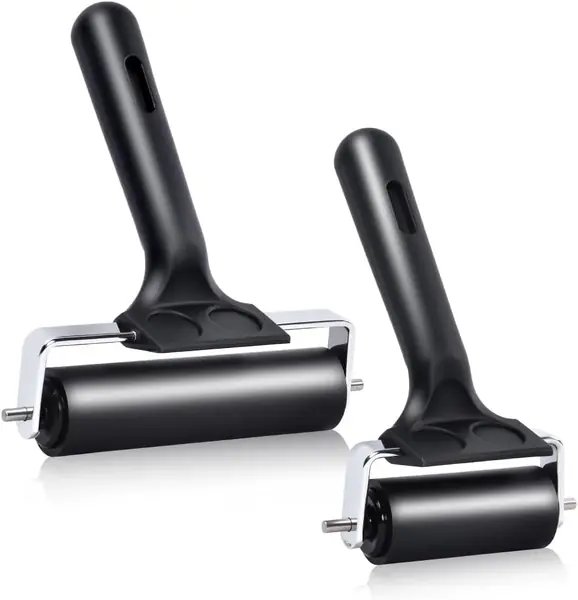
Lainrrew two-piece rubber roller set with 3.8-inch and 2.2-inch black drums

Quick cleanup

Shop Score 91/100
Frame
Stainless steel
Handle
Non-slip grip
Roller Widths
3.8 inches and 2.2 inches
Roller Material
Rubber
View on Amazon

Glue that dries on the drum is what ends a roller's useful life, and this pair handles it: cured PVA lifts off the rubber with hot water, so a roller forgotten on the bench doesn't turn into a disposable. The rubber doesn't hold onto glue the way a wooden roller does, and that makes the end of a glue-up a shorter job.

We like the widths here slightly better than the AKIRO set's: 3.8 inches covers a panel quickly and the 2.2-inch roller handles rails and stiles. Spread is what we judge it on, and it smooths a bead into an even film rather than pushing it into ridges. The handle is a textured non-slip grip, which stops mattering right up until your fingers are tacky and the drum starts to twist in your hand.

No tray or case comes with it, just the two rollers, which is fine in a drawer. The small drum turns out to be the more useful half on a short glue line, a miter or a hinge leaf or a small box, where a wide roller would only get in the way.

Worth Noting

  • Ships as two rollers without a tray or case
Our Verdict

We recommend this pair when cleanup is the chore you dread: cured glue lifts off the rubber with hot water, and the 3.8-inch drum spreads an even coat.

Check Latest Price
4.

HRLORKC 4-Inch and 2.2-Inch Roller Set Best for Narrow Stock

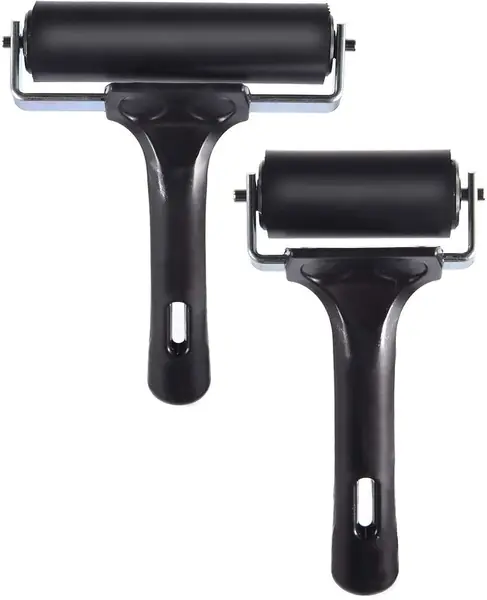
HRLORKC two-piece rubber roller set with black 4-inch and 2.2-inch drums

Narrow stock

Shop Score 90/100
Frame
Stainless steel
Handle
Plastic with finger indentations
Roller Widths
4 inches and 2.2 inches
Cleanup
Soap and warm water
View on Amazon

A 2x4 is a fair test of a glue roller: the face is narrow, the glue wants to run over the edge, and a four-inch drum is more tool than the job needs. The 2.2-inch roller in this set handles that width in a couple of passes, and it's the one we reach for on rails, aprons, and edge banding.

The four-inch drum is here for the panel work the small one can't do, so the pair covers both ends of a project. Both sit on a stainless frame with a plastic grip that has two finger indentations, which lets you change pressure and direction with your thumb while the other hand holds the board steady. Warm soapy water and a rinse take the glue off, and the steel dries quickly after a wipe.

What you accept for the lower price is a rougher drum. Run a thumb across the rubber before the first glue-up; a drum with visible lines or ridges across it will stripe the coat, and that's worth catching while returning it is still easy. Otherwise this is the value pick in the group: the same two widths as the AKIRO set for less, with a solidity in the hand we didn't expect at this price.

Worth Noting

  • Bearings and end pins can work loose over time
Our Verdict

It feels sturdier in the hand than its price suggests, and the 2.2-inch drum makes it the friendlier set for narrow stock and small assemblies.

Check Latest Price
5.

Wlivxch 4-Inch and 2.2-Inch Roller Set Best for Occasional Glue-Ups

Wlivxch two-piece rubber roller set with grooved plastic handles and steel frames

Occasional glue-ups

Shop Score 85/100
Frame
Stainless steel
Handle
Textured finger-groove grip
Roller Widths
4 inches and 2.2 inches
Roller Material
Hard rubber
View on Amazon

A glue roller is only as good as its roll, and this pair is inconsistent about it: the drums can drag or wobble instead of turning freely, and a dragging roller pushes glue into ridges rather than leveling it. That's why we rank it below the AKIRO and HRLORKC sets, even though the two widths are exactly what a mixed assembly needs.

Coverage is the reason to consider it anyway. Four inches of drum handles a panel, 2.2 handles a rail, and the grip has molded finger grooves that keep your hand steady once your fingers are tacky. It also takes contact cement for veneer work as readily as PVA, which makes it a sensible second roller to keep for the stickier adhesives, and warm water and a rag clean it up afterward.

Worth Noting

  • Pins can work loose from the frame
Our Verdict

For occasional glue-ups and craft work, this pair gives you a wide drum and a narrow one for less than any other two-roller set here.

Check Latest Price

How We Tested Wood Glue Rollers

We started with the listings themselves, sorting brayers by drum width, frame material, handle shape, and whether they were sold singly or as a two-width set, then narrowed to the ones buyers described as still spinning freely after months of use.

Fourteen rollers went onto our workbenches for four months, most of them on real glue-ups rather than craft projects: edge-gluing panels for a shop cabinet, laying veneer on plywood, pressing laminate onto a countertop patch, and one long afternoon re-gluing a chair rung that had worked loose.

To judge coverage, we ran a bead of PVA down a joint and rolled it out, then tilted a work light low across the surface to catch ridges, bare spots, and roller marks. We timed how long each drum took to cover a two-foot panel seam, and we rolled with one hand while the other held a clamp in place, which sorted the handles quickly.

Every drum got spun on its axle by hand before first use and again after each session, and we noted binding, side-to-side wobble, and skipping. Wet glue came off with warm soapy water and a rag; for cured PVA, we let a film dry overnight on two drums to see whether it peeled away or had to be scraped. We checked frames for rust and handles for flex after repeated washings, tried a few rollers on printmaking ink and wallpaper paste to see whether the drums stayed true, and compared what a two-width set cost against buying the same sizes separately.

How to Choose a Wood Glue Roller

Match the Drum Width to the Joint

Most glue-ups in a home shop are edge to edge, and a 2- to 2.4-inch drum suits them: it covers a board edge in one pass and doesn't slop glue onto the face you just planed. Move up to a 4-inch drum for panel laminations and veneer, where a narrow roller means a lot of passes and an uneven coat.

That's why a pair like the AKIRO, with a four-inch and a 2.2-inch drum, covers more ground than any single width. The trap is assuming wider is faster. On a 2x4 a four-inch drum is more tool than the joint, and the glue goes where you don't want it.

The Roll Is the Whole Tool

A roller that binds is worse than a brush: instead of spreading the bead, it pushes it ahead and leaves a ridge at one end of the joint and bare wood at the other. Check a new roller before it sees glue, pressing the ends of the drum together and spinning it in your hand.

Run a thumb across the rubber looking for ridges or a raised seam. Anything that skips, wobbles, or shows a line across the face goes back while returning it is still easy. We weight this far more heavily than the number of rollers in the box.

Rubber, Silicone, and What Wood Glue Does to Them

Wood glue is water-based, which is the best thing about it: while it's wet, warm water lifts it off rubber in seconds, and a roller rinsed at the end of a session keeps working. Cured glue takes longer, hot water and a little patience, and hard rubber holds onto it until it softens.

Silicone drums shed dried glue more readily, but the material can't rescue a roller that won't turn. Hard rubber is the standard for both jobs here, and a brayer sold for printmaking ink works exactly the same on a glue bead.

One Roller or a Set, and What the Handle Buys You

One good roller covers most joint work: rails, stiles, dowels, edge banding. A set earns its place when the same assembly needs a wide face and a narrow edge, so you aren't swapping tools with glue already open on the bench.

The other thing to weigh is the handle. During a glue-up one hand usually holds the board, so a shaped grip with a thumb indent gives you somewhere to press and steer; a plain plastic cylinder works, though a long run of edge gluing tells you the difference. Storage is a drawer and a rag either way.

Frequently Asked Questions

Final Verdict

If your glue-ups are joints rather than panels, buy the Falling in Art 2-inch roller. It lays the thinnest, most even coat in this group, spins without drama, rinses clean under the faucet, and costs less than every set here.

Step up to the AKIRO pair when you laminate panels and need four inches of drum, and take the Lainrrew set when dried glue is what usually ends your tools. Those two cover what the top pick can't, and none of the three needs a tray or a case to earn its place in a drawer.