↑↓ navigate ↵ open Esc close All results →

Best Wood Lathe Tool Rests of 2026

A tool rest doesn't cut anything, which is why it's easy to overlook — until a gouge starts chattering across a bowl rim and the rest under your hand gives a little. It's the only thing standing between your tool and a catch, so a sloppy fit, a short post, or a burr on the bar shows up in the cut fast. A good one fits the banjo snugly, sits close to the work, and stays put under pressure.

We tested 11 tool rests for nine months on a midi lathe and a full-size lathe, turning bowls, pens, boxes, and hollow forms. Post fit came first: most lathes take a 1-inch post, but length is the spec people miss, and a short post can leave the rest crowding the tailstock. Then adjustability — some collars and set screws hold a setting all evening, others slip. What we ended up with is a list built around the cut you make most, from straight spindle work to the inside of a bowl.

Our Top Picks

The Best Wood Lathe Tool Rests

1.

BMWOOD Integrated 12-Inch Tool Rest Best Overall
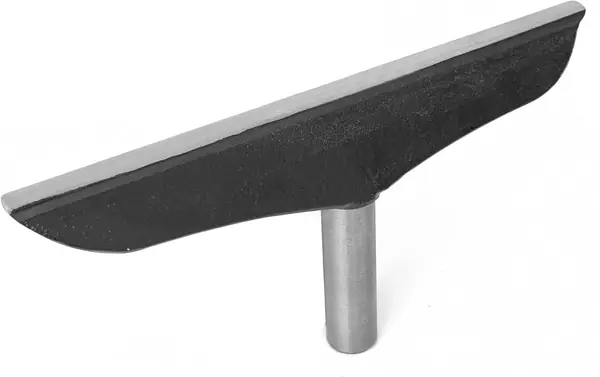
BMWOOD cast-iron 12-inch wood lathe tool rest with 1-inch post and rounded bar

General lathe work

Shop Score 89/100
Post Diameter
1 inch (25.4mm)
Rest Length
12 inches
Body
Cast iron with 45-degree face
Post Length
80mm
View on Amazon

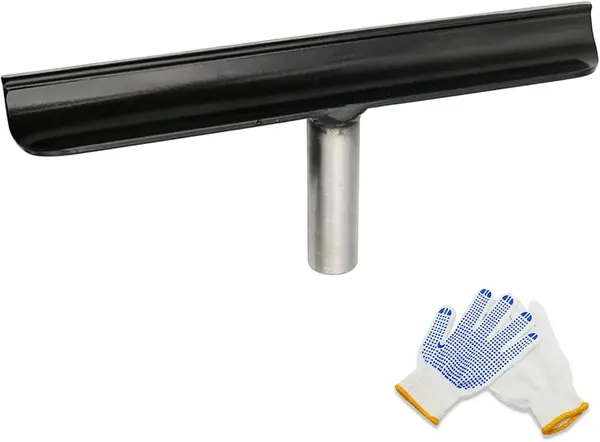
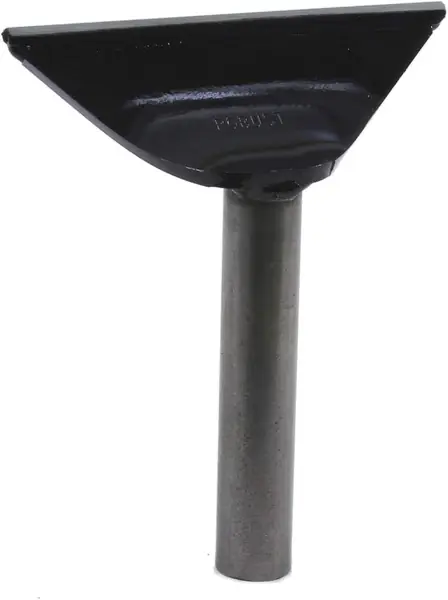
Cast iron is the reason this one feels different the moment you pick it up. The BMWOOD 12-inch rest is a single heavy casting rather than a bar welded to a post, and the face below the bar is cut on a 45-degree slope. That slope is the part we appreciate most: it gives your fingers a flat place to ride when you turn overhand, and it leaves room to drop the handle for a shear scrape without your knuckles grazing the bar.

A 1-inch stem, 80mm long, drops into the tool rest base of a full-size lathe and locks down hard once the banjo handle is snug. The top is a rounded cast profile, so a gouge or a skew glides instead of scraping, and there is enough mass in the body that a catch reads as a catch rather than a shudder. Sight along the top from both ends when it arrives: a rest that is ground unevenly lets the tool rock, and that is a return rather than a repair job.

For most turners this is the rest to buy first. Twelve inches of bar covers a spindle or the outside of a bowl without moving the banjo, the mass keeps a roughing cut quiet, and it is the lowest-priced straight rest we recommend here. The YEIXCIKA is the choice if you want stainless and a hollow for your fingers, and the Robust J takes over once your bowls get deep.

Worth Noting

  • 80mm post may sit low on tall banjo stacks
Our Verdict

This is the rest we point most turners to: 12 inches of cast iron, a 45-degree grip face, and a 1-inch post that seats and locks.

Check Latest Price
2.

Robust Small J Curved Tool Rest Best for Bowl Turning

Robust Small J curved 9-inch steel tool rest with a 1-inch post

Bowl interiors

Shop Score 88/100
Post Diameter
1 inch
Post
Long post
Rest Width
9 inches
Curve Radius
About 8 inches
View on Amazon

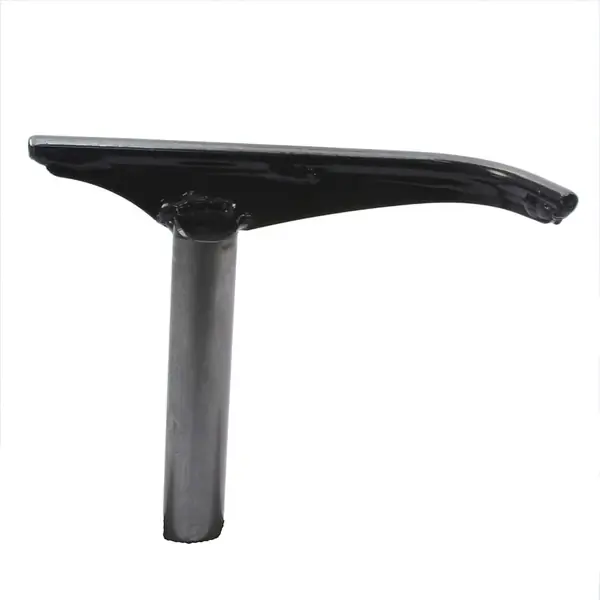
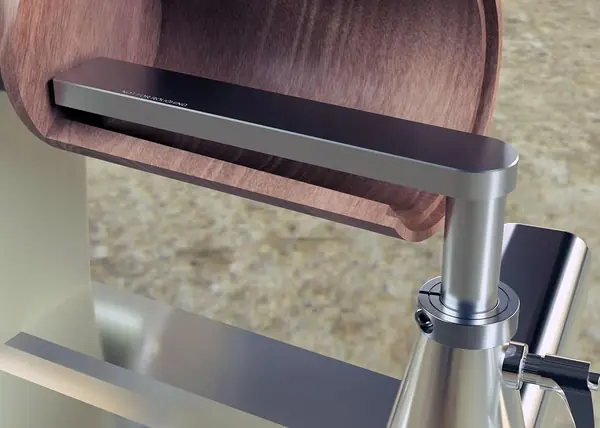
Reach is what limits a bowl. With a straight bar lying across the rim, a bowl gouge has to hang out past the bar to reach the inside wall, and that overhang is where chatter and catches begin. The Robust Small J is a 9-inch rest curved on roughly an 8-inch radius, so the bar follows the wall of the bowl instead of cutting across it and the tool stays supported down to the bottom.

Solid steel with a hardened top bar and a 2.29-pound body, it does not flex, and the long post puts the bar at center height on a 16- to 25-inch lathe. We reach for it on bowls from about 8 to 12 inches across, where the curve tracks the wall instead of fighting it. If bowl turning is more than an occasional evening for you, this is the specialty rest that earns its price before any other.

Price is the real obstacle. It is the most expensive rest on this list, and someone turning a bowl a month can cover most of the same ground with a straight bar and a repositioned banjo. Check the post too: the long version is built for full-size lathes, and the same rest is also sold with a standard post.

Worth Noting

  • Bulky for bowls under about 8 inches
Our Verdict

Our pick for anyone hollowing bowls on a full-size lathe: the 8-inch curve keeps the gouge supported where a straight bar leaves it hanging.

Check Latest Price
3.

Simple Woodturning Tools Platform Rest Best for Hollowing

Simple Woodturning Tools stainless platform rest with flat plate, post, and clamping collar

Hollow forms

Shop Score 87/100
Post Diameter
1 inch
Included
Rest, post, cap screw, collar, hex key
Platform
1/2 inch thick, 1.5 inches wide
Platform Length
7 inches
View on Amazon

A bar supports a tool along a line; a platform supports it on a plane, and that is the job you are doing when you hollow a box or a closed-form bowl with a flat-bottomed cutter. Simple Woodturning's rest is a stainless plate 1/2 inch thick and 1.5 inches wide, machined flat and mounted on a 1-inch post. The cutter lies on the plate instead of balancing on a rod, so overhang shrinks and the vibration that comes with it goes too.

The piece we did not expect to care about is the clamping collar. It slides onto the post and locks with the included 3/16 hex key, so when you lift the banjo between passes the rest comes back to the same height instead of being re-dialed by eye. It is a small convenience that pays off on every reposition, and it arrives with the cap screw and key.

The plate is 7 inches of machined stainless, CNC work from a shop in Minnesota, and the fit and finish are the best metalwork in this group. It was designed alongside the maker's own Simple Scraper, which is why the surface is dead flat and the edges are clean: there is nothing here for a cutter to catch on as it slides into a vessel.

We recommend it to anyone who hollows, without hesitation. If your turning is spindles, pens or open bowls, a bar-shaped rest does the same work with more clearance around the chuck. When you are dropping a scraper into a vessel and fighting chatter at the bottom, the plate and the collar change how the cut feels.

Worth Noting

  • Platform runs long for cutters from other makers
Our Verdict

Buy this platform rest if you hollow boxes and closed forms with a flat cutter; nothing else here steadies the tool as well at depth.

Check Latest Price
4.

BMWOOD 4-Piece Tool Rest Set Best Multi-Length Set

BMWOOD four-piece straight tool rest set in 3-1/2, 6, 9, and 12 inch lengths

Multiple rest lengths

Shop Score 86/100
Post Diameter
1 inch
Top Bar
Hardened steel round rod
Rest Lengths
3-1/2, 6, 9, and 12 inches
View on Amazon

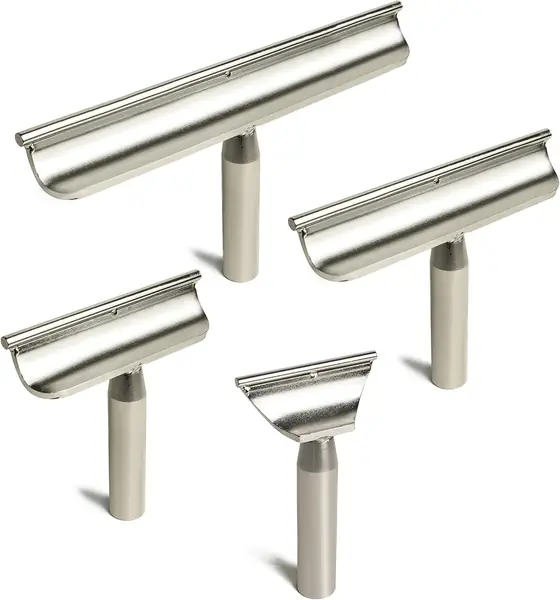
Nobody buys a lathe for the 3-1/2-inch rest, but it solves a specific annoyance: with a 12-inch bar on the banjo, the rest itself gets between your hand and a pen blank or a small box. This BMWOOD set gives you four straight rests — 3-1/2, 6, 9 and 12 inches — all on 1-inch posts with the same hardened round rod on top.

The four together weigh 7.94 pounds and the heft is real: hardened rods, tidy welds, and a chrome plate that resists rust in a damp shop. The 12-inch bar sits still through a roughing pass, the 6-inch gets the hardware out of the way for small work, and the posts seat and lock the way they should in a 1-inch base.

The taper on the posts is worth knowing about. Chips that find their way into the receptacle can wedge a rest in place, and one that drops all the way to the bottom can be stubborn coming back up; wipe the bore out and keep the posts from bottoming out, and it is a two-second swap again. What we keep coming back to is the range: one 12-inch rest cannot do what the short bars do, and four lengths for about what two singles cost is the practical answer.

Worth Noting

  • Bar sits close to the post, limiting clearance
Our Verdict

The practical way to own four lengths: our set recommendation for turners who want a short bar for pens and a long one for spindles.

Check Latest Price
5.

YEIXCIKA 12-Inch Lathe Tool Rest Best for Long Turning Sessions

YEIXCIKA 12-inch stainless steel lathe tool rest with concave top and 1-inch post

Long turning sessions

Shop Score 85/100
Post Diameter
1 inch
Material
Forged stainless steel
Rest Length
12 inches
Top
Concave finger profile
View on Amazon

Run a lathe for an hour and your hand tells you where the rest should be. The YEIXCIKA has a shallow concave cut along the top, so your fingers curl into the profile instead of perching on a crown and your knuckles stay clear of the spinning work. It is a small shaping decision that you notice in the second hour rather than the first.

The body is forged stainless steel: 12 inches of bar on a 1-inch post, 1.96 pounds, and no rust when green wood and wet sanding dust land on it. The welds are clean and the finish is smooth, and we like that a long stainless rest does not cost much more than the cast-iron pick. We recommend it to anyone who turns in long sessions, because the concave top does more for your hands than another inch of bar.

One check before you buy: the post can run a hair under 1 inch, which is snug in a healthy banjo and less so in a worn one, so confirm the fit before you lean on a heavy cut. The other thing it gives up to the BMWOOD is mass, 1.96 pounds against 2.64, and we noticed the cast rest sits quieter under a roughing gouge.

Worth Noting

  • Post can run slightly under one inch in worn banjos
  • Lighter 1.96-pound body is less quiet under a roughing gouge
Our Verdict

We recommend the YEIXCIKA to turners who spend long sessions at the lathe; the concave top and stainless body make 12 inches of bar easier on the hands.

Check Latest Price
6.

Robust Comfort Tool Rest, 6-Inch Best for Pens and Small Boxes

Robust Comfort 6-inch steel tool rest with hardened round bar and long post

Pens and boxes

Shop Score 84/100
Post Diameter
1 inch
Post
Long post
Top Bar
Hardened steel round rod
Rest Width
6 inches
View on Amazon

A 12-inch bar is wasted on a pen blank, and worse than wasted: its ends sit where the banjo and tailstock want to be. The 6-inch Robust Comfort is the rest we keep mounted for pens, handles, small boxes and little bowls, because it puts support directly under the cut and gets the hardware out of your way. It is also the best shape in the hand of any rest here; the radius is wide enough for an overhand or underhand grip, and it lets you drop the handle steeply for a shear scrape.

Solid steel, 3 pounds, 1-inch post, long version. The long post is what makes it work on a full-size lathe, lifting the bar to center height over a 16-inch swing, and the hardened top bar resists the dings that turn into marks on your work. The bar is straight, the weld is clean, and there is nothing to file before you use it.

The work it does is narrow, though. If your turning is mostly spindles, a 12-inch rest remains the more useful purchase, and this one only makes sense once small projects are a regular part of your week. For batch pen turning or a run of small lidded boxes, the short bar earns its keep every time you do not have to slide the banjo.

Worth Noting

  • Costs as much as a full-length rest
Our Verdict

If your turning is pens, handles and small boxes, this 6-inch Robust is the rest we keep mounted; it supports the cut and stays out of the banjo's way.

Check Latest Price
7.

Rockler Bowl Turner's Tool Rest Best for Small Bowl Work

Rockler stainless S-shaped bowl turner's tool rest with two curves

Small bowl work

Shop Score 83/100
Material
Solid stainless steel
Fits
Most mini and midi lathes
Shape
S-curve with two radii
View on Amazon

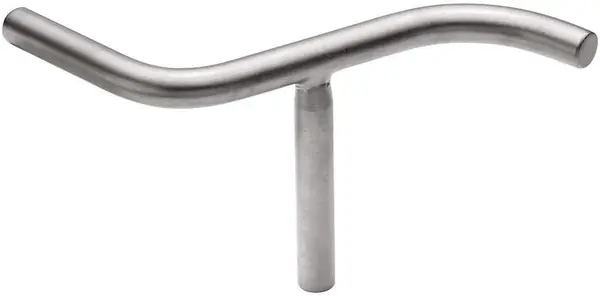
The S-shape is the whole idea, and it is a good one: a gradual curve for the outside of a bowl, and a tighter, more angular end that tucks into the mouth of a narrow vessel. That combination makes it the most versatile curved rest here for small work; you follow a profile on the outside, then turn the corner and hollow, without swapping rests. On a mini or midi lathe, with less banjo travel to work with, that saves real repositioning.

It is solid stainless with a polished finish that lets a gouge slide, and both the top and bottom edges are radiused, so you can flip it and keep working when one orientation will not reach. The finish is kind to your fingers as well, which matters more than it sounds when you are running the rest of the cut with your hand braced against it.

What holds it out of the top tiers is fit information: there is no published post diameter, so measure your banjo bore and the post length you need before ordering, because a bowl rest that sits below center is no better than a straight one. Do that five minutes of measuring and it is a comfortable, capable shape for small-bowl and hollow-vessel work.

Worth Noting

  • Listed for mini and midi lathes only
Our Verdict

A smart shape for midi-lathe bowl work, one gradual curve and one tight corner, provided you measure your banjo bore before ordering.

Check Latest Price

How We Tested Wood Lathe Tool Rests

We built the shortlist by gathering every rest we could find with a 1-inch post, since that's what most midi and full-size lathes accept, then filtering by post length, rest width, shape, and top-bar material so the pool covered straight spindle work, bowl interiors, hollowing, and small-detail turning rather than a stack of identical bars. Anything with rough machining or a post that rocked in the banjo never made it onto a lathe.

Eleven rests spent nine months on a midi lathe and a full-size lathe in a shop that turns pens and small boxes on weeknights and bowls and hollow forms on weekends. We dropped each post into the banjo and noted how much it rocked, how far the collar sat above the casting, and how much room the bar left for the banjo and tailstock when swung into position. Every time we moved a rest, we hand-spun the blank to check clearance before switching the lathe on.

Then we cut. Spindle gouges on square blanks, bowl gouges on green blanks, scrapers on end grain, with each shape and width used for the work it was built for. We watched the bar on interrupted cuts and out-of-balance blanks and noted which rests buzzed under a catch and which stayed dead still. After heavy catches we ran a finger along the top bar looking for burrs and checked the post-to-bar joint for cracks, filing smooth anything that had raised, and we re-set each rest a dozen times a session to see whether the collar held or slipped. That adjustability, weighed against what a specialized rest costs, is where the value question got settled.

How to Choose a Wood Lathe Tool Rest

Fit the post before you study the bar

Post diameter has to match the bore of your banjo: 1 inch is standard on most full-size lathes, and 5/8 inch shows up on many mini and midi models. Post length matters just as much, because a short stem leaves the bar below center on a lathe with a tall banjo stack.

Measure the bore and the length of the post you use now, and read the specification rather than the title, since listings sell the same part as a tool rest and a toolrest interchangeably. Nearly every rest we recommend here is listed with a 1-inch post, so a 5/8-inch banjo means checking the maker's other variants before you order.

Match the shape to the cut you make most

A straight bar is the generalist: spindles, the outside of bowls, and anything where the tool travels in a line. A curved or J-shaped rest follows the inside wall of a bowl so the gouge is not hanging out over the bar. A flat platform steadies a scraper when you hollow, and an S-shaped rest gets into the mouth of a narrow vessel.

Buy the straight bar first if you are unsure, because it covers the most work, and add a curve when bowls become a regular part of your week.

The top bar decides how the tool feels

Your tool rides on the top edge, so that edge is the whole interface. A hardened round rod stays smooth and resists the nicks a catch puts into softer metal; a cast or coated edge can wear through and leave a surface that drags.

Look for the word hardened, and look at the profile: round for general work, concave if you want your fingers to sit in a groove. A bar with a burr is worse than a bar with a scratch, because the burr lifts the tool and marks the work.

Weigh construction and clearance

Mass is what keeps a rest quiet. A one-piece casting or a solid bar welded to a solid post sits still through a roughing cut; a light fabricated rest transmits vibration straight into the tool. Weight is not everything, since a light stainless rest is fine for spindle work, but if you take heavy passes, cast iron earns its keep.

Look at the joint where the post meets the bar, and look at how much room the bar leaves around the post. A rest with a wide throat gives your hand space near a chuck; a tight one gets in the way of the tailstock on small work.

One length, or a set?

Most turning fits within a single 12-inch bar, which is why we start there. The case for a second, shorter rest is clearance: on pens, small boxes and finials, a long bar puts the rest and its post between your hand and the work.

A four-piece set spreads the cost of owning several lengths, while buying one good bar and adding a short one later is the cheaper way in. Either route beats repositioning the banjo four times to make one cut.

Frequently Asked Questions

Final Verdict

Most turners should buy the BMWOOD 12-inch cast rest and stop shopping. It covers spindle work and the outside of a bowl, it fits a 1-inch banjo properly, and it is the least expensive straight rest on this list, which makes retiring a factory rest an easy decision rather than a project.

Once you know what you turn, the specialist is worth the upgrade: the Robust Small J for bowl interiors, Simple's platform for hollowing with a flat cutter, or the 6-inch Robust Comfort for pens and small boxes. Buy the generalist first, then add the specialist when the work asks for it.